


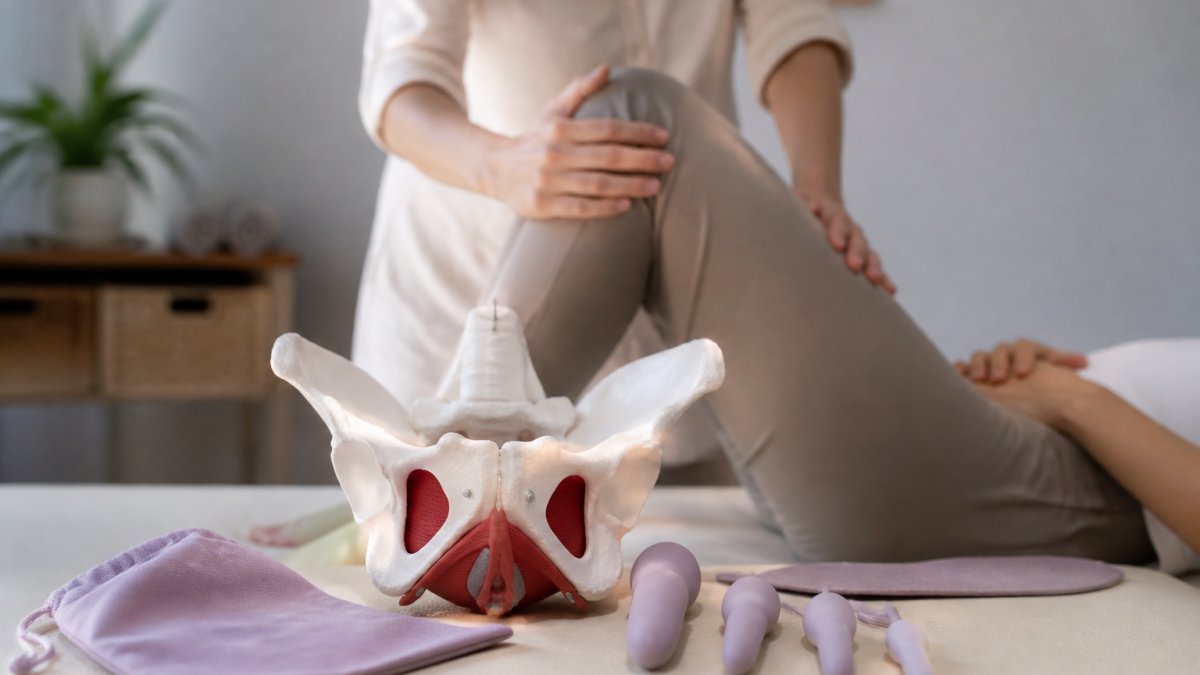
Table of Contents
- Pelvic Floor Therapy for Painful Intercourse: What You Need to Know
- What to Expect at Pelvic Floor Therapy
- Pelvic Floor Relaxation Exercises for Painful Intercourse
- Pelvic Floor Therapy Duration: How Long Until You See Results?
- Pelvic Floor Therapy for Vaginismus
- Red Flags and Diagnostic Pathways for Pelvic Pain
- Partner Communication and Intimacy During Treatment
- Conclusion
- Frequently Asked Questions
Last Updated: October 16, 2026
Pelvic Floor Therapy for Painful Intercourse: What You Need to Know
Pelvic floor therapy for painful intercourse is a conservative, non-surgical treatment that retrains the muscles supporting the bladder, uterus, and rectum so penetration stops triggering pain. At VuVatech, we've been in business since 2014, and the pattern is consistent: the muscles are usually too tense, not too weak.
Dyspareunia is the clinical term for persistent or recurrent genital pain before, during, or after penetrative sex. It is a symptom with many possible drivers, which is why a proper assessment matters more than a single diagnosis.
Pelvic floor physical therapy is a specialized form of physical therapy that addresses pelvic floor muscle dysfunction, including overactivity, poor coordination, and trigger points that refer pain into the vagina, vulva, and deep pelvis. The American College of Obstetricians and Gynecologists guidance on pelvic pain notes that pelvic floor physical therapy is a recommended component of care for many chronic pelvic pain conditions, including dyspareunia.
What to Expect at Pelvic Floor Therapy
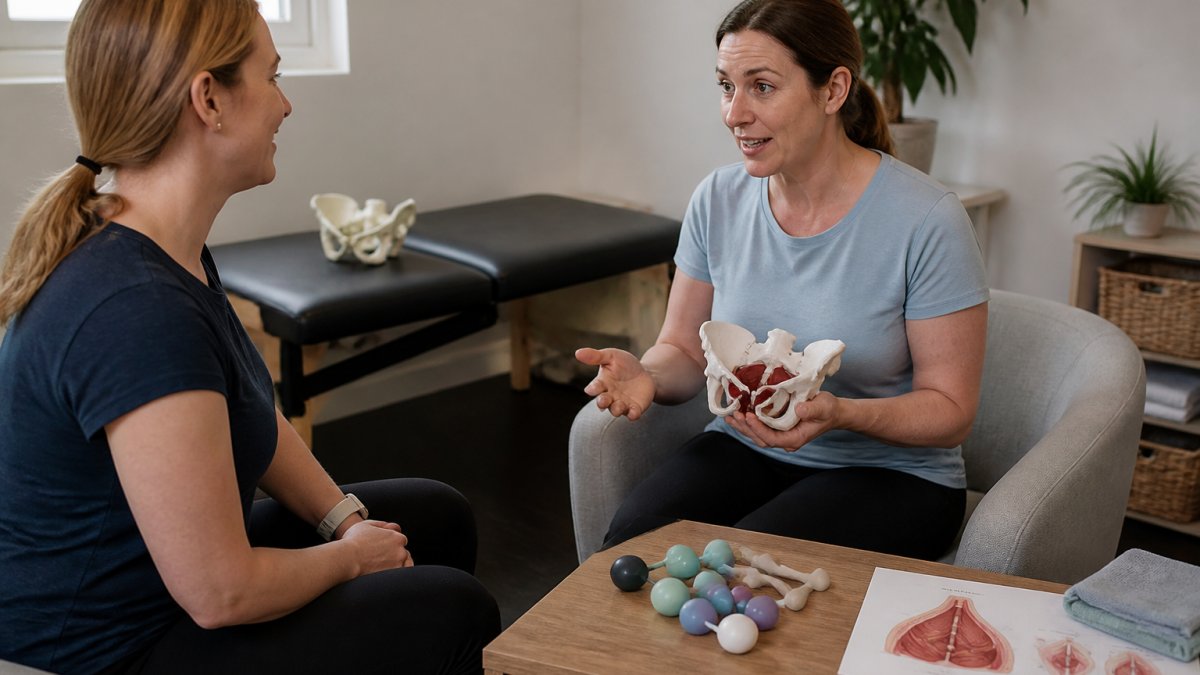
The first session is mostly conversation and assessment, not treatment. A good therapist spends the opening appointment understanding your history, your pain pattern, and what you want to be able to do again. You should expect to talk before anything else happens.
The First Visit: Consent and Communication
Consent is ongoing, not a single signature. A qualified therapist explains each step before doing it, asks permission, and stops the moment you say stop.
You can decline any part of the assessment. External work, breathing retraining, and education can all happen without internal examination. A therapist who pressures you past your comfort level is not the right fit.
A trauma-informed first visit typically follows a predictable arc:
- History and goals. The therapist asks about your pain pattern, medical history, prior treatments, and what you want to return to, not just intercourse, but tampon use, gynecological exams, or comfortable sitting.
- External observation. You remain clothed while the therapist watches how you breathe, sit, stand, and move. They may ask you to contract and relax your pelvic floor to assess coordination.
- Education. Before any touch, the therapist explains pelvic floor anatomy, why muscles may be overactive, and how the treatment plan addresses that.
- Consent for internal assessment. If an internal exam is recommended, the therapist describes exactly what they will do, where they will touch, and how long it will take. You can say yes, no, or yes-to-some-parts.
- Internal assessment (only with consent). Using a gloved finger and lubricant, the therapist checks for overactive muscles, trigger points, and tissue sensitivity around the vaginal opening and deeper pelvic tissues. You control the pace and can pause at any time.
- Debrief and plan. The therapist summarizes findings, explains the proposed treatment frequency, and gives you a home program.
If you are not ready for an internal exam, external-only assessment is a legitimate starting point.
Internal and External Assessment
External assessment looks at posture, hip mobility, low back movement, and how you hold tension in the glutes, adductors, and abdomen.
The goal is a map of where your pain comes from. That map drives a personalized treatment plan and a home exercise program you can actually follow.
A common pattern therapists look for is the difference between superficial and deep pelvic floor tension.
Pelvic Floor Relaxation Exercises for Painful Intercourse
Relaxation is a skill, and like any skill it takes repetition. Most people with entry pain need to learn how to lengthen and release the pelvic floor, not how to strengthen it further.
A common starting point is diaphragmatic breathing. Lie on your back with knees bent, place one hand on your belly, and breathe so the belly and pelvic floor both soften on the inhale. Practise for five minutes, twice a day.
- Pelvic floor drops: On the exhale, imagine the pelvic floor gently releasing downward. No pushing, no bearing down.
- Happy baby stretch: Hold for 30 to 60 seconds to open the hips and reduce tension in the inner thighs.
- Child's pose with breath: Let the pelvis widen on each exhale.
- Adductor and hip mobility work: Tight hips feed tight pelvic floors.
Pelvic Floor Therapy Duration: How Long Until You See Results?
Many people notice meaningful change within 6 to 12 weeks of consistent therapy and home practice. Progress is rarely linear. Some weeks feel better, some feel worse, and that fluctuation is normal.
What matters is measurable progress, not a fixed timeline. Therapists typically track pain scores, dilation size tolerated, and how far you can go in daily activities. If nothing has shifted after several weeks of consistent work, that's information worth bringing back to your clinician.
Visit Frequency and What to Expect
A common pattern is weekly sessions for the first four to six weeks, then tapering to every two weeks or monthly as you build independence. Some people need only a handful of visits to learn the techniques; others benefit from ongoing support for several months.
Between sessions, expect to spend 10 to 20 minutes per day on home practice. That might include breathing exercises, pelvic floor drops, stretching, or dilator work. The home program is not optional, it is where most of the change happens.
How Progress Is Measured
Because pain with intercourse is subjective, therapists use several practical markers rather than a single number:
- Pain rating during penetration. On a 0-to-10 scale, a drop from 7 to 4 is meaningful even if it is not zero.
- Dilation size tolerated. If you can comfortably use a dilator one size larger than last month, that is progress.
- Duration of comfort. How long you can tolerate penetration or touch before pain begins.
- Daily function. Can you sit through a meeting, use a tampon, or have a gynecological exam without the same level of pain?
- Confidence and fear. Reduced anticipation of pain is a legitimate outcome, even before pain fully resolves.
A therapist should revisit these markers every few weeks and adjust the plan if progress stalls.
What the Evidence Supports, and Where It Is Limited
Research supports pelvic floor physical therapy for many types of dyspareunia, particularly when muscle overactivity or trigger points are part of the picture.
HelloGina™ 12-Week Therapy Program →
However, the evidence is not uniform. Many studies are small, and treatment protocols vary widely.
This is why individualized care matters. A therapist who promises a fixed timeline or a guaranteed outcome is overselling.
Treatment response depends on the cause. For those managing vaginal atrophy, a gentle home routine can complement clinical care, and products like the VuVa Neodymium Magnetic Dilator Sets are designed to support relaxation and circulation as part of that routine.

Pelvic Floor Therapy for Vaginismus
Vaginismus is a condition where the pelvic floor muscles involuntarily tighten in response to attempted penetration, making sex, tampon use, or gynecological exams painful or impossible.
The approach usually combines muscle retraining with graded exposure. Programs like HelloGina's 12-week guided program pair dilator work with cognitive behavioral elements, which addresses both the muscle tension and the fear that keeps it in place.

Progress with vaginismus is measured in comfort, not speed. Rushing a size is the most common reason people stall.
Red Flags and Diagnostic Pathways for Pelvic Pain
Not all pelvic pain belongs in physical therapy first. Certain symptoms need medical investigation before any muscle work begins.
See a clinician promptly if you have:
- New or worsening pain that wakes you at night
- Bleeding between periods or after sex
- Fever, unusual discharge, or a foul odor
- Pain that is constant rather than tied to penetration
- A history of cancer, radiation, or pelvic surgery
A standard pathway typically starts with a gynecological exam, and may include swabs, imaging, or referral to a specialist. The NHS overview of pelvic pain assessment outlines when persistent pelvic pain warrants further investigation. Once serious causes are ruled out, pelvic floor therapy is often the next step.
Partner Communication and Intimacy During Treatment
Treatment works better when your partner is inside the process, not outside it. That doesn't mean sharing every clinical detail. It means agreeing on what's off the table for now and what still feels good.
Try this: set aside ten minutes outside the bedroom to talk about what's changed and what you both want. Name the things that are still available, like non-penetrative touch, massage, or oral sex.
Conclusion
Pain with intercourse is common and treatable, but the path forward requires patience and the right support at home. VuVatech has been making gentle, home-based pelvic wellness products since 2014, including patented Neodymium magnetic dilator sets, medical-grade BPA-free materials, and a 10-year magnet strength warranty, all shipped discreetly. If you're working with a therapist or starting a dilation routine on your own, our products are designed to support relaxation and circulation without adding stress to the process.
Frequently Asked Questions
Do they finger you during pelvic floor therapy?
During an internal assessment, a pelvic floor physical therapist may use one gloved finger to assess muscle tone, trigger points, and coordination. This is always done with your consent, and you can decline or ask for alternatives like external assessment or a mirror. The goal is to gather information to guide treatment, not to cause pain. Your comfort and boundaries are prioritized throughout.
Why does my pelvic floor hurt during intercourse?
Pain during intercourse, or dyspareunia, often stems from pelvic floor muscle tension, overactivity, or poor coordination. These muscles can become tight due to stress, injury, or conditions like vaginismus. When they don't relax, penetration can be painful. Other causes include vaginal atrophy, infections, or scar tissue. A pelvic floor physical therapist can help identify the specific cause and create a personalized treatment plan.
Is there a cure for painful intercourse?
Many cases of painful intercourse improve significantly with appropriate treatment, but 'cure' depends on the underlying cause. Pelvic floor therapy, relaxation exercises, and home tools like dilators can reduce pain and restore function. Conditions like vaginismus and vulvodynia often require ongoing management. A multidisciplinary approach, including medical and psychological support, offers the best outcomes. Consult a qualified professional for an individualized plan.
What happens during pelvic floor therapy for painful sex?
An initial session typically includes a discussion of your history, an external and internal assessment (with consent), and education about pelvic floor function. Treatment may involve manual therapy, breathing exercises, biofeedback, and a home program. Therapists often use a trauma-informed approach and may recommend tools like vaginal dilators, such as the VuVa Neodymium Magnetic Set, to support relaxation and circulation at home.
How long does pelvic floor therapy take to help painful intercourse?
Many people notice improvement within 4 to 8 weeks, but timelines vary based on the cause, severity, and consistency of home exercises. Chronic conditions like vaginismus may take several months. Pelvic floor therapy duration is highly individual; your therapist will track progress and adjust the plan. Attending regular sessions and practicing relaxation exercises at home can speed up results.
Can pelvic floor exercises make painful intercourse worse?
Yes, if the wrong exercises are done. Kegels, which strengthen the pelvic floor, can worsen pain if your muscles are already overactive or tight. For painful intercourse, relaxation and coordination exercises are usually more appropriate. A pelvic floor physical therapist can assess whether you need strengthening or relaxation and guide you to the right exercises. Always get professional guidance before starting any routine.
When should I see a pelvic floor physical therapist for pain during sex?
See a pelvic floor physical therapist if pain during intercourse persists for more than a few weeks, interferes with your quality of life, or is accompanied by other symptoms like urinary issues or pelvic pain. Early intervention can prevent chronic tension patterns. Ask your gynecologist for a referral or search for a therapist specializing in pelvic health. A thorough evaluation can pinpoint the cause and guide treatment.


