


Table of Contents
- Understanding Pelvic Floor Exercises for Chronic Pain
- Is Your Pelvic Floor Tight, Weak, or Both?
- Pelvic Floor Relaxation Exercises to Release Tension
- Pelvic Floor Stretches for Pain That You Can Do at Home
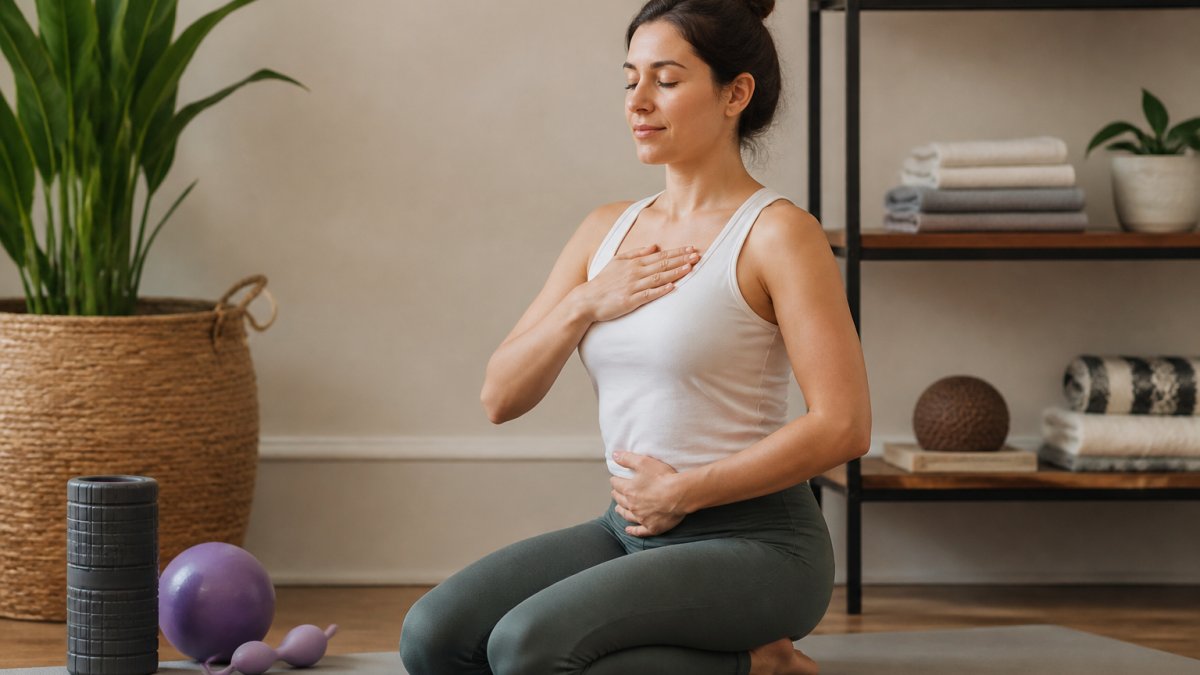
- Diaphragmatic Breathing for Pelvic Floor Relaxation
- When to See a Pelvic Floor Physical Therapist for Pain
- Building a Safe, Progressive Routine with Stopping Rules
- Frequently Asked Questions
Last Updated: October 15, 2026
Understanding Pelvic Floor Exercises for Chronic Pain
Pelvic floor exercises for chronic pain are gentle movements that relax, stretch, and slowly strengthen the muscles at the base of your pelvis.
This VuVatech guide covers what helps, what to avoid, and how to build a routine that does not flare you up.
The pelvic floor muscles form a sling supporting your bladder, bowel, and uterus, controlling urination, and playing a role in sexual health.
Is Your Pelvic Floor Tight, Weak, or Both?
Most people assume pelvic pain means weak muscles, but the opposite is often true. A pelvic floor can be overactive and weak at once, a common reason generic advice backfires.
The pelvic floor is a layered group of muscles (levator ani, coccygeus, and the urethral and anal sphincters) sitting like a hammock from pubic bone to tailbone. These muscles must contract on demand and fully let go.
A symptom-based way to tell them apart
Use this as a rough triage, not a diagnosis. Many people land in more than one column.
Signs the pelvic floor is overactive (tight, gripping, or hypertonic):
- Pain, burning, or a raw feeling in the vagina, rectum, or perineum
- A sense of constant gripping or clenching you cannot release
- Pain with penetration, intercourse, tampons, speculum exams, or dilators
Signs the pelvic floor is weak or under-supporting:
- Leaking urine with coughing, sneezing, laughing, or lifting
- Urgency, a sudden, hard-to-ignore need to go
- A heaviness, bulging, or "falling out" sensation in the vagina
Signs it is both, tight and weak:
This is the pattern clinicians see most often in chronic pelvic pain. The muscle is short and overactive at rest, so it cannot generate a clean contraction or relax afterward. You may leak when you sneeze and have pain with intercourse, feel gripping and heaviness.
How to self-check at home
You cannot reliably assess your own pelvic floor, but you can gather clues:
- Track symptoms for one week. Note pain level (0-10), leakage, pain with penetration, and what you were doing when symptoms appeared. Patterns matter more than any single day.
- Notice your default state. When you are not thinking about it, does your pelvic floor feel relaxed, or subtly held? Many people with chronic pain have clenched so long they no longer notice.
- Try a gentle release breath. Lie down, inhale into your belly, and on the exhale feel the pelvic floor drop and soften. If you cannot soften, or trying makes you grip harder, that points toward overactivity.
- Test a light Kegel. Gently contract, then fully release. If the release feels incomplete or the contraction triggers pain, treat this as overactive until a clinician says otherwise.
Why the distinction changes your whole routine
If your pelvic floor is overactive, your first weeks should be almost entirely relaxation and downtraining, breathing, stretches, and positions that let the muscle lengthen.
If it is both, the sequence is almost always: release first, coordinate second, strengthen last.
If unsure which pattern fits you, treat yourself as overactive until assessed. Relaxation work is low-risk for almost everyone; aggressive strengthening is not.
Pelvic Floor Relaxation Exercises to Release Tension
Relaxation is the missing half of most pelvic floor routines. These pelvic floor relaxation exercises teach the muscles to let go instead of grip.
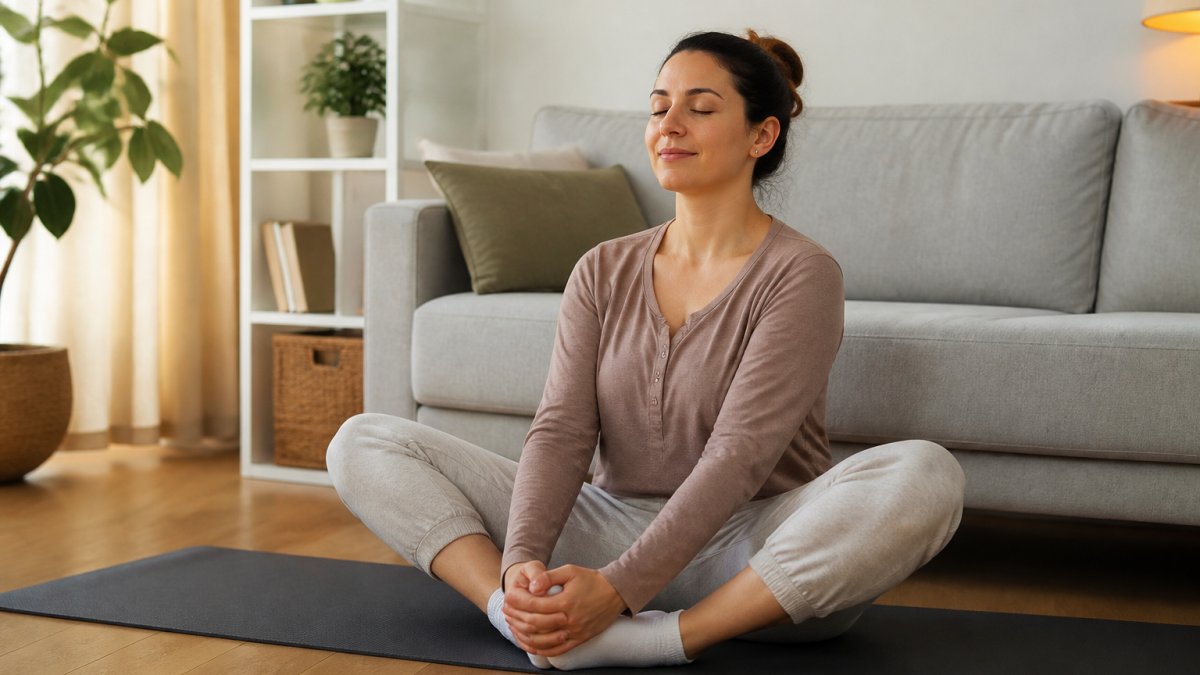
Try this short sequence:
- Diaphragmatic breathing: lie down, breathe into your belly, feel the pelvic floor soften on the exhale
- Happy baby pose: lie on your back, hold your feet, let your hips open
- Child's pose: kneel and fold forward, breathe slowly for 5 to 10 breaths
- Butterfly stretch: sit with the soles of your feet together, let your knees fall open
- Pelvic drop: sit on a firm chair and consciously let the pelvic floor relax downward
Hold each stretch for 30 seconds to 1 minute. Stop if you feel sharp pain.
Pelvic Floor Stretches for Pain That You Can Do at Home
Pelvic floor stretches for pain target surrounding muscles too, tight hips, glutes, and lower back all pull on the pelvis.
Aim for these stretches:
- Piriformis stretch: lie on your back, cross one ankle over the other knee, pull the thigh toward you
- Bridge pose: lie on your back, lift your hips, hold for 5 breaths
- Modified plank: on your knees, keep your core gently engaged, hold for 10 to 20 seconds
Stretching works best gentle and consistent: one short session daily beats one long session weekly.
Diaphragmatic Breathing for Pelvic Floor Relaxation
Diaphragmatic breathing for pelvic floor relaxation is the single most useful tool for chronic pelvic pain, calming the nervous system and coordinating the pelvic floor with your breath.
Here is the how-to:
- Lie on your back with knees bent
- Place one hand on your belly, one on your chest
- Breathe in through your nose for 4 counts, feeling your belly rise
- Breathe out slowly for 6 counts, feeling your pelvic floor soften
- Repeat for 5 minutes, twice a day
Many find it easier to start with breathing before stretching.
When to See a Pelvic Floor Physical Therapist for Pain
Pelvic floor physical therapy for pain is the gold standard for chronic pelvic pain. A trained therapist can assess muscle tone, coordination, and trigger points you cannot feel on your own.
See a pelvic floor physical therapist if you have:
- Pain that has lasted more than a few weeks
- Pain during intercourse (dyspareunia)
- Incontinence that is getting worse
The American Physical Therapy Association's guide to pelvic health explains what to expect from a pelvic floor evaluation.
If you are recovering from pelvic radiation or cancer treatment, ask your oncology team for a referral.
Building a Safe, Progressive Routine with Stopping Rules
A safe routine starts small, adds load slowly, and has a clear plan for bad days. Most people do too much too soon, flare up, and quit, or push through pain because they think it is supposed to hurt.
The framework below is built around three ideas: dose (how much), progression (when to add more), and stopping rules (when to back off). It is a template, not a prescription.
The dosage basics
For chronic pelvic pain, less is almost always more at the start:
- Frequency: one short daily session beats three long weekly sessions. Consistency beats intensity.
- Duration: start with 5 minutes, building to 10-15 over several weeks. Longer is not better if it flares you.
- Stretch holds: 30 seconds to start, building toward 60 as tolerance improves. Breathe through the hold; do not brace.
A four-week progression template
Week |
Focus |
Daily Time |
Stretch Hold |
Strengthening |
Progression Criteria |
|---|---|---|---|---|---|
1 |
Breathing + body awareness only |
5 min |
n/a |
None |
You can complete 5 minutes without a pain increase |
2 |
Breathing + 2 gentle stretches |
8 min |
30 sec |
None |
Pain stays at or below your baseline for 24 hours after |
3 |
Add a third stretch; introduce light Kegels only if your pattern is weak, not overactive |
10 min |
30-45 sec |
3 sets of 5, 2-sec holds |
No gripping, burning, or next-day flare |
4 |
Full routine + a short walk |
12-15 min |
45-60 sec |
3 sets of 5-8, 3-sec holds |
Symptoms stable or improving for 3 consecutive sessions |
How to progress: move to the next week only when you have met the progression criteria for at least three sessions in a row. If you flare, drop back one week and rebuild.
How to regress: if pain rises during or after a session, cut the duration in half and remove the newest element. If that still flares you, return to breathing only for several days.
Tolerable sensation vs. warning sign
This is the distinction most home programs skip, and the one that keeps people safe.
Usually tolerable, keep going, but stay attentive:
- A mild stretch or pulling sensation that eases within 30-60 seconds
- A feeling of warmth or gentle lengthening
- Slight muscle fatigue after strengthening that resolves within a day
Warning signs, stop the exercise and reassess:
- Sharp, stabbing, or shooting pain
- Burning that increases during the exercise rather than easing
- Pain above a 3 out of 10 on your personal scale
Flare-day protocol
Flares are normal, especially in the first few weeks, information, not failure. When one hits:
- Stop strengthening entirely. Do not try to "work through" a flare.
- Drop to breathing only. Five minutes of diaphragmatic breathing, lying down with knees bent, is the safest reset.
- Use heat or a warm bath. Heat helps many with overactive pelvic floors relax; cold helps some with acute inflammation.
- Return to your last comfortable week. Do not resume at the level that triggered the flare.
- Log it. Note what you did in the 24 hours before the flare, new exercise, longer sitting, stress, hormonal cycle, dietary trigger. Patterns emerge over weeks, not days.
If flares happen more than once a week, or last more than a few days, check in with a pelvic floor physical therapist rather than push forward alone.
Modifications for different abilities and situations
- If lying down is uncomfortable: do breathing reclined with pillows under the knees, or seated on a firm chair with feet flat.
- If you are postpartum: wait for provider clearance, then start with breathing and gentle release before any strengthening. Healing timelines vary widely.
- If you are post-menopausal: tissue changes can make stretching less comfortable. A clinician can advise on lubricants, topical options, or dilator use.
- If you have a prolapse: avoid heavy straining and high-impact exercise until assessed. Some strengthening may help, but the sequence matters.
When to stop and get assessed
Home exercises are a starting point, not a substitute for evaluation. Seek a pelvic floor physical therapist or physician if you develop:
- Pain worsening over weeks rather than improving
- New numbness, weakness, or loss of bladder or bowel control
- Blood in urine or stool, fever, or unexplained weight loss
- Pain that wakes you at night or is unrelated to movement
A pelvic floor physical therapist can assess muscle tone, coordination, and trigger points you cannot feel on your own, and tailor a program to whether your pattern is tight, weak, or both, the difference between a routine that helps and one that quietly makes things worse.
Frequently Asked Questions
How do you know if your pelvic floor is tight or weak?
A pelvic floor physical therapist can assess this. Signs of tightness include pain with penetration, difficulty relaxing during urination, and a feeling of constant tension. Weakness may show as leaking urine when coughing or sneezing, or a sensation of heaviness. Some people have both, where muscles are tight but also weak. A professional evaluation is the only way to know for sure, as symptoms overlap.
Can Kegel exercises make pelvic pain worse?
Yes, if your pelvic floor is already overactive or tight, Kegels can increase tension and worsen pain. Kegels strengthen muscles, but they do not teach relaxation. For chronic pelvic pain, relaxation and lengthening exercises are often more appropriate. A pelvic floor physical therapist can determine whether strengthening or relaxing is right for you. If you have pain, avoid Kegels until you have been assessed.
How often should you do pelvic floor relaxation exercises?
Start with 5 to 10 minutes once or twice a day, focusing on gentle breathing and release. Quality matters more than quantity. If pain increases, stop and rest. Over time, you can gradually increase duration as tolerated. Consistency is key, but never push through sharp pain. A physical therapist can help tailor frequency to your specific condition.
When should you see a pelvic floor physical therapist?
See a pelvic floor physical therapist if you have persistent pelvic pain, pain during intercourse, difficulty urinating or having bowel movements, or if home exercises worsen your symptoms. Also seek help if you experience incontinence or a feeling of pelvic heaviness. A therapist can provide an internal assessment, manual therapy, and a personalized program. Early intervention often leads to better outcomes.


