


Last Updated: October 30, 2026
Quick Summary
Oil-based lubricant compatibility with vaginal dilators depends on the dilator material. Rigid plastic and glass dilators accept oil-based lubricant, but silicone dilators should avoid it because oils can degrade the surface over time. When unsure, choose a water-based lubricant, which suits nearly every dilator.
- Dana-Farber guidance lists oil-based lubricant as acceptable with rigid plastic dilators.
- A 2026 ScienceDirect review warns oils pose a surface risk to silicone dilators.
- Glass is non-porous and tolerates oil, water, and silicone lubricants alike.
- Cleveland Clinic advises against oil-based lubricant and petroleum jelly for dilator use generally.
- Patch test any new oil on the inner wrist or outer vulva for a few hours first.
Table of Contents
- The Short Answer on Oil-Based Lubricant and Dilator Materials
- Lubricant Compatibility by Dilator Material
- Water-Based Lubricants and Why They Suit Almost Every Dilator
- Oil-Based Products: Coconut Oil, Massage Oil and Petroleum Jelly
- Silicone-Based Lubricant and Silicone Device Compatibility
- How to Find the Best Lubricant for Vaginal Dilators
- How to Clean Vaginal Dilators After Every Session
- Which VuVa Magnetic Dilator Set Should You Start With?
- Frequently Asked Questions
The Short Answer on Oil-Based Lubricant and Dilator Materials
Oil-based lubricant compatibility with vaginal dilators depends almost entirely on what the dilator is made of. Rigid plastic handles oil-based lubricant well. Silicone dilators do not, because oils can degrade the surface over time. Glass accepts oil-based lubricant without issue. I'm Tara Langdale, and I invented VuVa Magnetic Dilators in 2014 after years of living with vulvodynia and painful intimacy. This lubricant question confuses a lot of women, so here is the honest breakdown before you reach for the coconut oil.
The short version: check your dilator material first, then your own sensitivity, then decide.
Lubricant Compatibility by Dilator Material
Dilator material decides which lubricant is safe to pair with it. The vaginal dilator therapy instructions from Dana-Farber Cancer Institute state that water-, oil-, and silicone-based lubricants are acceptable with rigid plastic dilators. That guidance is specific to rigid plastic. It does not extend to every material.
Here's how the main materials compare:
| Dilator Material | Water-Based | Oil-Based | Silicone-Based |
|---|---|---|---|
| Rigid plastic | Yes | Yes | Yes |
| Silicone | Yes | Avoid | Avoid |
| Glass | Yes | Yes | Yes |
Rigid Plastic Dilators
Rigid plastic is the most forgiving material for oil-based lubricant. Dana-Farber's guidance lists oil-based lubricant as acceptable with rigid plastic dilators, and that includes the medical-grade BPA-free plastic we use at VuVaTech. Mild soap and warm water are a simple way to clean it.
Silicone and Glass Dilators
Silicone dilators are where oil-based lubricant becomes a real problem. A 2026 review in ScienceDirect on vaginal dilator therapy warns that silicone-based lubricants can damage silicone dilators, and oils pose a similar risk to the surface. Glass sits at the other end. It is non-porous and tolerates oil, water, and silicone lubricants alike.
Water-Based Lubricants and Why They Suit Almost Every Dilator
Water-based lubricant is the safest default for nearly every dilator material. It works with rigid plastic, silicone, and glass, and it rinses away cleanly. Alberta Health Services recommends water-based lubricant for silicone dilators and advises reading the ingredient list to avoid irritants. Cleveland Clinic's patient guidance on vaginal dilators also points to water-based lubricant as the standard choice.
Water-based formulas do dry out faster, so you may need to reapply mid-session. That small trade-off buys you compatibility and easy cleanup. If you want a deeper comparison, our guide to best lubricant types for vaginal dilator practice walks through the options.
Oil-Based Products: Coconut Oil, Massage Oil and Petroleum Jelly
Oil-based products are where the advice online gets genuinely confusing, and I want to untangle it rather than add to the noise. Dana-Farber accepts oil-based lubricant with rigid plastic dilators. Cleveland Clinic advises against oil-based lubricant and petroleum jelly for dilator use generally. Both can be correct at the same time, because they are answering two different questions: Will this damage the device? and Is this a good idea for my body and my routine?
Here is how the common oil-based products actually differ:
- Coconut oil: Semi-solid at room temperature and melts on contact. Popular because it is inexpensive and fragrance-free in its pure form. It is not compatible with silicone dilators, and some women find it irritating if their tissue is already inflamed. If you try it, choose a food-grade, unrefined version with no added scent.
- Massage oil: Formulations vary widely. Many contain fragrance, essential oils, or warming agents that can sting sensitive vulvar tissue. Read the ingredient list before anything goes near a dilator, added fragrance is one of the most common causes of irritation in this routine.
- Petroleum jelly: Thick, occlusive, and long-lasting, which is why it is tempting. It is also the hardest to fully remove from silicone surfaces and from skin folds. Cleveland Clinic specifically advises against petroleum jelly for dilator use, and I would follow that guidance.
- Mineral oil: Similar residue concerns to petroleum jelly. It coats well but lingers, and it can be difficult to rinse from seams and bases.
A common mistake is reading that oil is "fine with plastic" and assuming that means any oil, on any dilator, is fine. The material question and the ingredient question are separate. A pure, fragrance-free oil may be mechanically compatible with a rigid plastic dilator and still be a poor match for your skin, your condom use, or your cleanup routine.
4oz Slippery Stuff Gel Personal Lubricant →
If you are comparing oil-based products against other options for painful sex, our 2026 guide to lubricants for painful intercourse covers the wider picture.
Silicone-Based Lubricant and Silicone Device Compatibility
Silicone lubricant and silicone dilators should not be paired. The 2026 ScienceDirect review flags that silicone-based lubricants can damage silicone dilators, and the same caution applies to any silicone device. Silicone lubricant lasts longer than water-based, which makes it tempting, but the material risk is real.
If you use silicone lubricant, reserve it for rigid plastic or glass. For magnetic dilators with silicone-adjacent surfaces, stick with water-based. Our article on silicone lubricant mistakes to avoid with magnetic dilators covers the specific errors that shorten a dilator's life.
How to Find the Best Lubricant for Vaginal Dilators
Finding the best lubricant for vaginal dilators comes down to three checks, in order. First, confirm your dilator material. Second, review the ingredient list for anything that irritates your skin. Third, test a small amount before a full session.
Use this decision path:
- Identify your dilator material. Rigid plastic or glass opens up all three lubricant types. Silicone means water-based only.
- Read the ingredients. Avoid added fragrance, warming agents, and dyes if your tissue is sensitive.
- Patch test. Apply a small amount to the inner wrist or outer vulva and wait a few hours.
- Reapply as needed. Water-based lubricant dries faster, so keep the bottle within reach.
- Stop if it stings. Burning or irritation means the formula isn't right for you.
If you need a glycerin-free option, our guide to finding a vaginal dilator lubricant without glycerin narrows the field.
How to Clean Vaginal Dilators After Every Session
Cleaning vaginal dilators after every session takes about two minutes and protects both the device and your tissue. Wash with mild soap and warm water, rinse thoroughly, and dry completely before storage. Oil-based residue needs more attention than water-based, and this is the part most guides skip.
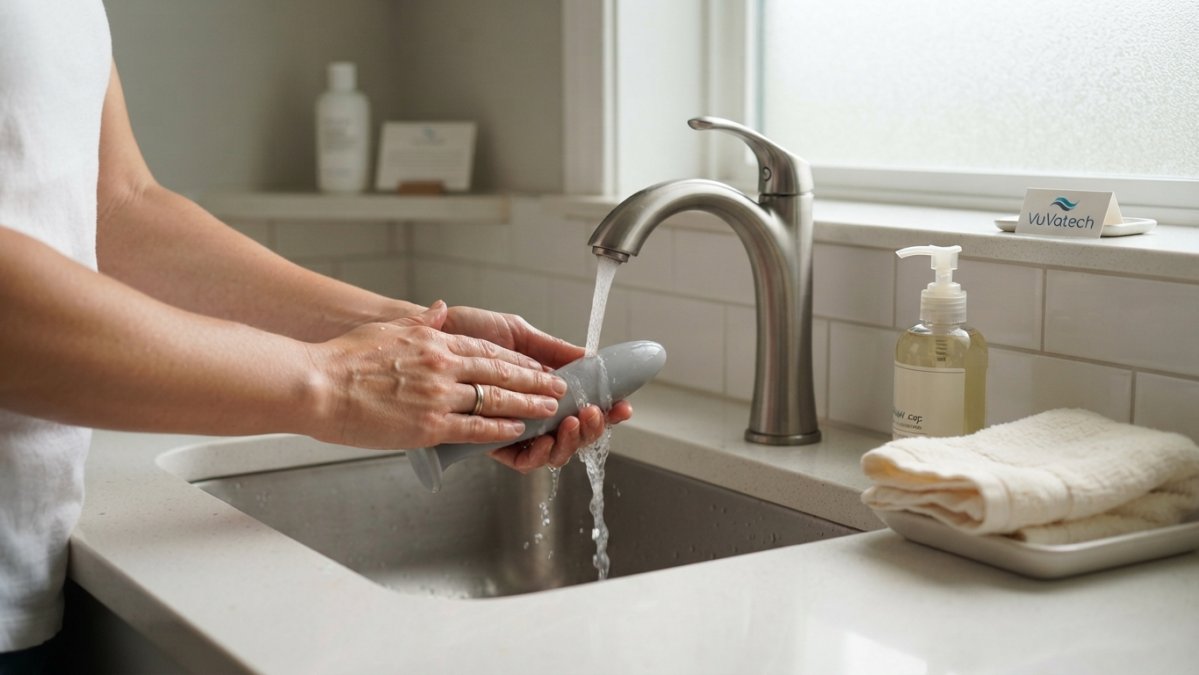
A few cleaning habits worth keeping:
- Wash immediately after use, before residue sets
- Use a soft cloth, never anything abrasive
- Check the base and seams where oil can collect
- Store dry in a clean, discreet container
- Replace dilators that show cracks or surface changes
Oil-based lubricant can leave a film that water alone may not lift. A drop of mild soap handles it, but you may need to work it into seams and the base with your fingertips or a soft cloth.
Material-specific cleanup notes:
- Rigid plastic: The most forgiving. Mild soap and warm water are usually enough, even after oil. Dry fully before storage.
- Silicone: Oil can cling to silicone more stubbornly. Wash with mild soap, rinse until the water runs clear, and let it air-dry completely before storing. If the surface feels tacky after drying, that is a sign residue remains, wash again.
- Glass: Non-porous and easy to clean. Warm soapy water and a thorough rinse are sufficient.
When to stop using a dilator and check in with your clinician:
- New burning, stinging, or itching that does not settle within a day
- Visible cracks, chips, or a change in surface texture
- Persistent irritation despite switching to a water-based lubricant
- Any unexplained bleeding or signs of infection
Those symptoms are a signal to pause and get medical advice. Dilation is one part of a broader plan, and a pelvic health clinician can help you adjust.
Which VuVa Magnetic Dilator Set Should You Start With?
Choosing a VuVa Magnetic Dilator Set starts with the smallest size you can use comfortably without forcing insertion. VuVa Magnetic Dilators were invented by Tara Langdale and feature patented, permanently enclosed neodymium magnets, with sizes for gradual progression.
4oz Slippery Stuff Gel Personal Lubricant →
Here's how the sets break down:
- Sizes 1-4: beginner set for smaller starting sizes and gradual progression
- Sizes 3-6: intermediate set for those already comfortable with smaller sizes
- Sizes 5-7: larger set for those ready to move beyond intermediate sizes
- Full Set 1-7: widest size range for flexibility
One important note: Size 1 does not contain magnets. Check our VuVa dilator size charts before ordering, and talk with your clinician if you're unsure where to start.
The VuVa Full Magnetic Set offers the widest range if you want room to progress. For most beginners, the Sizes 1-4 set is the more sensible first step.


A water-based lubricant pairs well with every VuVa set. Our Slippery Stuff Gel Personal Lubricant is water-based, water-soluble, and odorless, which makes cleanup simple. It's also HSA/FSA eligible.

A word of caution: anyone with an implanted electronic medical device should check with their doctor before using magnetic dilators.
Finding the right lubricant shouldn't add more anxiety to a routine you're already approaching carefully. If you're ready to begin at your own pace, explore the VuVa Magnetic Vaginal Dilators collection and find the starting size that fits your body.
Tara Langdale is the founder of VuVaTech and the inventor of VuVa Magnetic Dilators. She created VuVa in 2014 after her own experience with vulvodynia and painful intimacy.
Medical references:
- Dana-Farber Cancer Institute. "Vaginal Dilator Therapy: Instructions." 2021.
- Alberta Health Services. "Choosing a personal lubricant."
- Cleveland Clinic. "Vaginal Dilators: Purpose, Types & How To Use."
- "Vaginal dilator therapy for pelvic cancer patients: a review." ScienceDirect, 2026.
Frequently Asked Questions
Can I use coconut oil with vaginal dilators?
It depends on the material. Dana-Farber Cancer Institute's 2021 dilator instructions list oil-based lubricants as acceptable with rigid plastic dilators, so coconut oil can work with that material. For silicone dilators, guidance is less settled: Alberta Health Services recommends a water-based lubricant for silicone devices. Clean the dilator thoroughly afterward. If you have sensitive skin or a history of irritation, test a small amount first and ask your clinician.
Why should you avoid oil-based lubricants with silicone dilators?
Silicone lubricants and oils can degrade silicone rubber over time, which is why a 2026 review in ScienceDirect warns that silicone-based lubricants can damage silicone dilators. The same concern applies to oil-based products with some soft silicone materials. Rigid plastic and glass do not share this problem, which is why Dana-Farber lists oil-based lubricant as acceptable for rigid plastic. If your dilator is silicone, choose a water-based lubricant such as Slippery Stuff Gel and check the manufacturer's instructions before trying anything else.
What type of lubricant is best for vaginal dilator therapy?
Water-based lubricant is the safest default for most dilator materials. Water-based lubricant is commonly recommended for vaginal dilator use. Water-based formulas are water-soluble, easy to rinse off, and compatible with rigid plastic, silicone and glass. Slippery Stuff Gel is a water-based, water-soluble option that has been recommended by physicians for two decades. Whatever you choose, stop if you feel burning or irritation.
How do I clean vaginal dilators after using an oil-based lubricant?
Oil-based products leave a film that water alone will not shift. Wash the dilator with mild soap and warm water, rubbing gently to lift the residue, then rinse thoroughly and dry it with a clean towel before storing it. Check your dilator's manufacturer instructions first, because some materials have specific cleaning guidance. Wash it before and after each session. If residue or odor persists, or you notice irritation, stop using that lubricant and speak with your clinician.


