


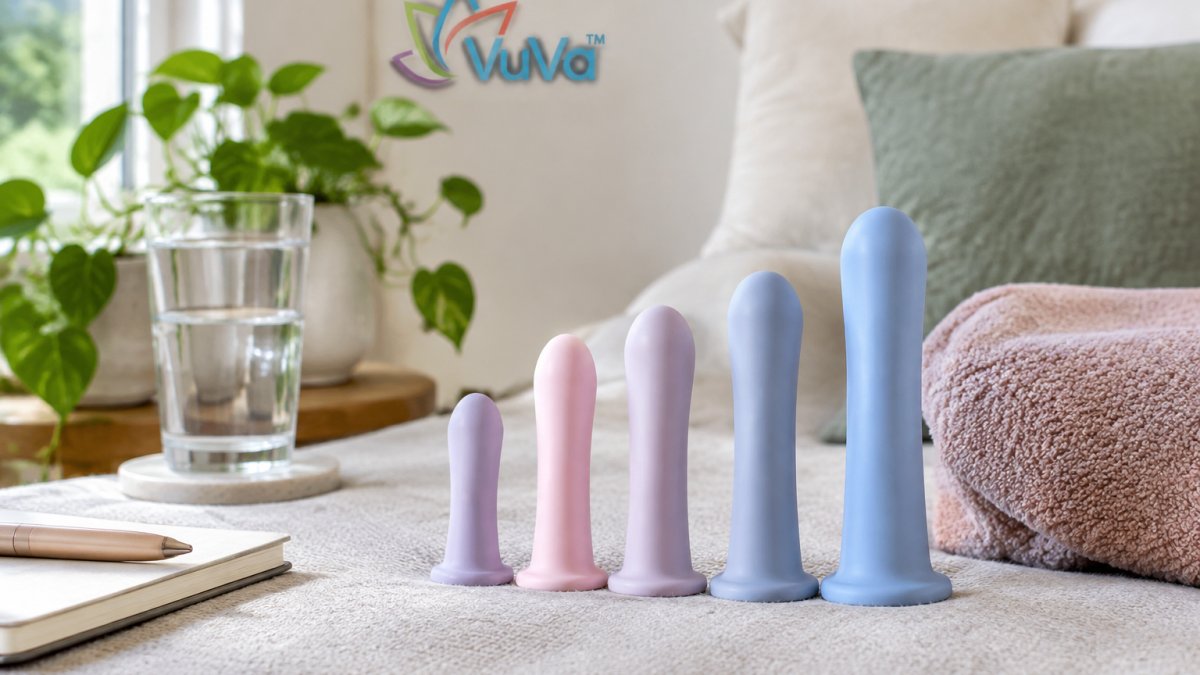
Last Updated: November 12, 2026
Quick Summary
Vaginal dilators may help some people with vaginal atrophy and painful intercourse by gently stretching the tissue over time, helping keep the vaginal canal flexible and comfortable. Dilators work mechanically and are not a replacement for hormone treatments or lubricants. Because painful penetration has several possible causes, a clinical assessment should come first.
- Vaginal atrophy is a common change in vaginal and vulvar tissue, most often linked to lower estrogen after menopause.
- Start with the smallest dilator size you can use comfortably and never force insertion.
- Stop if you feel sharp pain, heavy bleeding, burning, tearing, or symptoms that worsen over several days.
- Dilation is studied mainly in people receiving pelvic radiotherapy, so evidence for menopausal atrophy is less direct.
- Speak to your clinician before starting dilator therapy to check for infection, skin conditions, or pelvic floor tension.
Table of Contents
- Why Vaginal Atrophy Makes Penetration Painful
- How Vaginal Dilators Work for Atrophy
- How to Use a Vaginal Dilator Gently
- Best Dilators for Atrophy: Choosing Size, Material and Starting Point
- Side Effects of Using Dilators and When to Stop
- How Long Can You Leave an image of the purple wand: it is In?
- Talking to Your Clinician Before You Start Dilator Therapy
- Frequently Asked Questions
Why Vaginal Atrophy Makes Penetration Painful
Painful intercourse is one of the most common concerns women bring to their clinicians, and it is often hard to talk about. I'm Tara Langdale, founder of VuVatech and the inventor of VuVa. I know how isolating that pain can feel, and I want this guide to give you clear, careful information.
Vaginal atrophy, also called vulvovaginal atrophy (VVA), is one of several possible causes. It is a common change in the tissue of the vagina and vulva, most often linked to lower estrogen levels after menopause. The tissue can become thinner, drier, less elastic, and more fragile. A review of vaginal dilator therapy in pelvic cancer patients reports that VVA affects up to 84% of postmenopausal women, and it is more common among cancer survivors.
Painful penetration can also come from other causes, including involuntary pelvic floor tightening, vulvodynia, infections, and skin conditions. Because symptoms overlap, a symptom alone cannot tell you what is going on. That is why a clinical assessment matters.
Some readers find that understanding the basics of their own anatomy makes these conversations easier. For a plain-language overview of common reasons penetration feels difficult, see our guide on why it is hard to fit a penis in the vagina.
How Vaginal Dilators Work for Atrophy
A vaginal dilator is a smooth, graduated device inserted into the vagina to gently stretch the tissue over time. For atrophy, the goal is to maintain the length, flexibility, and comfort of the vaginal canal. Regular, gentle use helps keep the tissue accustomed to stretch.
A 2024 study on regular vaginal dilator use found that regular dilation was associated with a significantly lower five-year risk of vaginal stenosis in a clinical setting. Dilation is mainly studied in people receiving pelvic radiotherapy, so its use for menopausal atrophy is supported by less direct evidence.
Dilators work mechanically. They are not a replacement for hormone-based treatments or lubricants. Many clinicians discuss dilators alongside other options, such as vaginal estrogen, moisturizers, or pelvic floor physical therapy. For a non-dilator overview of managing atrophy, read our article on treating vaginal atrophy after menopause naturally.
VuVa Magnetic Dilators are one option in this category. Tara designed VuVa with patented, permanently enclosed neodymium magnets and progressive sizes. The magnetic design is a product feature.
How to Use a Vaginal Dilator Gently
Gentle use is the most important rule. Dilation should never cause sharp pain or force. With atrophy, the tissue is thinner and more fragile than it once was, so the pace that works for someone else may be too fast for you.

1. Set up before you start. Choose a quiet time when you are not rushed. Wash your hands, have your dilator and lubricant within reach, and decide in advance that you can stop at any point.
2. Find a position that lets you relax. Many people do best lying on their back with knees bent and feet flat, or on their side with the top knee drawn up. Sitting with one foot propped on a low stool is another option.
3. Use plenty of lubricant. Apply a generous amount of water-based lubricant to both the dilator and the vaginal opening. Find out which lubricants are safe with dilators before you choose one. Choose a water-based option such as Slippery Stuff Gel Personal Lubricant, and check that any lubricant is compatible with your dilator material.

4. Start with the smallest size you can use comfortably. Never push past discomfort. Hold the dilator at the vaginal opening and angle it gently toward the small of your back.
5. Insert slowly and stop if it hurts. Pause at the first sign of sharp pain, breathe, and reduce pressure. A mild stretch or pressure sensation is common; sharp pain is a signal to back off.
6. Keep sessions short at first. Many clinicians suggest only a few minutes at a time, then increasing gradually as you feel able.
7. Clean the device according to the manufacturer's instructions after each use, and store it somewhere clean and dry.
Watch out: if insertion causes burning, tearing, or a feeling of being blocked no matter how slowly you go, stop and talk to your clinician. That pattern can point to pelvic floor tension, a skin condition, or another cause that needs assessment rather than more stretching.
If you're not sure whether an image of the purple wand: it is suits your symptoms, speak to your clinician before starting. For a deeper look at beginning gently, our article on how to use an image of the purple wand: it is for the first time walks through a first session step by step.
Best Dilators for Atrophy: Choosing Size, Material and Starting Point
Choosing the right starting size matters more than choosing the most advanced device. Most people with atrophy do best starting small and progressing slowly.
Which VuVa Magnetic Dilator Set Should You Start With?
VuVa offers sets designed for different stages of progression:
- Sizes 1-4: A smaller beginner progression, useful if the vagina feels closed up or penetration causes significant anxiety. Size 1 has no magnet, even though it is sold within a magnetic set.
- Sizes 3-6: An intermediate progression for people who can already insert a tampon comfortably.
- Sizes 5-7: A larger progression for later stages of dilation.
- Full Set 1-7: The broadest range, covering the full progression.
Start with the smallest size you can use comfortably, and never force insertion. You can check [VuVa's dilator size charts | vuvatech.com] to compare dimensions. Our best-selling Full Magnetic Set covers the complete range, while the Sizes 1-4 set suits a gentler start.
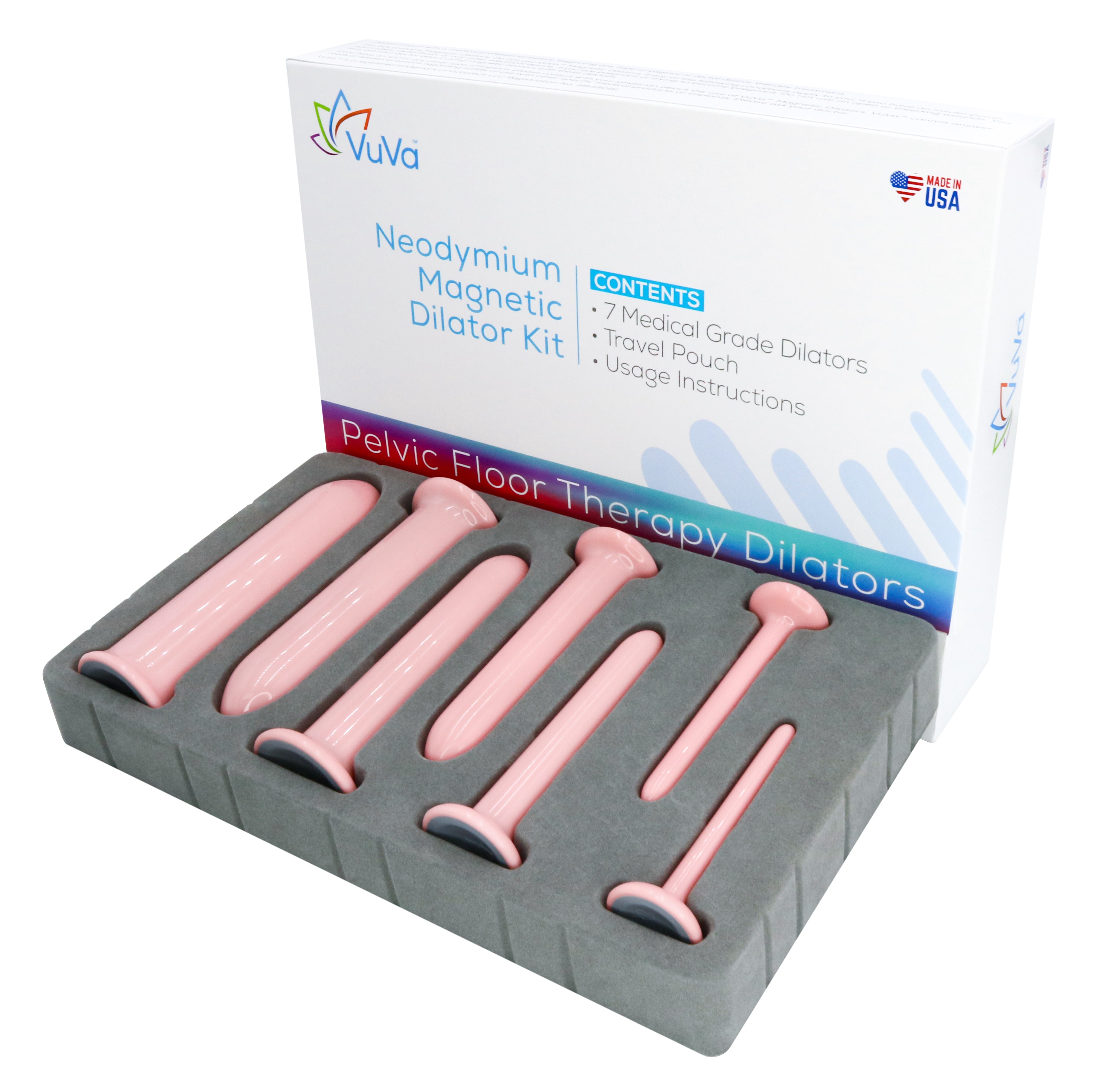
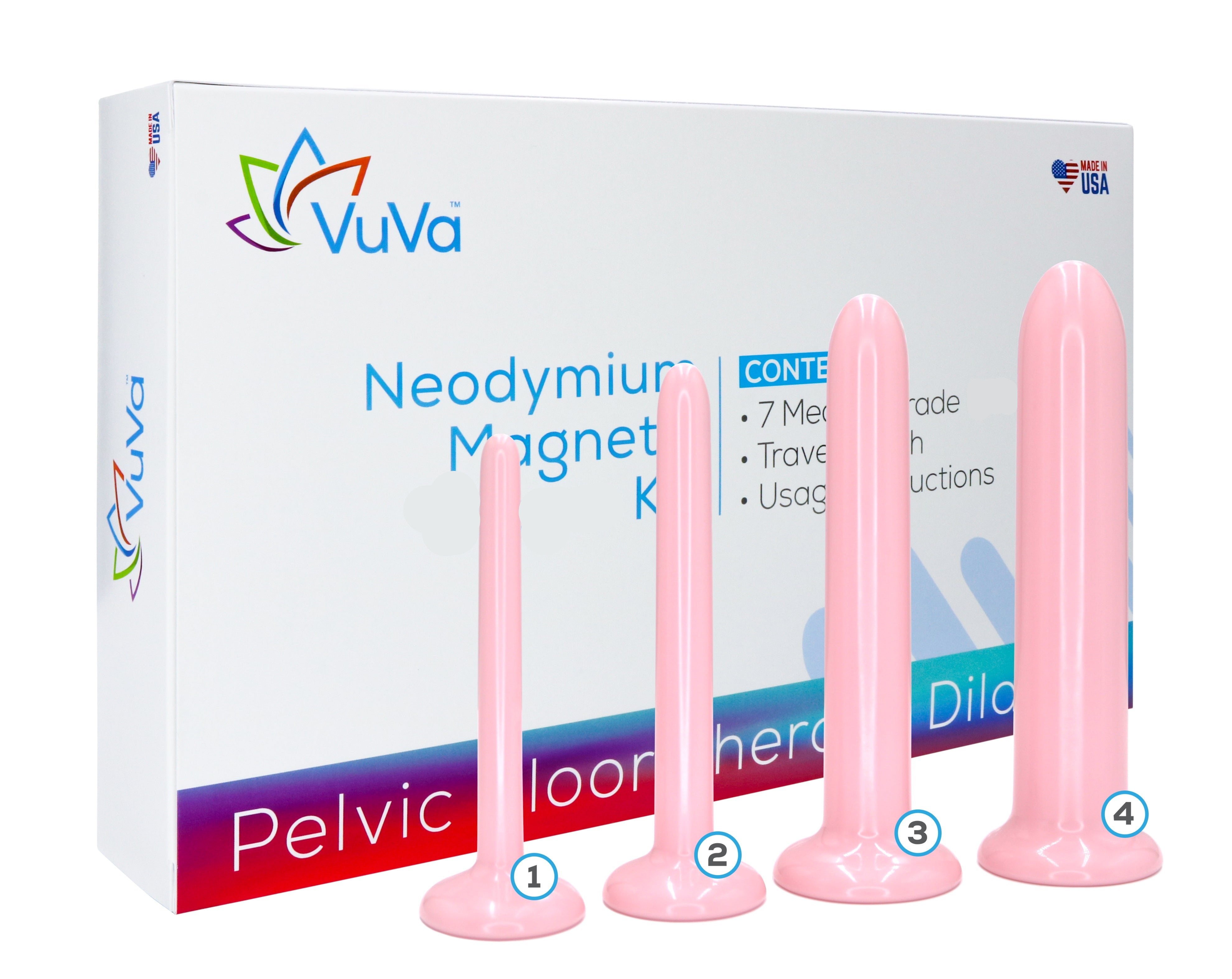
When you choose material, look for body-safe plastic that is easy to clean. Compare features and cleaning instructions before you buy.
The article points to a few practical choices that shape how you start, and they are easier to compare side by side.
| Set | Sizes | Best for |
|---|---|---|
| Sizes 1-4 | 1 to 4 | Smaller beginner progression |
| Sizes 3-6 | 3 to 6 | Intermediate progression |
| Sizes 5-7 | 5 to 7 | Larger progression |
| Full Set 1-7 | 1 to 7 | Broadest range |
Sizes
Side Effects of Using Dilators and When to Stop
Dilators should be used gently, and they can cause discomfort. With atrophy the tissue is more fragile than usual. That does not mean you should expect pain, it means the margin between a helpful stretch and an irritation is narrower, so it pays to know what is normal and what is not.
Mild tenderness or a temporary feeling of fullness after a session can happen, especially when you are starting a new size. It should settle within a short time and should not be sharp. A common pattern is a little awareness of the area for a few minutes, then nothing.
Stop and speak to your clinician if you notice:
- Sharp or increasing pain during or after use
- Bleeding that is more than light spotting
- Burning, tearing, or swelling that lasts
- Signs of infection, such as unusual discharge, odour, or itching
- Symptoms that worsen over several days
With atrophy, a small amount of light spotting can occasionally happen when tissue is very dry or thin, but any bleeding that is unexplained, heavier than spotting, or recurring should always be checked by a clinician.
It also helps to think about what else could be going on. Burning that appears after every session, itching, or a change in discharge may point to an infection or a skin condition rather than to dilation itself. If those symptoms are new, pause dilation and get assessed before restarting.
If you have an implanted electronic medical device, such as a pacemaker, check with your doctor before using any magnetic product.
A practical way to stay safe is to keep a short note of what you used, for how long, and how you felt afterward. That record makes a clinician conversation far more useful, and it helps you spot whether a symptom is tied to a particular size or technique.
How Long Can You Leave an image of the purple wand: it is In?
Dilators are usually used for short, timed sessions rather than left in place. Most guidance describes using an image of the purple wand: it is for a few minutes at a time, rather than leaving it in for long periods. Some clinicians suggest regular sessions across the week, but the schedule should be set by your clinician or pelvic health specialist.
Leaving a device in overnight is not something we recommend without clinician advice. Follow the instructions that come with your device and your care team's guidance. Research describing [low-dose, high-frequency movement-based dilator therapy | pmc.ncbi.nlm.nih.gov] has explored frequent, gentle sessions, but the evidence is limited.
Talking to Your Clinician Before You Start Dilator Therapy
A clinician can help work out whether dilation is appropriate. They can check for causes such as infection, skin conditions, or pelvic floor tension, and they may recommend pelvic floor physical therapy, lubricants, or prescribed treatment for menopausal changes.
Bring a list of your questions to the appointment. Useful ones include:
- What is causing my pain, and how do you know?
- Is dilator therapy suitable for me?
- What starting size should I use?
- How often should I practise, and for how long?
- What should I do if the pain increases?
Ongoing [clinical research on dilators alongside standard vulvovaginal atrophy treatment | clinicaltrials.gov] shows that researchers are still studying how dilators fit into care. Your clinician is the best guide for your situation.
If you decide dilators may help, you can explore VuVa Magnetic Dilator sets and find a comfortable starting size. Not sure where to start? Our size guide can help you choose.
About the author: Tara Langdale is the founder and inventor of VuVatech. She created VuVa in 2014 after experiencing vulvodynia and painful intimacy herself, and holds US Patent 9,687,274.
Frequently Asked Questions
Can vaginal dilators help with vaginal atrophy?
For some women, gentle and regular use of vaginal dilators can help keep the vaginal canal more comfortable during penetration, particularly when atrophy has narrowed or shortened the tissue. Research on dilator therapy in postmenopausal and pelvic-cancer populations has explored whether consistent use is associated with a lower risk of vaginal stenosis. Dilators do not treat the hormonal cause of atrophy, so many clinicians combine them with moisturizers, lubricants, or prescribed estrogen treatment. A clinician can help you decide whether dilation fits your situation.
Does it hurt to use an image of the purple wand: it is?
Using an image of the purple wand: it is should not cause sharp pain. Some pressure or mild stretching is normal, but pain, burning, or bleeding is a signal to stop, go slower, or check with your clinician. Starting with the smallest size you can use comfortably, adding plenty of water-based lubricant, and relaxing your breathing all help. Never force an image of the purple wand: it is in. Persistent or significant pain should be evaluated, because it can have causes that dilation alone will not address.
Are there side effects of using vaginal dilators?
The most common issues are mild discomfort, temporary spotting, or irritation, especially when tissue is already thin or sensitive. Side effects still matter for fragile tissue. Stop and contact a healthcare provider if you notice heavy bleeding, ongoing pain, signs of infection such as unusual discharge or odor, or sores that do not heal. Dilators should be cleaned as directed by the manufacturer between uses.
Should I see a doctor before using an image of the purple wand: it is for atrophy?
Yes. Painful intercourse and vaginal atrophy can have several causes, including menopause-related tissue changes, pelvic floor muscle tightening, vulvodynia, infections, and skin conditions. Some guidance recommends a professional assessment before dilator therapy so that the approach matches the actual cause. A gynecologist, pelvic floor physical therapist, or menopause specialist can confirm whether dilation is appropriate and whether other treatments, such as topical estrogen or moisturizers, should be used alongside it.


