



Table of Contents
- Understanding Vaginal Atrophy After Menopause
- Vaginal Atrophy Symptoms to Watch For
- Natural Remedies for Vaginal Dryness After Menopause
- Vaginal Moisturizers for Menopause: How to Choose and Use Them
- Lifestyle Habits That Support Vaginal Tissue Health
- When to See a Doctor for Vaginal Dryness
- Natural Care vs. Hormonal Treatment: Setting Realistic Expectations
- Frequently Asked Questions
Last Updated: October 17, 2026
Understanding Vaginal Atrophy After Menopause
Vaginal atrophy is the thinning, drying and inflammation of the vaginal walls that occurs when estrogen levels fall, and it affects the majority of postmenopausal women. Research published through the AGATA study on postmenopausal vaginal atrophy found prevalence between 65% and 84% among women one to six years after menopause, with vaginal dryness the most common finding. At VuVatech, we hear from women who assumed this was simply something to endure.
The condition sits under a broader clinical umbrella, genitourinary syndrome of menopause, because low estrogen affects the urinary tract as well as the vagina. Tissue becomes thinner, less elastic and less able to produce natural moisture. That single hormonal change explains most of the symptoms below.
Vaginal Atrophy Symptoms to Watch For
Vaginal atrophy symptoms typically include dryness, burning, irritation, itching and soreness, plus pain during intercourse. Many women notice several at once rather than a single complaint, and severity varies widely from mild discomfort to pain that interferes with daily life.
Urinary and Intimacy-Related Signs
Because estrogen receptors line the urethra as well as the vagina, urinary symptoms often travel alongside dryness. Watch for urgency, frequent urinary tract infections and discomfort when urinating. On the intimacy side, dyspareunia (painful intercourse) is one of the most reported complaints, and it frequently starts as a lubrication problem before becoming a tissue-sensitivity problem. Left unaddressed, both tend to worsen rather than settle.
Natural Remedies for Vaginal Dryness After Menopause
Natural remedies for vaginal dryness after menopause range from plant-derived topical options to dietary and lifestyle measures, but the evidence behind them varies enormously. A 2020 review by F. R. Fakari and coauthors, published via PubMed Central's review of pharmacological treatments for vaginal atrophy, examined options including licorice, chamomile, royal jelly, vitamins E and D, and hyaluronic acid. It did not establish that most of these are effective.
Grading the Evidence Behind Each Remedy
| Remedy | Evidence Strength | What It May Help | Key Caveat |
|---|---|---|---|
| Vaginal moisturizers | Moderate | Ongoing dryness, tissue hydration | Manage symptoms, not cause |
| Water/silicone lubricants | Moderate | Painful intercourse | Short-term comfort only |
| Hyaluronic acid | Emerging | Dryness, tissue comfort | Smaller evidence base |
| Vitamin E / D | Limited | General tissue support | Weak comparative data |
| Phytoestrogens, isoflavones | Limited | Uncertain | Not proven for atrophy |
| Herbal remedies (licorice, chamomile) | Limited | Uncertain | Little outcome data |
One often-cited study, published in PubMed Central's research on PM extract and vaginal atrophy, involved postmenopausal cynomolgus monkeys, not people. That matters when you are deciding what to try.
Safety and Ingredient Checks Before You Try Anything
Most guidance on natural remedies stops at naming them. The part that actually protects you is knowing what not to put in your body and when to ask a clinician first.
- Read the full ingredient list, not the front label. "Natural" and "herbal" are marketing terms, not safety guarantees. Fragrance, essential oils, glycerin in high concentrations, and preservatives such as parabens are common irritants for already-thinned tissue.
- Do not insert anything vaginally that is not labeled for internal use. Products sold as massage oils, bath products, or skin creams may contain ingredients that are fine on the vulva but irritating inside the vagina.
- Patch test first. Apply a small amount to the inner wrist or outer thigh and wait 24 hours before using internally, especially if you have sensitive skin or a history of contact dermatitis.
A practical rule: give a well-formulated nonhormonal moisturizer or lubricant a fair four-week trial, keep a simple symptom note, and bring that note to a clinician if you are not improving. That turns a vague experiment into information someone can act on.
Vaginal Moisturizers for Menopause: How to Choose and Use Them
Vaginal moisturizers for menopause are nonhormonal products used on a regular schedule, typically two to three times per week, to support tissue hydration rather than to lubricate a single sexual encounter. Ohio State Health's guidance on nonhormonal moisturizers describes this routine use, while Mayo Clinic's vaginal atrophy treatment overview also recommends water- or silicone-based lubricants for intercourse.
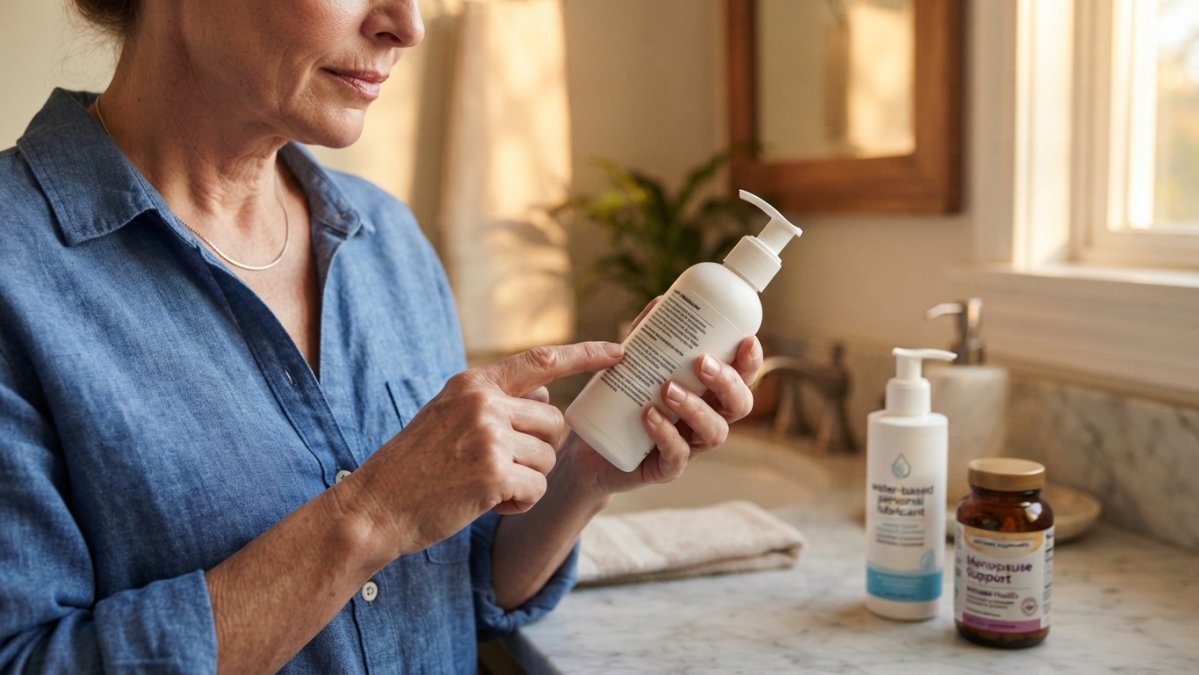
Choosing well comes down to a short checklist:
- Check the ingredient list for parabens, glycerin and added fragrance if your tissue is sensitive
- Match the product to the job: moisturizer for daily comfort, lubricant for sex
- Choose water-based lubricant with dilators or silicone toys; silicone-based lasts longer
- Patch test on the inner wrist first if you react easily
For a water-based option, our 2oz Slippery Stuff Gel Personal Lubricant and 4oz Slippery Stuff Gel Personal Lubricant are odorless, non-staining, water-based, and water-soluble.


Lifestyle Habits That Support Vaginal Tissue Health
Lifestyle measures are widely discussed as natural approaches, though the supplied research does not quantify their effectiveness. Healthline's overview of natural treatments for vaginal atrophy lists lubricants, exercise and regular sexual activity; Medical News Today's review of vaginal atrophy remedies adds quitting smoking and staying hydrated.
What we would prioritize:
4oz Slippery Stuff Gel Personal Lubricant →
- Stay sexually or dilator active. Regular gentle activity supports blood flow to vaginal tissue.
- Stop smoking. Smoking constricts circulation, and circulation is what keeps tissue healthy.
- Hydrate and eat whole foods. Fruits, vegetables and adequate water intake support tissue hydration from the inside.
- Avoid harsh soaps and scented washes. They strip what little natural moisture remains.
When to See a Doctor for Vaginal Dryness
See a doctor for vaginal dryness when symptoms persist despite consistent moisturizer and lubricant use, when you have bleeding, or when pain interferes with sex or daily life. Recurrent urinary tract infections and any new discharge also warrant assessment.
A Symptom-Based Guide to Your Next Step
Symptoms vary, and so does the right response. Use this as a rough map, not a diagnosis:
- Mild, occasional dryness with no pain. Start with a nonhormonal moisturizer used two to three times per week and a lubricant for sex. Reassess at four weeks. If you are comfortable, continue and monitor.
- Persistent dryness or discomfort despite four to six weeks of consistent moisturizer use. This is the point to book a clinician visit. Bring your symptom note and the products you tried.
- Pain during sex that limits intimacy. Try a water- or silicone-based lubricant first, and consider gentle dilator use if tightness is part of the picture. If pain persists or is sharp rather than a friction sensation, get assessed.
- Burning, itching, or irritation that worsens with a new product. Stop the product. If it does not settle within a few days, see a clinician to rule out infection or contact dermatitis.
Why Urinary Symptoms Deserve Their Own Attention
Because estrogen receptors line the urethra as well as the vaginal walls, genitourinary symptoms of menopause often include urinary urgency, frequency, and a higher rate of urinary tract infections alongside dryness. The overlap matters: symptoms that look like a UTI may be tissue irritation from atrophy, and symptoms that look like atrophy may be an infection that needs treatment. If you have burning with urination plus urinary frequency, a urine test is a reasonable first step.
What to Bring to the Appointment
Diagnosis is usually straightforward: your clinician takes a history, performs an examination, and may test vaginal pH or take a swab to rule out infection. Bring a list of what you have tried and for how long. That single step saves appointments. If you are considering any product for internal use, ask your gynecologist first, particularly if you have a history of hormone-sensitive cancer.
Natural Care vs. Hormonal Treatment: Setting Realistic Expectations
Natural approaches can ease symptoms, but they do not correct the underlying estrogen deficiency, and that gap matters. The Menopause Charity's explanation of vaginal dryness notes that symptoms stem from a lack of estrogen and that applying estrogen directly to the affected area is a very effective solution. A review in PubMed Central on current treatment options for postmenopausal vaginal atrophy reported local therapy eliminating symptoms in 80% to 90% of cases, against 75% for systemic hormone replacement therapy.
So where does that leave nonhormonal care? For women also managing pelvic tension or recovering from pelvic radiation, gentle home-based tools such as our patented Neodymium magnetic dilator sets and our Feminine Moisture Support supplement, which uses omega-7 sea buckthorn oil, can sit alongside that plan.

Vaginal atrophy after menopause is common, treatable and worth raising with someone who can help. If dryness and tissue discomfort are part of your daily routine, start with nonhormonal support you can use consistently at home, and bring your clinician into the conversation early.
Frequently Asked Questions
Can vaginal atrophy after menopause improve naturally?
Some symptoms can ease with consistent self-care, but natural approaches rarely reverse the underlying low estrogen that causes vaginal atrophy. Nonhormonal moisturizers used two to three times a week and water- or silicone-based lubricants can reduce dryness and discomfort during intercourse, according to Ohio State Health and Mayo Clinic guidance. Lifestyle measures such as staying hydrated, quitting smoking, and regular sexual activity are commonly recommended, though the research supplied does not quantify their effectiveness. If symptoms persist or worsen, a healthcare professional can discuss local estrogen, which a 2018 review found eliminated symptoms in 80% to 90% of cases.
What natural remedies may help with vaginal dryness after menopause?
A 2020 review listed licorice, chamomile, royal jelly, vitamins E and D, and hyaluronic acid among options discussed for vaginal atrophy, but it did not provide comparative results or confirm that these are effective natural treatments. Sea buckthorn oil has some supporting data: a study of 116 menopausal women found better improvement in vaginal epithelium integrity with regular use, with effects observed within months. The evidence base for most herbal remedies remains limited, so treat any single remedy as supportive rather than a replacement for assessed treatment.
Are vaginal moisturizers and lubricants the same thing?
No. Moisturizers are used on a regular schedule, typically two to three times per week, to hydrate vaginal tissue and ease ongoing dryness. Lubricants are used at the time of sexual activity to reduce friction and discomfort. Mayo Clinic recommends water- or silicone-based lubricants, and many people use both products together. If you have sensitive skin, check ingredients and avoid products with added fragrances or warming agents. A water-based gel lubricant is a practical starting point.
Can vaginal atrophy cause pain during sex or urinary symptoms?
Yes. Thinning, less elastic vaginal tissue can make intercourse painful, a symptom clinicians call dyspareunia. The AGATA study, which reported vaginal atrophy prevalence of 65% to 84% among women one to six years after menopause, identified vaginal dryness as the most common finding. Urinary symptoms such as urgency, frequency, or recurrent infections can also occur because the same low-estrogen changes affect the urinary tract. Report urinary symptoms to a healthcare professional, since recurrent infections need proper assessment rather than self-treatment alone.
When should I see a healthcare professional about vaginal dryness?
Book an appointment if dryness does not improve after several weeks of regular moisturizer use, if intercourse remains painful, if you notice bleeding, or if you have urinary symptoms such as burning or recurring infections. A clinician can confirm the diagnosis and rule out other conditions. The Menopause Charity notes that symptoms stem from a lack of estrogen and that applying estrogen directly to the affected area is a very effective option. Bring a symptom log to the visit so your doctor can judge severity and response to treatment.


