



Last Updated: November 13, 2026
Quick Summary
A P2 dilator is simply the second size in a graduated dilator set, a step slightly wider than the first size, used only after the smallest size feels comfortable. It is not a diagnosis, a grade, or a measure of severity. Progression is best guided by comfort rather than by calendar date.
- P2 has no single medical meaning; in urology, P2 refers to a pressure measurement during a urodynamic study.
- P1 is the size you can use comfortably today, P2 is the next step, and P3 is further out.
- Signs you are ready for P2 include easy insertion at P1, no soreness the next day, and feeling calm rather than braced.
- Size 1 contains no magnet, even when it ships inside a magnetic set; the magnetic sizes begin at Size 2.
- Pause and speak to a clinician if you notice unexplained bleeding, signs of infection, or sharp pain that persists.
Table of Contents
- What P2 Means in Vaginal Dilation
- The P2 Medical Meaning Behind the Label
- How P1 P2 P3 Priority Levels Work in a Dilation Plan
- P2 UDS Protocol and Why the Same Term Means Something Else in Urology
- Signs Your Body Is Ready to Move From P1 to P2
- Which VuVa Magnetic Dilator Set Should You Start With?
- When to Pause and Talk to a Clinician
- Choosing Your Starting Size With Confidence
- Frequently Asked Questions
What P2 Means in Vaginal Dilation
If you have ever opened an image of the purple wand: it is set and felt your stomach drop at the rows of numbered sizes, you are not alone.
Gradual, repeated dilation is generally described as a way to give tissue time to adapt, which is why many routines move up one size at a time rather than jumping ahead. If you are new to this, our size guide shows the full range side by side.
Why Dilation Uses Numbered Sizes at All
Numbered sizes turn a vague goal ("insertion should hurt less") into something you can measure. Each number adds a small, predictable increment in width, so you can stay at one size until it is genuinely comfortable and then move up one step. That is the whole system. Progression is best guided by comfort rather than by calendar date.

The P2 Medical Meaning Behind the Label
Here is where the confusion starts, and it is worth clearing up early. P2 has no single medical meaning. In dilation, "P2" is shorthand for the second size in a progression. In urology, P2 refers to a specific pressure measurement during a urodynamic study. In product development, P1, P2 and P3 are priority levels.
So when you see P2 on an image of the purple wand: it is chart, read it as "size two," nothing more. It does not mean second stage, second attempt, or a more advanced condition.
How P1 P2 P3 Priority Levels Work in a Dilation Plan
A dilation plan borrows the same logic product teams use for P1, P2 and P3 priority levels: rank tasks by what matters most right now, then work through them in order. In your plan, P1 is the size you can use comfortably today. P2 is the next step, and P3 is further out. You do not skip a level because you are impatient.
What most guides miss is that a dilation plan is not a straight line. Some weeks you stay at P1 longer than expected, and that is not failure. It is information. A slower pace at one width is a normal part of a careful routine.
What P1, P2 and P3 Actually Mean as a Framework
In product and project work, a P1/P2/P3 ranking is a triage system: P1 items are the ones you must handle now because they block everything else, P2 items are important but can wait behind P1, and P3 items are nice-to-have or future work. The value of the system is not the labels, it is that it forces a decision about order instead of letting everything compete at once.
Applied to dilation, the same triage works like this:
- P1, the current size. This is the width you can insert with gentle pressure, leave in for your routine's duration, and recover from without lingering soreness. It is your baseline, and it stays P1 until it is genuinely easy.
- P2, the next width up. This is the size you are working toward, not the size you force today. It becomes P1 only when the current size is consistently comfortable.
- P3, everything beyond. Larger sizes, longer sessions, or new positions are future work. They are not failures to reach; they are simply not on the table yet.
A Concrete Example of Ranking Your Own Steps
Suppose you are at Size 1 and it still stings at the opening.
Watch out: the most common ranking error is promoting P2 to P1 because a calendar says so. A date is not a readiness signal.
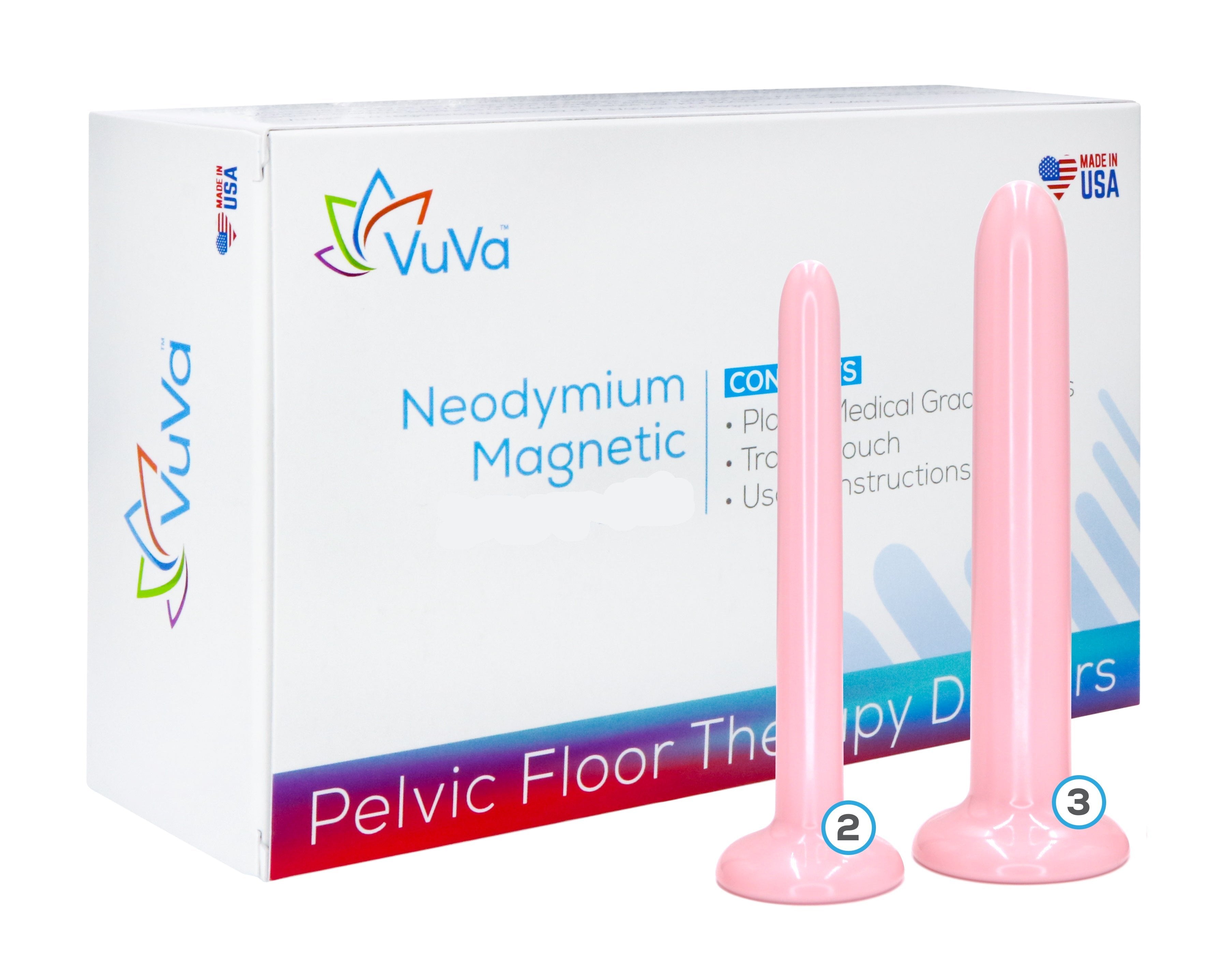
If you are mapping out the next step, the Size 2 & 3 magnetic combo set covers the transition from P1 into P2 and P3 in one purchase, so you have both widths on hand when readiness arrives rather than ordering mid-progression.
P2 UDS Protocol and Why the Same Term Means Something Else in Urology
In urology, the P2 UDS protocol refers to a pressure reading taken during a urodynamic study (UDS), a test that measures how your bladder and urethra behave while filling and emptying. The "P2" there describes a pressure value recorded by a catheter-based sensor, not an image of the purple wand: it is size.
Why mention it at all? Because search results mix the two constantly, and Readers often ask whether a urology P2 finding relates to dilator size. It does not. If your clinician mentions P2 in a urodynamic report, ask them to explain what that measurement means for you specifically.
How a Urodynamic Study Produces a P2 Reading
A urodynamic study typically involves a small catheter in the bladder and another in the rectum or vagina, plus surface sensors, while your bladder is filled with sterile fluid.
That is the key difference from an image of the purple wand: it is chart. An image of the purple wand: it is P2 is a width in a progression you control. A urodynamic P2 is a measurement your clinician interprets against your symptoms, your voiding diary, and the rest of the tracing.
How to Tell Which P2 You Are Looking At
A short chooser helps here, because the same two characters appear in unrelated fields:
- On an image of the purple wand: it is box or size chart: P2 means the second size in a graduated set, a width, nothing more.
- In a urodynamic or cystometry report: P2 is a pressure channel or measurement point, reported in pressure units.
- In a product roadmap or bug tracker: P2 is a priority tier, usually "important but not urgent."
- In an automotive or HVAC diagnostic code: P2 is part of an alphanumeric fault code, read with a scan tool or the manufacturer's code list.
- In environmental or manufacturing documentation: P2 often abbreviates pollution prevention or a phase-two process step.
If you are holding a physical object, it is almost certainly the size meaning. If you are reading a clinical report, a code scanner, or a planning document, it is one of the others.
Watch out: do not assume a P2 in a medical report and a P2 on an image of the purple wand: it is chart describe the same thing just because the letters match. They come from different systems and are not interchangeable.
If your reason for searching P2 is painful insertion or tightness rather than a urology report, the dilation meaning is the one you want, and the sections below walk through readiness and sizing.
Signs Your Body Is Ready to Move From P1 to P2
Readiness is not about how many days have passed. It is about how the smallest size feels. The clearest sign is that P1 now goes in without hesitation, stays comfortable, and produces no lingering soreness afterward. If you are still bracing, or if insertion at P1 still stings, stay there.
A few practical signals that you are ready for the next size:
- P1 inserts easily with gentle pressure and no holding of breath
- You can leave P1 in place for the full time in your routine without discomfort
- No burning or soreness the following day
- You feel calm rather than braced before starting
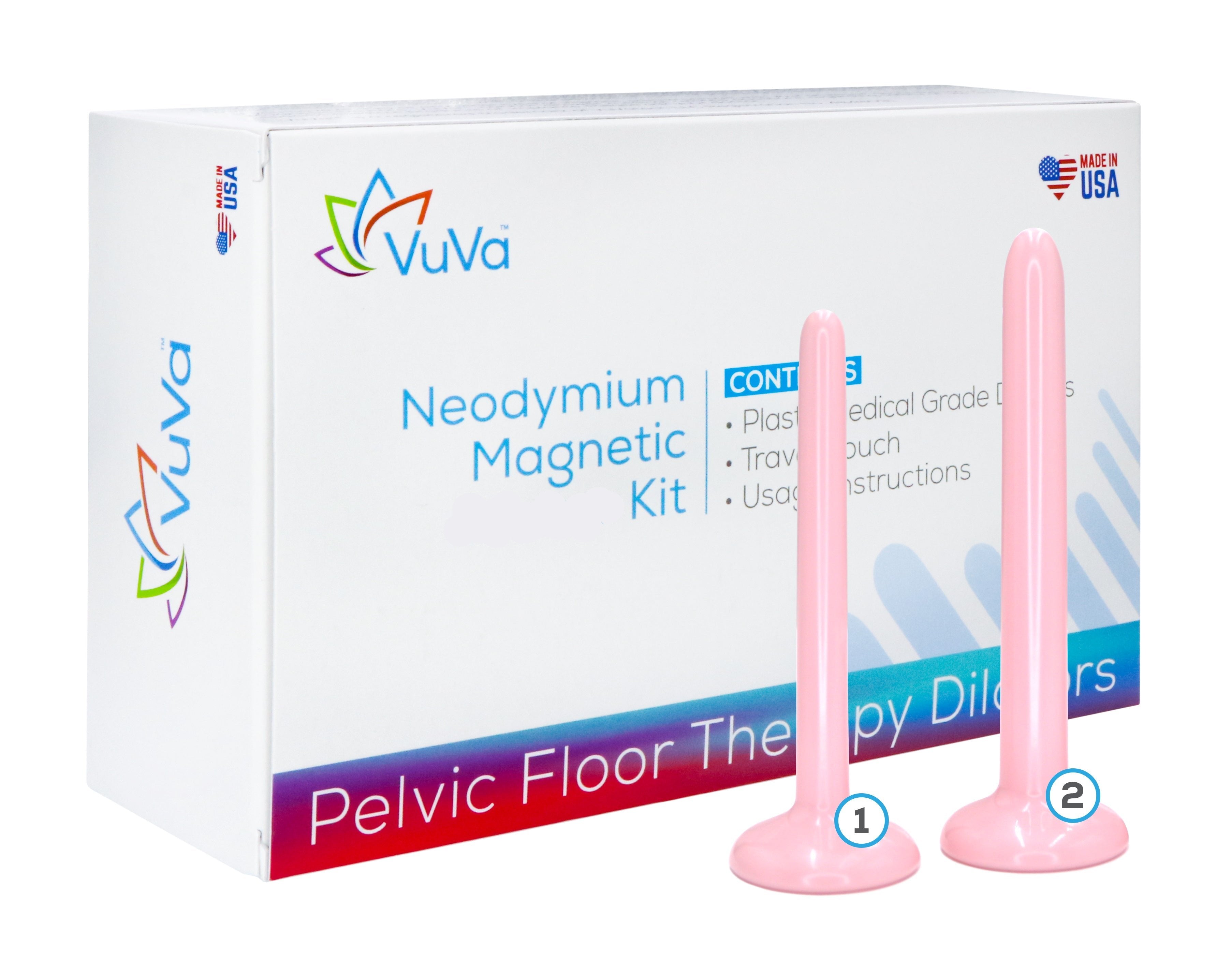
When those are true consistently, try P2 once, slowly, and stop if it hurts. The Size 1 & 2 magnetic combo set is designed for exactly this transition, so you have both widths on hand.
Which VuVa Magnetic Dilator Set Should You Start With?
Start with the smallest size you can use comfortably, and choose the set that covers your next two or three steps rather than the whole ladder. Our sets break down like this: Sizes 1 to 4 form the smaller beginner progression, 3 to 6 the intermediate range, 5 to 7 the larger progression, and the Full Set 1 to 7 gives the broadest range if you would rather not buy twice.
One detail matters here. Size 1 contains no magnet, even when it ships inside a magnetic set. The magnetic sizes begin at Size 2. Never force insertion, and never move up a size to "catch up." Our full size chart and the magnetic dilator collection let you compare widths before deciding.
When to Pause and Talk to a Clinician
Dilation is one part of care, not a replacement for it. Pause and speak to a clinician if you notice unexplained bleeding, signs of infection such as unusual discharge or fever, sharp pain that persists after you stop, or irritation that does not settle.
Painful insertion has many possible causes, including genitourinary syndrome of menopause, involuntary pelvic floor tightening, vulvodynia, infection, and skin conditions. A symptom alone cannot tell you which one applies. Professional guidance on pelvic pain generally points to clinical assessment as the starting point.
One product precaution: if you have an implanted electronic medical device, speak with your clinician before using a magnetic product.
Choosing Your Starting Size With Confidence
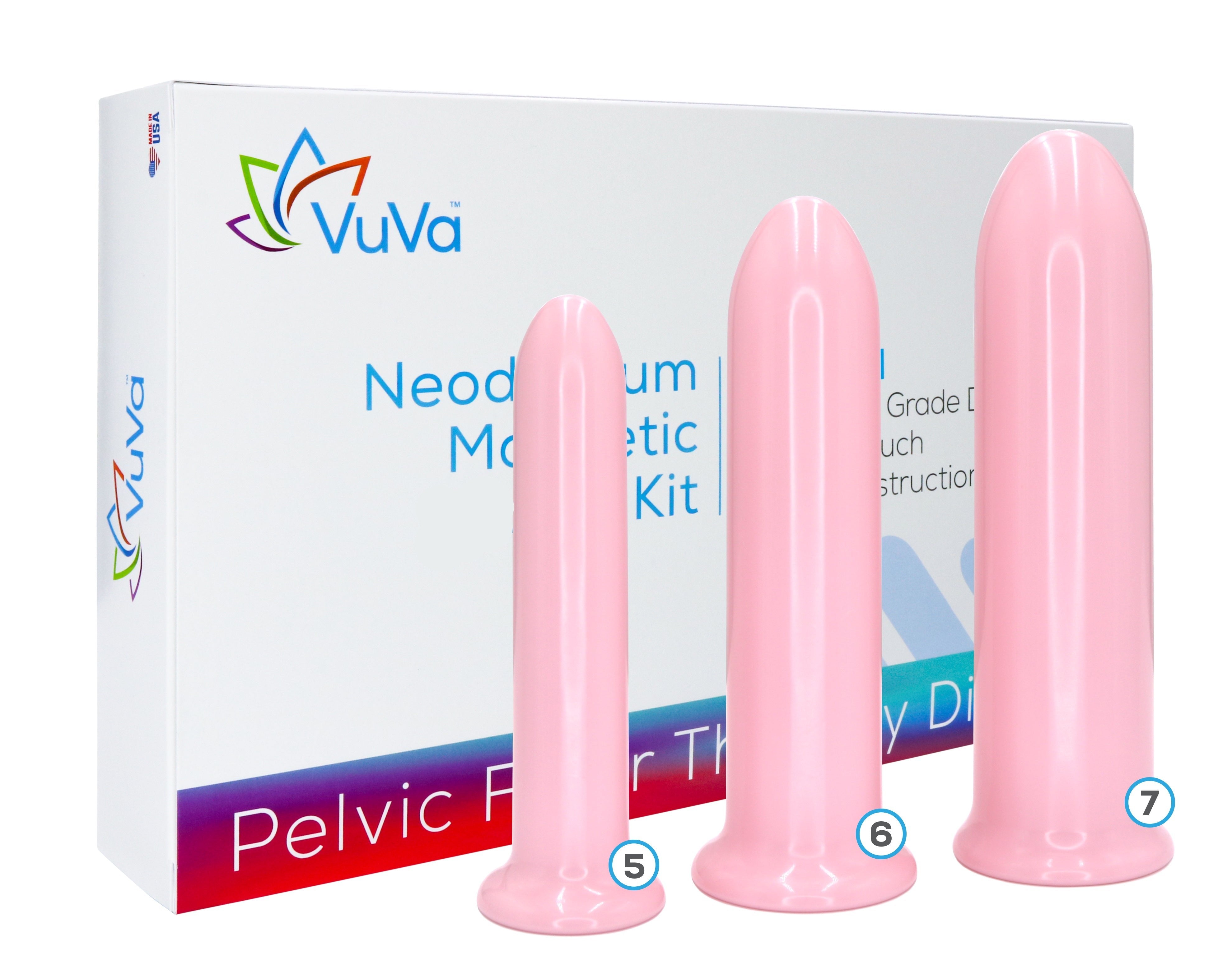
The question I hear most is some version of "what if I buy the wrong size?" The honest answer is that the right starting size is the one that feels manageable today, not the one that matches a goal. You can always add a larger set later, and the Size 5, 6 and 7 set is there when your progression reaches that range.
Confidence comes from a plan you can adjust, not from getting it right the first time. Give each size real time. Track how insertion feels rather than how fast you are moving. That is the whole method, and it works because it respects tissue that needs patience.
Not sure where to start? Explore VuVa Magnetic Dilator sets and find a comfortable starting size.
Painful insertion is isolating, and I know how much courage it takes to begin.
Frequently Asked Questions
What does P2 stand for?
P2 is shorthand for the second step in a numbered dilation progression. In an image of the purple wand: it is set, P1 is the smallest size, P2 is the next step up, and P3 continues from there. The label is not a diagnosis or a medical grade. It simply tells you where a size sits relative to the others in the same set, so you can track progress over weeks rather than guessing by eye.
What is the P2 medical meaning in pelvic care?
In pelvic care, the P2 medical meaning is a staging label for the second dilator in a graduated series, not a clinical diagnosis. It matters because moving up in a paced way is generally recommended, and comfort rather than the calendar should guide each step. Staying at P2 until insertion feels easy, unhurried and free of sharp pain is safer than pushing to the next size on a calendar.
What does P2 mean in the UDS protocol?
In the P2 UDS protocol, P2 refers to a pressure reading taken during a urodynamic study, a bladder function test run by a clinician. That P2 has nothing to do with dilator sizes. The overlap in naming confuses people searching for dilation guidance, so check whether the source is talking about urology testing or pelvic floor dilation before applying the advice.
Do I need the full set or can I start with P2 alone?
Many people find it helpful to begin with the smallest size they can use comfortably. VuVa sets group as 1-4 for a smaller beginner progression, 3-6 as intermediate, and 5-7 for a larger progression, with the full 1-7 set offering the widest range. Begin with the smallest size you can use comfortably and never force insertion. Size 1 contains no magnet, even inside a magnetic set.


