


Last Updated: October 23, 2026
Quick Summary
Whether vaginismus treatment is covered by insurance depends on your specific plan, not the condition itself. Pelvic floor physical therapy is often covered in part, while dilators are sometimes billed as durable medical equipment that many plans exclude. Ask your insurer about each treatment separately.
- Coverage is plan-specific, so two women with different plans can get very different answers.
- Most plans require a diagnosis code, and many require a referral before physical therapy.
- A letter of medical necessity should state your diagnosis and why dilator therapy is needed.
- Call your insurer before buying dilators, since many plans require pre-authorization for DME.
- If denied, ask your provider to resubmit and file a formal appeal within your plan's deadline.
Table of Contents
- Why Vaginismus Treatment Coverage Is So Confusing
- What Vaginismus Treatment Actually Involves
- Insurance Coverage for Pelvic Floor Physical Therapy
- Will Insurance Cover Vaginal Dilators?
- Questions to Ask Insurance About Pelvic Floor Therapy
- Denied? How to Appeal and What to Do Next
- How I Choose My Magnetic Set (and How You Can Too)
- Conclusion
- References & Further Reading
- Frequently Asked Questions
Why Vaginismus Treatment Coverage Is So Confusing
I created VuVa because I understood what it felt like to struggle with intimacy, and one question women frequently ask me is whether vaginismus treatment is covered by insurance. The honest answer: it depends on your plan. Insurance coverage for vaginismus treatment is not uniform.
That is frustrating, but it helps to know why. Vaginismus is a pelvic floor condition, and care can involve physical therapy, dilator therapy, or psychological support. Each one may be billed differently. A Cochrane review of vaginismus interventions notes that proposed treatments include sex therapy and desensitisation, which means the billing picture is rarely simple.
Below, I'll walk you through what each treatment involves, what to ask your insurer, and what to do if a claim is denied.
What Vaginismus Treatment Actually Involves
Vaginismus treatment is usually a mix of approaches, not a single fix. A 2025 systematic review indexed on PubMed's vaginismus treatment meta-analysis reports pooled therapeutic success rates of 86% for combined psychosexual interventions and 82% for CBT. That is a hopeful number, and it shows why treatment often combines several methods.
If you want a plain-language walkthrough of the at-home side, our guide to vaginismus treatment options at home covers it in more detail.
Pelvic floor physical therapy
A pelvic floor physical therapist teaches you to relax and control tight muscles. This is often a first-line, non-surgical option. Sessions are usually billed as physical therapy, which many plans partially cover.
Dilator therapy and other at-home care
Dilators support a gradual stretching routine at home. Some plans cover dilators as durable medical equipment, but many do not. We have a step-by-step guide on how to use pelvic dilators for vaginismus if you are starting out.
Insurance Coverage for Pelvic Floor Physical Therapy
Insurance coverage for pelvic floor physical therapy is more common than coverage for dilators, but it still comes with conditions. Most plans require a diagnosis code from your provider, and many require a referral first.
Here is what to check before your first appointment:
- Is the therapist in-network?
- Does the plan require a referral from your gynecologist?
- How many visits per year are covered?
- What is your deductible and copay?
If you are unsure what happens at the appointment itself, it helps to know what to expect at your pelvic floor therapy appointment before you commit.
VuVa Full Magnetic Set - Best Seller →
Will Insurance Cover Vaginal Dilators?
Will insurance cover vaginal dilators? Sometimes, but less often than physical therapy. This is the question I hear most often from women who have already been quoted a dilator routine by their provider and are now staring at the bill.
Here is the practical picture, treatment by treatment, because "vaginismus treatment" is not one line item on a claim.
- Pelvic floor physical therapy. Usually billed as physical therapy with a diagnosis code for vaginismus or pelvic floor dysfunction. Many plans cover it in part, often subject to visit limits and a referral.
- Dilator therapy. Sometimes classified as durable medical equipment (DME) when a provider documents medical necessity. Many plans exclude DME for this purpose or require it through a specific DME supplier.
- Specialist visits (gynecology, urogynecology, pelvic pain). Typically covered as specialist visits, subject to your copay or coinsurance and deductible.
- Medication. Coverage depends on your plan's formulary and whether the prescribed drug is on it.
- Procedures (for example, treatment performed under anesthesia). These usually require prior authorization and a medical necessity review.
A common pattern is that the same plan will cover the physical therapy visit but deny the dilators, because the two are processed under different benefit categories. That is why I tell women to ask about each item separately rather than asking "is vaginismus treatment covered?" as one question.
If dilators are covered, the paperwork is what decides it. A letter of medical necessity from your provider should state your diagnosis, describe the dilator therapy as part of your treatment plan, and explain why it is medically necessary for you. Vague letters get denied.
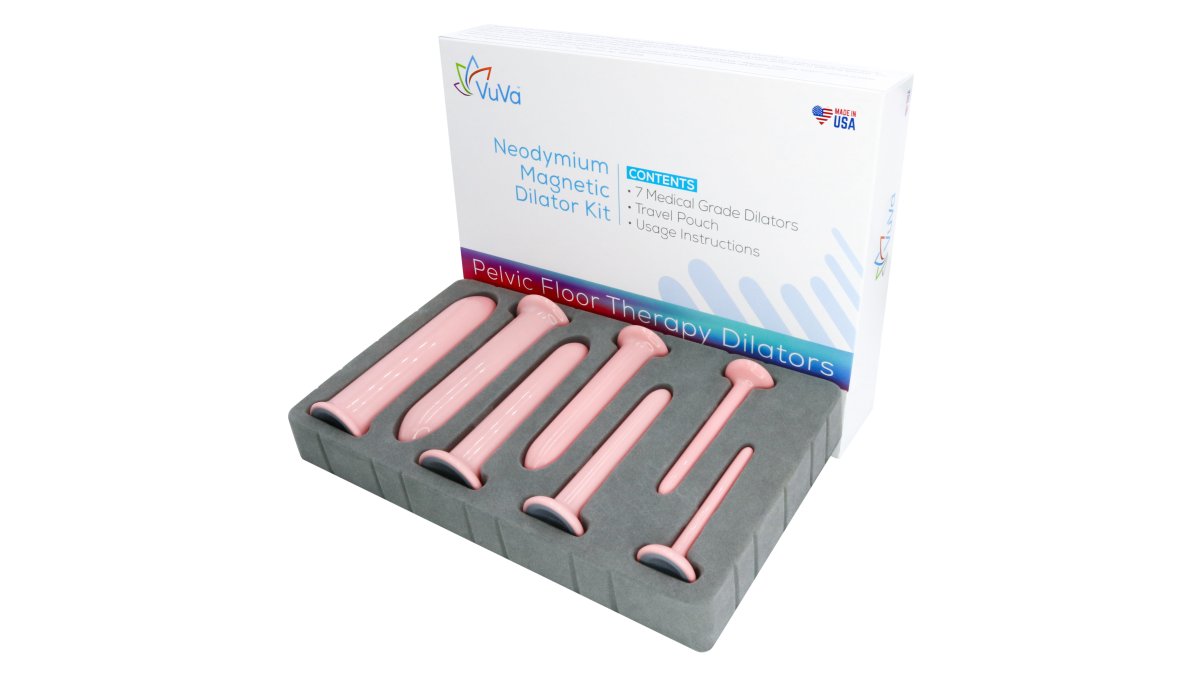
One thing I have learned from talking with women over the years is that the type of dilator rarely changes the coverage decision, but it does change your experience of the routine. VuVa Magnetic Dilators feature our patented neodymium magnet technology, setting them apart from traditional non-magnetic dilators. Both support a gradual stretching routine; the difference is the integrated, permanently enclosed neodymium magnets in our design. I want to be clear that this is a design difference. If you are weighing options while you sort out coverage, you can explore the VuVa Magnetic Dilator collection and see the sizes for yourself.
Here is how each part of vaginismus treatment is typically billed and covered.
| Treatment | How it is billed | Typical coverage |
|---|---|---|
| Pelvic floor physical therapy | Physical therapy with a diagnosis code | Many plans cover in part; visit limits and referral may apply |
| Dilator therapy | Sometimes durable medical equipment (DME) | Many plans exclude DME for this purpose |
| Specialist visits | Specialist visit | Typically covered, subject to copay, coinsurance, deductible |
| Medication | Plan formulary | Depends on whether the drug is on the formulary |
| Procedures under anesthesia | Procedure with prior authorization | Usually requires prior authorization and medical necessity review |
Questions to Ask Insurance About Pelvic Floor Therapy
Before you call, have these ready: your member ID, your plan name, the provider's name and NPI if you have it, and the specific treatment your provider recommended.
Ask these, one treatment at a time:
- Is pelvic floor physical therapy a covered service under my plan, and is it subject to visit limits?
- Do I need a referral from my gynecologist or primary care provider before the first visit?
- Does this service require prior authorization, and who submits it, me or the provider?
- Which diagnosis codes does my plan accept for vaginismus or pelvic floor dysfunction?
- Are vaginal dilators covered, and under which benefit category (DME, pharmacy, or excluded)?
- Is the therapist in-network, and what is my out-of-network reimbursement if I see someone outside the network?
- What are my deductible, copay, and coinsurance for each of these services?
- Can I use HSA or FSA funds for any out-of-pocket portion?
Document the answers. Write down the representative's name, the date, the reference or call number, and exactly what they told you.
Understand the cost-sharing terms before you book. A deductible is what you pay before the plan starts sharing costs. A copay is a flat amount per visit.
If you are still deciding which dilator set fits your routine while you verify coverage, a simple rule helps: start with the smaller sizes if penetration feels intimidating, and choose a set that leaves room to progress. Our VuVa Neodymium Magnetic Set, sizes 1 through 4 is a gentle starting point, and our full magnetic set covers the wider size range for women who want to move up over time. Go slowly, and move up only when you are comfortable.
Denied? How to Appeal and What to Do Next
A denial is not the end of the conversation. Start by reading the reason on your explanation of benefits. Most denials cite a missing referral, a coding issue, or a medical necessity question.
VuVa Full Magnetic Set - Best Seller →
Then:
- Ask your provider to resubmit with a stronger letter of medical necessity.
- File a formal appeal within your plan's deadline.
- Ask for a peer-to-peer review between your provider and the plan's reviewer.
- Use HSA or FSA funds if you pay out of pocket.
If you are paying yourself, check whether your plan offers out-of-network benefits. They often reimburse part of the cost.
How I Choose My Magnetic Set (and How You Can Too)
Choosing a set comes down to your starting point and your comfort level. VuVa Magnetic Dilators feature our patented neodymium magnet technology, setting them apart from traditional non-magnetic dilators. Both support gradual stretching. The difference is the design: ours contain permanently enclosed neodymium magnets as an added feature. I want to be clear that the magnetic element is a design difference.
A simple way to choose:
- If you feel "closed up" or anxious about penetration, start with the smaller sizes in our VuVa Neodymium Magnetic Set - Sizes 1,2,3,4.
- If you want room to progress, our VuVa Full Magnetic Set - Best Seller covers the full size range.
Go slowly, use the smallest size that feels manageable, and move up only when you are comfortable.


Conclusion
Figuring out insurance for vaginismus treatment takes patience, and you deserve clear answers rather than guesswork. If you are ready to start a gentle at-home routine, explore VuVa Magnetic Dilators and find your starting size. Our sets are HSA/FSA eligible, made in the USA, and backed by our patented design.
References & Further Reading
- Systematic review and meta-analysis of vaginismus treatment outcomes, PubMed, 2025. https://pubmed.ncbi.nlm.nih.gov/41148166/
- Cochrane review, "Interventions for vaginismus," hosted by PMC, 2012. https://pmc.ncbi.nlm.nih.gov/articles/PMC7072531/
- Pacik and colleagues, "Vaginismus Treatment: Clinical Trials Follow Up 241 Patients," hosted by PMC, 2017. https://pmc.ncbi.nlm.nih.gov/articles/PMC5440634/
Note: These sources concern vaginismus treatment generally. They do not evaluate VuVa's specific magnetic technology.
Frequently Asked Questions
Will insurance cover vaginal dilators?
It depends on your plan and how the dilators are prescribed. Some plans treat dilators as durable medical equipment or a covered supply when a healthcare provider documents medical necessity for vaginismus, vaginal stenosis, or similar diagnoses. Others exclude them or require prior authorization. Call your insurer and ask specifically whether vaginal dilators are a covered benefit, what diagnosis codes are required, and whether you need a referral. Keep any denial in writing so you can appeal.
Does insurance cover pelvic floor physical therapy for vaginismus?
Many plans cover pelvic floor physical therapy when it is billed as medically necessary treatment, but coverage varies widely by carrier and plan. Internal pelvic floor work is sometimes coded differently from general physical therapy, which can trigger a denial. Before your first visit, ask your insurer whether pelvic floor PT is covered, how many visits per year are allowed, and whether the specific CPT codes your therapist uses are on the approved list.
Can I use an HSA or FSA to pay for vaginal dilators?
In many cases, yes. Dilators prescribed by a healthcare provider for a diagnosed condition like vaginismus are often treated as eligible medical expenses under HSA and FSA rules. VuVa Magnetic Dilators are HSA/FSA eligible. Keep your prescription and receipt, and confirm eligibility with your plan administrator before you buy, since rules differ between accounts.
What should I ask my insurer before starting vaginismus treatment?
Ask four things: whether the specific treatment is a covered benefit, whether you need prior authorization, what your deductible and coinsurance will be, and whether the provider is in network. Also ask for the exact billing codes the treatment will use and confirm those codes are covered. Get the answers in writing or note the representative's name and call reference number. That record matters if you need to appeal later.
Why might pelvic floor physical therapy not be covered by insurance?
Common reasons include the plan excluding pelvic floor therapy as a category, the therapist being out of network, missing prior authorization, or the claim being coded in a way the insurer does not recognize as medically necessary. Some plans also cap visits per year. If you are denied, request the reason in writing. A letter of medical necessity from your provider often resolves coding or documentation issues on appeal.


