


Table of Contents
- Why Your Pelvic Floor Tightens Before Sex
- A Timed Pre-Intimacy Routine to Relax Pelvic Muscles
- Diaphragmatic Breathing for Pelvic Floor Relaxation
- Pelvic Floor Relaxation Exercises: Drops and Body Awareness
- Pelvic Floor Stretches for Tight Muscles
- How to Relax Pelvic Floor Muscles Quickly When You're Anxious
- Lubrication, Gradual Insertion, and Magnetic Dilators
- Communication, Consent, and Stopping Rules
- Frequently Asked Questions
Last Updated: October 20, 2026
Why Your Pelvic Floor Tightens Before Sex
If you've ever tried to relax pelvic muscles before intimacy and felt your body clench instead, you're not broken. Your nervous system is doing what it learned to do.
I created VuVa because I understood what it felt like to struggle with intimacy. Before I invented our magnetic dilators, I spent years with vulvodynia, dreading the moment my body would tighten again.
The pelvic floor is a hammock-shaped group of muscles at the base of your pelvis that supports your bladder and uterus and plays a role in arousal and orgasm.
Muscle Guarding and the Fear of Penetration
Fear of penetration creates a loop. You expect pain, your body braces, penetration hurts, and the expectation gets stronger next time.
Pelvic health resources describe this as an overactive pelvic floor, where muscles stay switched on when they should be resting. Kegels often make it worse. guidance on pausing Kegels when muscles are already tight notes that strengthening an already tight pelvic floor can increase tension.
When Tension Is Not the Whole Story
Not all pain during sex comes from tight muscles. Vulvodynia, vestibulodynia, vaginal atrophy after menopause, infection, and skin conditions such as lichen sclerosus can all cause discomfort. Relaxation work helps muscle tension but won't fix an infection or atrophy. If you have burning, bleeding, unusual discharge, or persistent pain, see a clinician before assuming it's tension.
A Timed Pre-Intimacy Routine to Relax Pelvic Muscles
Here's the routine I wish someone had handed me years ago.
Minutes 0-2: Settle. Put your phone down, sit or lie somewhere warm, and let your jaw and shoulders drop.
Minutes 2-7: Breathe. Do diaphragmatic breathing (details below).
Minutes 7-12: Stretch. Two or three gentle poses from the list below, held 30-60 seconds each. No forcing, choose what feels easiest today.
| Phase | Time | What You Do | Goal |
|---|---|---|---|
| Settle | 2 min | Slow down, warm space | Signal safety |
| Breathe | 5 min | Belly breathing | Lower arousal level |
| Stretch | 5 min | 2-3 gentle poses | Release holding |
| Check | 3 min | Body scan, talk | Set pace together |
Adapting the Routine to Your Body and Circumstances
The routine above assumes you can get to the floor and lie on your back. Many women can't, and relaxation is still within reach.
- Pregnancy and postpartum: Use gentle chest-to-rib breathing if belly breathing is uncomfortable, and try sidelying with a pillow between the knees. Check with your provider first.
- Menopause and perimenopause: Dryness can make even a fingertip sting, so add a water-based lubricant before the body check.
- Disability, chronic pain, or limited mobility: Do the breathing and body check seated in a supportive chair, and swap child's pose and happy baby for a pillow-supported reclined butterfly or sidelying with knees bent.
What to Do If a Phase Backfires
Sometimes the routine makes things worse, you breathe, you stretch, and your pelvic floor clenches harder. That's not you doing it wrong; your nervous system just needs a different entry point.
- If focusing on the pelvic floor makes you clench, shift attention to your hands, your jaw, or your partner's voice.
- If stretching increases pain, stop and try a supported rest position.
- If breathing makes you dizzy, shorten the exhale and breathe at your normal rate for a minute.
If you're using dilators, this is the window to practice, a few minutes with a comfortable size after breathing and stretching often feels easier than going in cold. VuVa Magnetic Dilators feature our patented neodymium magnet technology, setting them apart from traditional non-magnetic dilators, and the graduated sizes let you work at the pace your body allows on any given day.
Diaphragmatic Breathing for Pelvic Floor Relaxation
Diaphragmatic breathing for pelvic floor relaxation works because your diaphragm and pelvic floor move together. When you breathe into your belly, the diaphragm drops and the pelvic floor lengthens in response.
Try this:
- Lie on your back with knees bent, or sit supported.
- Rest one hand on your belly.
- Breathe in through your nose for 4 counts, letting your belly rise.
- Breathe out slowly for 6 counts.
- Repeat for 5-10 minutes.
A 2025 review led by E. Sahin describes pelvic physical therapy, which includes breathing and relaxation training, as an evidence-based first-line treatment for many pelvic floor concerns review of pelvic physical therapy as first-line care.
If belly breathing feels strange, you're not doing it wrong. Most of us breathe shallowly for decades.
Pelvic Floor Relaxation Exercises: Drops and Body Awareness
Pelvic floor relaxation exercises teach you to let go on purpose. The main one is the pelvic floor drop, sometimes called a reverse Kegel.
Here's how to do a pelvic floor drop:
- Imagine your pelvic floor as an elevator at the top floor.
- On an exhale, picture it descending one floor.
- Don't push hard. Just let it soften.
- Hold the relaxed feeling for 3-5 seconds.
- Return to neutral and repeat 8-10 times.
Body awareness comes next: lie down and notice where you're gripping, belly, inner thighs, buttocks, jaw, place a hand there, and breathe until it softens.
A 2025 paper led by S. Tekbaş examined pelvic floor muscle exercises aimed at relaxing hypertonic muscles and their link to sexual function study on relaxation-focused pelvic floor exercise and sexual function.
Pelvic Floor Stretches for Tight Muscles
Pelvic floor stretches for tight muscles should feel like a slow lengthening, never a stretch you push through. Hold each pose 30-60 seconds and breathe throughout; if you can't breathe easily, you're pushing too far.
Poses to Try at Home
These are the ones pelvic health resources most often suggest:
- Child's pose: knees wide, hips back toward heels, forehead down. Breathe into your lower back; put a folded blanket behind the knees if they complain.
- Happy baby pose: on your back, knees toward armpits, holding feet or ankles and rocking gently. Hold behind the thighs if you can't reach your feet.
- Reclined butterfly: soles together, knees open over pillows, letting the pillows take the weight.
pelvic health resources listing relaxation poses and guidance on gentle movement for tense muscles both describe these as ways to help relax tense muscles. Skip any pose that increases pain.
Adapting Stretches for Different Bodies and Circumstances
This is the part most guides skip, and the part I hear the most questions about. The poses above assume you can get to the floor; many women can't, and stretching is still on the table.
- Pregnancy: Avoid deep squats and belly pressure. Reclined butterfly with pillows under each knee, or sidelying with a pillow between the knees, is usually most comfortable. Check with your provider first.
- Postpartum: Start with sidelying and reclined butterfly. Skip child's pose while healing from a tear or cesarean, and don't push into scar tissue.
- Menopause and perimenopause: Tissue is drier and less elastic, so go slower and start with 30-second holds. A little lubricant on the inner thighs and vulva reduces friction and stinging.
What to Do If Stretching Increases Pain or Anxiety
Some women find stretching makes them clench harder, or that focusing on the pelvic floor raises anxiety. That's common, not a failure.
- If a pose increases pain, stop and try a supported rest position, sidelying with a pillow between the knees is a good default.
- If focusing on the pelvic floor makes you clench, shift attention to your breath or your hands.
- If stretching feels like too much on a given day, do the breathing phase only.
If you're using dilators alongside stretching, the poses above can make insertion easier because the pelvic floor has already lengthened a little. VuVa Magnetic Dilators feature our patented neodymium magnet technology, setting them apart from traditional non-magnetic dilators, and the graduated sizes let you match the dilator to how relaxed your body feels on the day. Conventional non-magnetic dilators provide mechanical stretching alone; VuVa's patented magnetic design adds a distinctive feature, and it's the heart of what I set out to build. To be clear about the evidence: the magnetic component is a design difference, not a proven clinical advantage over non-magnetic dilators.
How to choose your set: If you're new to dilators or very sensitive, start with the smallest size in a graduated set so you can progress at your own pace. If you're already comfortable with one finger, a mid-range set gives you room to move up.
How to Relax Pelvic Floor Muscles Quickly When You're Anxious
When you need to relax pelvic floor muscles quickly, the fastest route is a long exhale plus a deliberate drop.
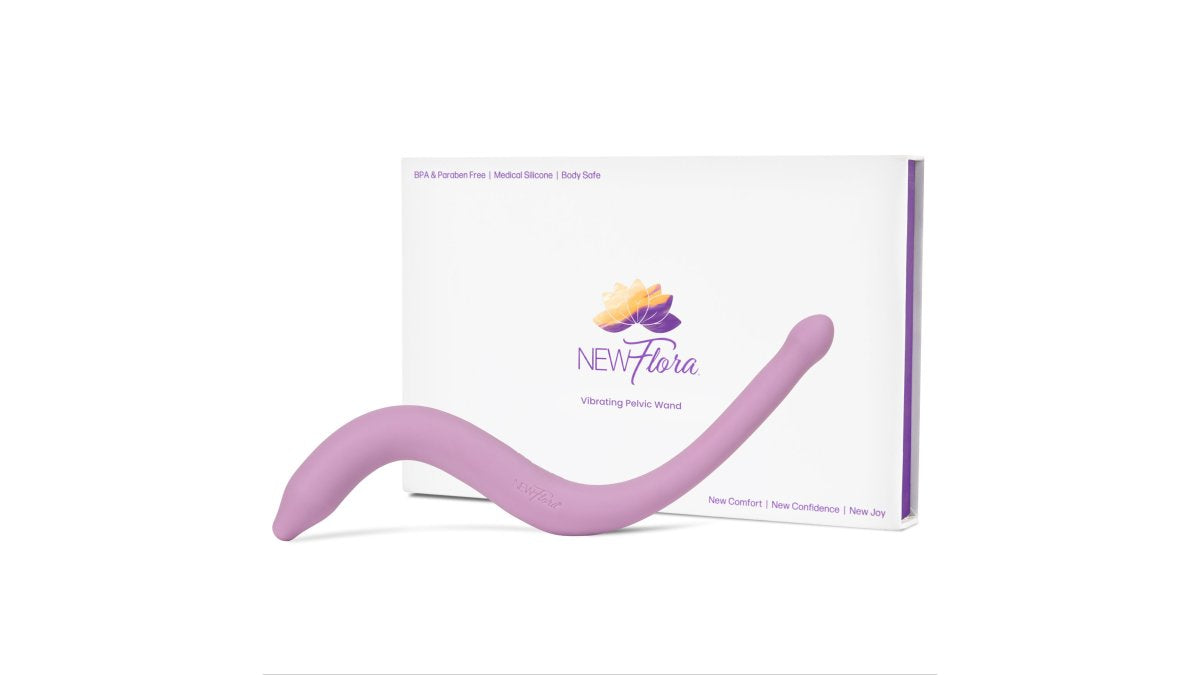
Vibrating Pelvic & Perineal Massage Wand →
Try this 60-second reset:
- Exhale fully through your mouth, twice.
- Drop your jaw and shoulders.
- On the next exhale, imagine the pelvic floor elevator sinking.
- Repeat 5 times.
It won't always work instantly, anxiety is a whole-body state, and some nights your body won't cooperate. That's information, not failure. If relaxation exercises increase pain or anxiety, stop and note what happened; some women clench more when focusing on the pelvic floor, so shift attention to your hands, breath, or your partner's voice.
Lubrication, Gradual Insertion, and Magnetic Dilators
Lubrication and gradual insertion turn relaxation into something your body can practice.
Our water-based Slippery Stuff Gel is odorless, non-staining, and has been recommended by physicians for two decades.
This is where dilators come in. A dilator lets you practice insertion on your own terms, with no pressure to perform. VuVa Magnetic Dilators feature our patented neodymium magnet technology, setting them apart from traditional non-magnetic dilators.
Conventional non-magnetic dilators provide mechanical stretching alone.
How to choose your set:
- New to dilators or very sensitive? Start with the smallest size in a graduated set so you can progress at your own pace.
- Already comfortable with one finger? A mid-range set gives you room to move up.
- Working with a pelvic floor therapist? Ask which sizes match your current stage, then match the set to that.
Explore the VuVa Magnetic Dilator Collection and pick the set that matches where you are now, not where you hope to be next month.
Communication, Consent, and Stopping Rules
Communication is a relaxation tool, telling your partner what you need lowers the threat your nervous system perceives. Agree before you start on a signal for slow down, a signal for stop with no explanation required, a mid-way check-in phrase, and the understanding that stopping is a success, not a failure.
If painful intimacy has been shaping your relationship with your body, you're not alone, and you deserve options that meet you where you are. Explore VuVa Magnetic Dilators and find your starting size.
References & Further Reading
- Tekbaş, S., et al. (2025). The effect of pelvic floor muscle exercise on sexual function in hypertonic pelvic floor muscles. PubMed Central.
- Sahin, E., et al. (2025). Pelvic physical therapy as first-line treatment for pelvic floor disorders and sexual dysfunction. PubMed Central.
- National Association for Continence. Guidance on diaphragmatic breathing practice for pelvic health.
Note: These sources address dilator therapy and pelvic floor relaxation generally. They do not constitute evidence that magnetic dilators outperform non-magnetic dilators.
Frequently Asked Questions
How can I relax my pelvic floor muscles before intimacy?
Start with five to ten minutes of diaphragmatic breathing, then move through two or three gentle stretches such as child's pose or reclined butterfly. Follow with a few conscious pelvic floor drops, where you briefly tighten and then fully let go. Use a quality lubricant and go slowly. Practicing this sequence daily, not only before sex, helps your body learn to relax pelvic muscles more readily over time.
Should I do Kegels if my pelvic floor feels tight?
Kegels are strengthening exercises, and strengthening an already overactive pelvic floor can make tightness worse. Some guidance suggests pausing Kegels and focusing on relaxation instead when muscles are tense. The right choice depends on your individual assessment, so a pelvic floor physiotherapist can help determine whether you need strengthening, relaxation, or both.
How long does it take to relax tight pelvic floor muscles?
There is no single timeline. Some women notice a difference within a few weeks of daily breathing and stretching, while others need months of consistent practice, especially with long-standing vaginismus or vulvodynia. Pelvic floor physiotherapy and dilator therapy can support progress. If pain persists despite regular practice, seek evaluation from a qualified professional.
Can a warm bath help relax pelvic floor muscles?
A warm bath can help you feel more relaxed overall, which may make it easier to let go of muscle tension. It works best as part of a broader routine that includes breathing, stretches, and gradual insertion with lubricant. Heat is a comfort measure, not a treatment on its own, so pair it with the other steps in your pre-intimacy plan.


