


Last Updated: October 26, 2026
Quick Summary
To manage pelvic floor tension, practice diaphragmatic breathing with longer exhales, gentle stretching like figure-four poses, and lengthening exercises such as the pelvic floor drop exercise. If home practices don't help after several weeks, consider discussing pelvic floor physical therapy with a qualified professional.
- Pelvic floor tension occurs when muscles stay contracted instead of relaxing, often causing pain during intimacy or difficulty with penetration.
- Diaphragmatic breathing with a 6-count exhale activates your parasympathetic nervous system and helps tight muscles relax.
- Avoid standard Kegel exercises, which can worsen tension; focus instead on lengthening and relaxation-based movements.
- Pelvic floor physical therapy for 8-12 weeks is an initial treatment approach for persistent symptoms.
- VuVa Magnetic Dilators with patented neodymium magnet technology offer gradual stretching as part of a broader home wellness routine.
Table of Contents
- Understanding Pelvic Floor Tension and What It Means
- Signs and Symptoms You're Experiencing Pelvic Floor Tension
- How to Relax Pelvic Floor Muscles at Home
- Tight Pelvic Floor Exercises That Lengthen Rather Than Strengthen
- When Pelvic Floor Physical Therapy for Tension Is the Right Choice
- Vaginal Dilators for Pelvic Floor Tension: A Complementary Approach
- Getting Started With Your Pelvic Floor Wellness Routine
- References & Further Reading
- Frequently Asked Questions
Understanding Pelvic Floor Tension and What It Means
Pelvic floor tension is when the muscles that support your bladder, uterus, and bowel stay tight or contracted instead of relaxing. Think of it like a muscle that's constantly clenched, it never gets a chance to rest.
When I invented VuVa Magnetic Dilators, I wanted to offer another option for intimate pelvic wellness.
Your pelvic floor muscles work like a sling. They help support the pelvic organs and contribute to bladder and bowel control. Pelvic floor tension may be associated with discomfort or difficulty with penetration.
Pelvic floor tension and weakness are different concerns. A qualified professional can help assess your symptoms and discuss an appropriate approach.
Home-based wellness routines may be one part of a broader approach to pelvic health. A qualified professional can help determine what is appropriate for you.
Signs and Symptoms You're Experiencing Pelvic Floor Tension
Some symptoms can have different causes, so a qualified professional can help assess what may be contributing to them.
Pain and discomfort:
- Pain during or after sex
- Pain with tampon insertion
- Pressure or heaviness in the pelvic area
- Sharp or dull pain in the lower abdomen or lower back
Urinary and bowel symptoms:
- Frequent urge to urinate
- Difficulty emptying your bladder completely
- Constipation or straining during bowel movements
- Urgency that feels hard to control
Sexual wellness concerns:
- Difficulty with penetration
- Feeling like there's a barrier or wall during intimacy
- Reduced pleasure or sensation
- Anxiety about sexual activity
General tension signs:
- Muscle tightness in your hips, lower back, or glutes
- Pain that gets worse with stress or sitting for long periods
- Feeling like your pelvic area is always "clenched"
Symptoms vary, and they do not by themselves establish that pelvic floor tension is the cause.
If you have unexplained pain, bleeding, signs of infection, or symptoms that don't improve, talk to your doctor. Pelvic floor tension can overlap with other conditions, so professional evaluation matters.
How to Relax Pelvic Floor Muscles at Home
If pelvic floor tension is a concern, a qualified professional can discuss whether relaxation practices are appropriate for you.
Home-based approaches are not appropriate for everyone. Consider discussing options with a qualified professional.
Diaphragmatic Breathing and Pelvic Floor Coordination
Diaphragmatic breathing, also called belly breathing, is the foundation of pelvic floor relaxation. When you breathe from your diaphragm, your pelvic floor naturally drops and relaxes.
Breathing and pelvic floor movement can be discussed with a qualified professional, who can help determine what is appropriate for you.
Try this simple practice:
- Sit or lie down in a comfortable position
- Place one hand on your chest and one on your belly
- Breathe in slowly through your nose for a count of 4, letting your belly expand (not your chest)
- Exhale slowly through your mouth for a count of 6
- Repeat 5-10 times, twice daily
The longer exhale is key. It signals your nervous system to relax. Research on breathing and muscle relaxation shows that extended exhales activate your parasympathetic nervous system, which helps tight muscles let go.
If you are considering breathing practices, ask a qualified professional whether they are appropriate for you.
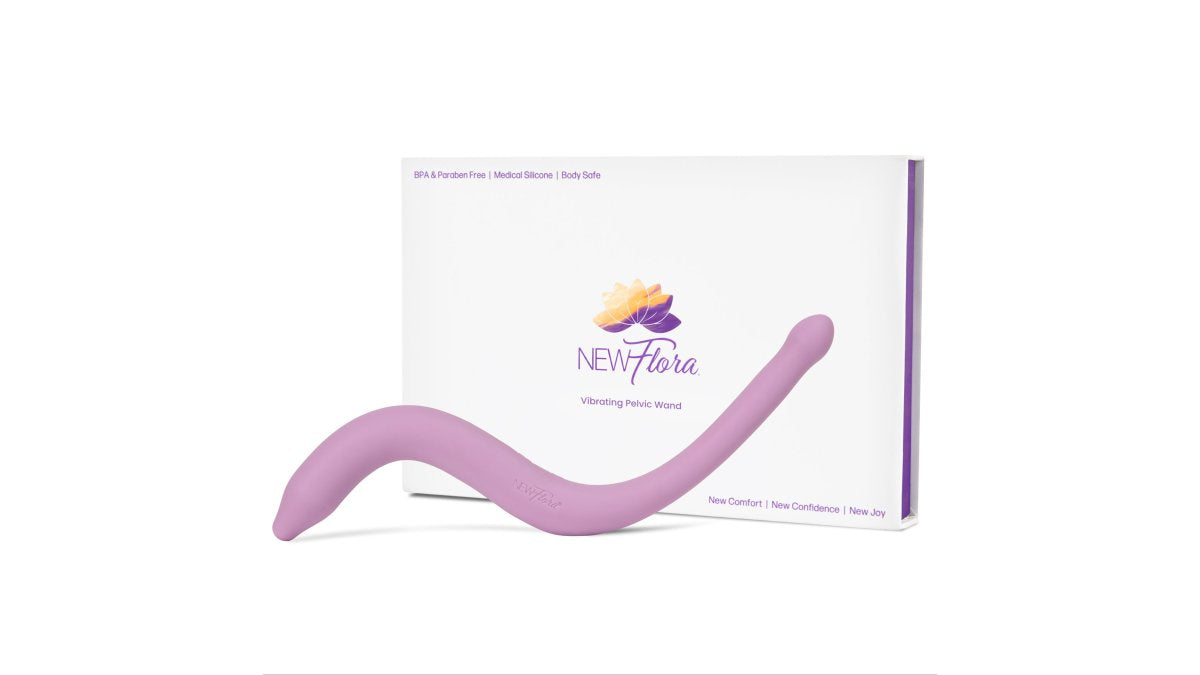
Vibrating Pelvic & Perineal Massage Wand →
Gentle Stretching for Hip and Pelvic Release
Hip or pelvic discomfort can have different causes. A qualified professional can help assess your symptoms and discuss appropriate options.
Figure-four stretch (best for hip and pelvic release):
- Lie on your back with both knees bent
- Cross one ankle over the opposite knee (creating a "4" shape)
- Gently pull the bottom leg toward your chest
- Hold for 30 seconds, then switch sides
- Repeat 2-3 times on each side
Child's pose (gentle full-body release):
- Kneel on a yoga mat or soft surface
- Sink your hips back toward your heels
- Stretch your arms forward
- Rest your forehead down
- Hold for 1-2 minutes, breathing deeply
Reclined butterfly stretch (inner thigh and pelvic opening):
- Lie on your back with knees bent
- Let both knees fall open to the sides, soles of feet together
- Support your knees with pillows if needed
- Hold for 1-2 minutes
Discuss stretches with a qualified professional, particularly if they cause discomfort.
Tight Pelvic Floor Exercises That Lengthen Rather Than Strengthen
This is crucial: not all exercises help pelvic floor tension. Standard Kegel exercises or pelvic floor strengthening can make tension worse.
A qualified professional can help determine which exercises, if any, are appropriate for your situation.
Happy baby pose (pelvic floor lengthening):
- Lie on your back
- Bring both knees toward your chest
- Grab the outside edges of your feet
- Gently press your knees toward the floor
- Hold for 30-60 seconds
Pelvic floor drop exercise (learning to relax):
- Sit or lie down comfortably
- Imagine your pelvic floor as an elevator
- As you inhale, visualize the elevator dropping down (relaxing)
- As you exhale, let it gently rise
- Repeat 5-10 times, focusing on the dropping sensation
Gentle cat-cow stretch (spinal and pelvic mobility):
- Start on hands and knees
- Inhale, drop your belly, look up gently (cow pose)
- Exhale, round your spine, tuck your chin (cat pose)
- Move slowly with your breath, 8-10 cycles
These exercises teach your muscles to move and release. Clinical guidance on pelvic floor dysfunction management emphasizes that functional retraining for tension focuses on relaxation and lengthening, not strengthening.
Discuss the frequency and suitability of exercises with a qualified professional.
When Pelvic Floor Physical Therapy for Tension Is the Right Choice
Home care helps many women, but some need professional guidance. Treatment recommendations for high-tone pelvic floor dysfunction suggest that pelvic floor physical therapy for at least 8-12 weeks is an initial treatment approach, with longer symptom histories potentially requiring more sessions.
A pelvic floor physical therapist can assess your situation and discuss whether therapy may be appropriate.
Consider discussing persistent or concerning symptoms with a qualified professional.
You can explore how long it takes to loosen tight pelvic floor muscles and understand when professional support becomes important for your specific situation.
Vaginal Dilators for Pelvic Floor Tension: A Complementary Approach
Dilators are one possible part of a broader care plan. Ask a qualified professional whether dilator use is appropriate for you.
VuVa Magnetic Dilators incorporate patented neodymium magnet technology as an additional design feature. Conventional non-magnetic dilators provide mechanical stretching without VuVa's integrated magnetic technology. Discover how magnetic pelvic floor dilators support relaxation and circulation and learn the benefits for pelvic pain relief as part of your home wellness routine.
How dilators work:
- You can discuss whether dilator use and progression are appropriate with a qualified professional.
VuVa Magnetic Dilators vs. conventional non-magnetic dilators:
| Feature | VuVa Magnetic Dilators | Non-Magnetic Dilators |
|---|---|---|
| Material | Medical-grade BPA-free plastic with enclosed neodymium magnets | Medical-grade plastic or silicone |
| Design | Patented magnetic technology | Standard smooth design |
| Stretching | Gradual lengthening with magnetic support | Gradual mechanical stretching |
| Durability | 10-year magnet strength warranty | Varies by brand |
| Made in USA | Yes | Varies |
When I created VuVa Magnetic Dilators, I wanted women to have another option for intimate pelvic wellness. The magnetic design is part of that innovation.
If you are considering dilator use, ask a qualified professional about an approach that is appropriate for you.
Vibrating Pelvic & Perineal Massage Wand →
A qualified professional can help you consider whether dilator use is appropriate and how to choose a starting size.
Getting Started With Your Pelvic Floor Wellness Routine
If you are considering a home routine, a qualified professional can discuss what may be appropriate for you.
A simple daily routine:
- Morning: 5 minutes of diaphragmatic breathing
- Midday: One gentle stretch (figure-four or child's pose)
- Evening: 10-15 minutes with your dilator, followed by stretching
This takes about 20-30 minutes total per day. Most women do dilator work 3-5 times per week, not daily.
How to choose your VuVa Magnetic Dilator set:
A qualified professional can help you consider whether dilator use is appropriate and discuss how to choose a starting size.
Access the VuVa Ultimate Relaxing Bundle, a curated collection designed to support relaxation and tension relief at home.
Tracking progress:
Keep a simple log:
- Date and size used
- How long you used it
- Any changes in pain, tension, or comfort
- Emotional notes (stress, anxiety, mood)
A log can help you keep track of what you have tried and what you have noticed.
When to seek additional support:
If symptoms persist or concern you, consider discussing them with a qualified professional.
Understand how pelvic floor tension connects to sexual wellness and explore the full picture of your pelvic health journey.
If you are considering options for pelvic floor tension, discuss them with a qualified professional. If you are interested in VuVa Magnetic Dilators, explore the available information and ask a qualified professional whether they may be appropriate for you.
References & Further Reading
A Treatment Algorithm for High-Tone Pelvic Floor Dysfunction, PMC, 2024. Clinical guidance on assessment and treatment approaches for pelvic floor tension.
Pelvic Floor Physical Therapy in the Treatment of Pelvic Floor Dysfunction in Women, Stanford Urology, 2019. Research on functional retraining, relaxation, and physical therapy outcomes.
Biofeedback and Physical Therapy for Pelvic Floor Dysfunction, StatPearls, NCBI Bookshelf, 2023. Overview of biofeedback, physical therapy, and professional assessment in managing pelvic floor conditions.
Frequently Asked Questions
What is the difference between a tight pelvic floor and a weak pelvic floor?
Pelvic floor tension and weakness are different concerns. Symptoms alone may not establish which is present. A qualified professional can assess your situation and discuss appropriate options.
Can pelvic floor tension cause pain during intimacy?
Pelvic floor tension may be one possible factor associated with discomfort during intimacy, but pain can have different causes. A qualified professional can help assess your symptoms and discuss whether dilator use or other options may be appropriate.
How long does it typically take to see improvement in pelvic floor tension?
The time course varies, and the appropriate approach depends on the individual. A qualified professional can discuss whether pelvic floor physical therapy or home-based options may be appropriate.
Should I do Kegel exercises if my pelvic floor feels tight?
Whether Kegel exercises are appropriate depends on the individual. A qualified professional can assess your situation and discuss suitable options.


