


Last Updated: October 26, 2026
Quick Summary
A dilator lubricant without glycerin is simply a water-based personal lubricant formulated without glycerin, glycerol, glycerine, or vegetable glycerin. Choose one that is water-soluble, free of alcohol and fragrance, and patch-test it for 24 hours before first use. Water-based lubricant rinses cleanly off any dilator material and is the safest default for sensitive skin.
- Read the full ingredient list, not the front label, since glycerin appears under several names.
- MAHEC dilator guidance recommends a water-based lubricant free from alcohols, glycerin, parabens, and propylene glycol.
- Apply lubricant generously at the vaginal entrance, not just on the dilator, where most friction happens.
- Stop using any lubricant that burns, itches, or causes redness within minutes and rinse with warm water.
- VuVa Magnetic Dilators feature patented neodymium magnet technology, setting them apart from traditional non-magnetic dilators.
Table of Contents
- Why a Vaginal Dilator Lubricant Without Glycerin Is Worth Considering
- How to Choose a Water-Based Lubricant for Vaginal Dilators
- Finding a Lubricant for Sensitive Skin That Works With Silicone
- Vaginal Dilator Instructions for Beginners: Applying Lubricant Step by Step
- Choosing the Right Vaginal Dilator Size for Your Routine
- What to Do If a Lubricant Causes Irritation
- How Magnetic Dilators Fit Into Your Lubricant Routine
- Find Your Starting Size in the VuVa Magnetic Dilator Collection
- Frequently Asked Questions
Why a Vaginal Dilator Lubricant Without Glycerin Is Worth Considering
When I invented VuVa, I wanted women to have another option. One of the first questions I hear from women starting a dilator routine is about lubricant.
Here's what most guides get wrong: they tell you to "use plenty of lubricant" without explaining that the ingredients matter as much as the amount.
Below, I'll walk you through what glycerin does, how to read a label, and how to apply lubricant step by step, the details are where people get stuck.
What Glycerin Actually Does in a Lubricant
Glycerin is a humectant, meaning it draws moisture toward itself. In a water-based lubricant, it helps the product stay slippery and feel silky rather than watery.
It's cheap, effective, and used in a huge number of personal lubricants. For many women it causes no trouble at all. But some find glycerin-based formulas feel sticky after a few minutes, or notice irritation in delicate tissue.
Who Tends to Prefer Glycerin-Free Options
Women with sensitive skin, a history of yeast infections, or reactive vulvar tissue often tell me they check ingredients first, and others simply prefer a shorter list. If you're dealing with vulvodynia, vaginismus, or post-menopausal dryness, your tissue may already feel raw, so a formula you tolerate well matters more than a fancy one. If you're unsure, ask your gynecologist or pelvic floor physical therapist.
How to Choose a Water-Based Lubricant for Vaginal Dilators
Start with water-based. Water-based lubricants are the most common recommendation for dilator use, they rinse off easily, and they're compatible with most dilator materials. If you're comparing options, this guide to the best lubricant types for vaginal dilator practice goes deeper on which formulas work best.
But "water-based" alone doesn't tell you whether a product contains glycerin. Here's how I'd actually read a label in the store or on a product page.
How to Spot Glycerin on an Ingredient Label
Ingredient lists on personal care products in the U.S. are usually written in descending order by weight, so anything near the top is present in a meaningful amount. Glycerin can appear under several names, and a product marketed as "glycerin-free" on the front may still list a related ingredient further down. Look for:
- Glycerin, the most common label name
- Glycerol, the same compound under its chemical name
- Glycerine, an older spelling still used by some brands
A product can legally say "glycerin-free" only if none of these appear, so the back label is your source of truth, not the front. If a brand lists "proprietary blend" or "fragrance" without detail, email the company before you buy.
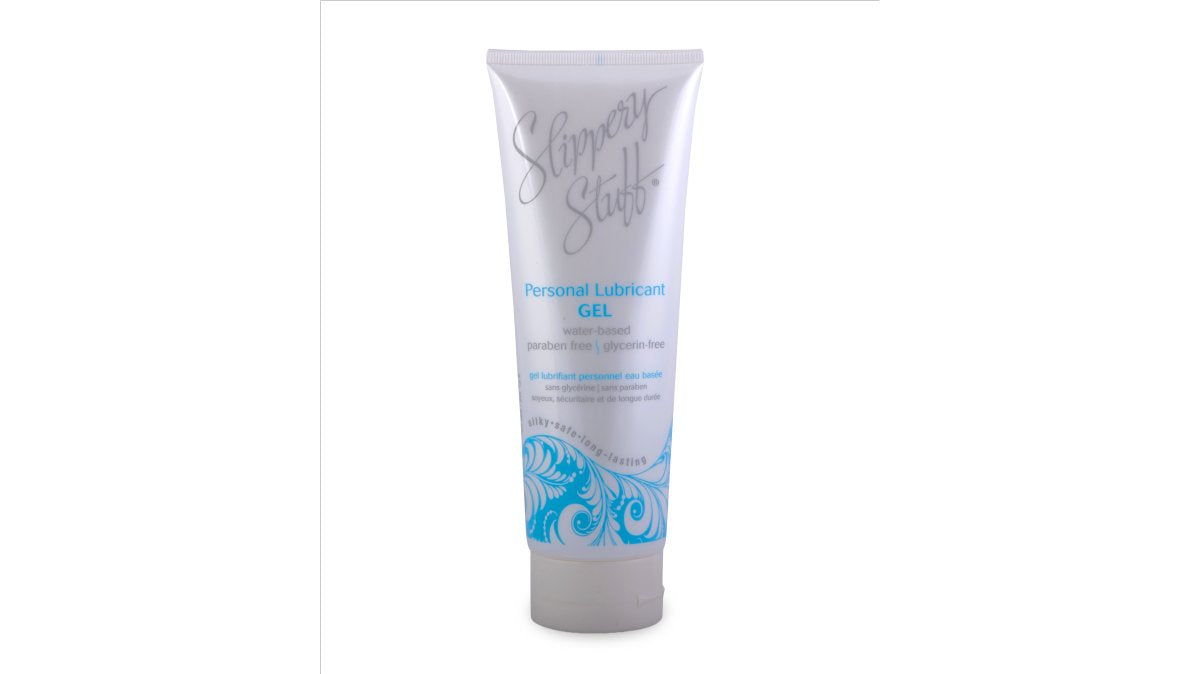
4oz Slippery Stuff Gel Personal Lubricant →
A Practical Label-Reading Checklist
- Read the full ingredient list, not just the front label
- Scan for glycerin, glycerol, glycerine, and vegetable glycerin
- Note alcohol (ethanol, isopropyl) if your tissue is reactive
Ingredients to Check Beyond Glycerin
Glycerin isn't the only ingredient worth a second look. A MAHEC patient handout on dilator use recommends a water-based lubricant free from alcohols, glycerin, parabens, and propylene glycol (EXTERNAL_LINK: MAHEC dilator instructions | mahec.net).
Preservatives matter too. Some women tolerate phenoxyethanol-based preservatives better than parabens, and some don't notice either way; the only way to know is a small patch test and a slow start.
One question women frequently ask me is whether they need a special "dilator lubricant." You don't.
Here's how to read a label and spot glycerin under its other names before you buy.
| Label name | What it is | Note |
|---|---|---|
| Glycerin | The most common label name | Same ingredient, different name |
| Glycerol | The same compound under its chemical name | Same ingredient, different name |
| Glycerine | An older spelling still used by some brands | Same ingredient, different name |
| Vegetable glycerin | Same ingredient, plant source | Same ingredient, different name |
| Plant-derived glycerin | Same ingredient, plant source | Same ingredient, different name |
| Glyceryl anything | A related compound, not identical to glycerin | Worth noting if highly reactive |
Finding a Lubricant for Sensitive Skin That Works With Silicone
This is where I see the most confusion. Silicone-based lubricants and silicone dilators are a pairing to think about carefully, and the reason is simple chemistry: like dissolves like.
Clinicians don't fully agree on this. Memorial Sloan Kettering Cancer Center advises avoiding oil- and silicone-based lubricants because they don't wash off the dilator easily, while Leeds Teaching Hospitals says oil-based lubricant may be used on the dilator tip with water-based lubricant at the vaginal entrance (EXTERNAL_LINK: Memorial Sloan Kettering dilator guidance | https://www.mskcc.org).
The Practical Rule I'd Give a Friend
- Water-based lubricant + any dilator material, the safest default. Rinses off with warm water and mild soap, no residue, no compatibility worry.
- Silicone-based lubricant + silicone dilator, possible but fussy. It lasts longer and needs less reapplication, but you'll need to wash the dilator more thoroughly and may notice a film over time.
- Oil-based lubricant + silicone dilator, same washing problem as silicone lube, plus oil can degrade some materials. Not a first choice.
For sensitive skin, a water-based gel is usually the safest starting point because it rinses cleanly and lets you evaluate one variable at a time. If you want a glycerin-free option to try, Good Clean Love Liquid Water Based Lubricant is one to consider.
What "Sensitive Skin" Actually Means Here
Sensitive vulvar tissue isn't one thing. It can mean vulvodynia, where even gentle touch registers as pain; vestibulodynia, where the entrance is reactive; post-menopausal dryness, where tissue is thinner and less lubricated; or a history of reacting to fragrances and preservatives. Each points to a different priority:
- If your issue is fragrance or preservative reactions, look for short ingredient lists and no added fragrance.
- If your issue is dryness, a thicker water-based gel may feel better than a thin liquid.
- If your issue is pain at the entrance, apply lubricant generously at the entrance, not just on the dilator, that's where most friction happens.
When to Stop and Ask
If a lubricant burns, itches, or causes redness within minutes, stop using it. Rinse with warm water, skip the dilator for a day or two, and bring the ingredient list to your next appointment. Persistent irritation, discharge, bleeding, or worsening pain deserves a proper evaluation.
Where VuVa Fits
VuVa Magnetic Dilators feature our patented neodymium magnet technology, setting them apart from traditional non-magnetic dilators. Both types support gradual stretching, and both work best with a water-based lubricant you tolerate well. The difference is the design: our dilators contain permanently enclosed neodymium magnets, while conventional non-magnetic dilators provide mechanical stretching alone.
If you're just starting out, the Size 1 and 2 Neodymium Magnetic Vaginal Dilator Combo Set is where I'd point most beginners. If you're already progressing and need larger sizes, the Size 5, 6, and 7 Neodymium Magnetic Vaginal Dilators Set of Three lets you move up gradually. Or explore the full VuVa Magnetic Dilator Collection to find the set that matches where you are today.
Vaginal Dilator Instructions for Beginners: Applying Lubricant Step by Step
A 2021 review describes dilators as tools often prescribed to support an adaptive brain-body connection and reduce anxiety and pain associated with anticipation (Vaginal Dilators: Issues and Answers(https://pubmed.ncbi.nlm.nih.gov/32014450/)). That framing matters: the goal is calm, gradual training, not force.
4oz Slippery Stuff Gel Personal Lubricant →
Here's how I'd walk you through it:
- Wash your hands and the dilator with mild soap and warm water, then dry both.
- Apply a generous amount of water-based lubricant to the dilator tip and shaft.
- Add a small amount at the vaginal entrance.
- Lie down or sit comfortably, breathe calmly, and relax your pelvic floor.
- Insert slowly and gently push only to a point of mild stretch, never sharp pain.
- Hold for the time your clinician or instructions suggest, then withdraw slowly.
- Clean the dilator again and let it air dry before storing it.
Watch out: adding lubricant only to the dilator and none at the entrance is a common beginner mistake. That's where most of the friction happens.
Choosing the Right Vaginal Dilator Size for Your Routine
Size progression is where a lot of women get stuck. The right starting size is the smallest one you can insert comfortably, not the one you think you "should" manage. If you're a beginner unsure where to start, the Size 1 and 2 Neodymium Magnetic Vaginal Dilator Combo Set gives you a small starting pair so you can begin without guessing.
What to Do If a Lubricant Causes Irritation
Stop using it. That's the first step, and it's not negotiable. Burning, itching, redness, or swelling after applying a lubricant means your tissue is telling you something. Rinse with warm water, skip the dilator for a day or two, and switch to a plain water-based formula while you figure out the trigger. Bring the ingredient list to your next appointment.
How Magnetic Dilators Fit Into Your Lubricant Routine
VuVa Magnetic Dilators feature our patented neodymium magnet technology, setting them apart from traditional non-magnetic dilators. Both types support gradual stretching, and both work best with lubricant. The difference is the design: our dilators contain permanently enclosed neodymium magnets, while conventional non-magnetic dilators provide mechanical stretching alone. If you're progressing and need larger sizes, the Size 5, 6, and 7 Neodymium Magnetic Vaginal Dilators Set of Three lets you move up gradually.
Find Your Starting Size in the VuVa Magnetic Dilator Collection
Choosing your set comes down to three questions: Where are you starting? What can you insert comfortably today? How much progression do you expect in the next few months? If you're brand new, start small. If you're returning after a break, start one size below where you left off.
If you've been putting off starting a dilator routine because you weren't sure which lubricant or size to use, you're not alone.
References & Further Reading
- Vaginal dilator therapy for pelvic cancer patients: a review (2026), PubMed Central(https://pmc.ncbi.nlm.nih.gov/articles/PMC13276794/)
- Vaginal Dilators: Issues and Answers (2021), PubMed(https://pubmed.ncbi.nlm.nih.gov/32014450/)
- MAHEC, Instructions for Using Vaginal Dilators
Frequently Asked Questions
Can I use glycerin-free lubricant with a vaginal dilator?
Yes. A 2026 review of vaginal dilator therapy states that dilators should be used with lubricant to reduce friction and ease insertion, and it lists water-, silicone- and oil-based options. Glycerin-free simply describes a water-based formula made without glycerin, so it fits the same role. Check the full ingredient list rather than only the glycerin line, since some patient handouts also suggest avoiding alcohols, parabens and propylene glycol. If you are unsure which formula suits you, ask your clinician or pelvic floor physical therapist before starting.
How much dilator lubricant should I actually use?
Use enough that the dilator glides without dragging, and add more rather than pushing through friction. A practical approach is a generous coating on the dilator itself plus a small amount at the vaginal entrance, which is how some hospital guidance describes it. If you feel resistance or stinging, stop and reapply instead of forcing progress. Keep the bottle within reach so you are not interrupted mid-routine, and wipe excess from the dilator after use according to the instructions that came with your dilator.
What should I do if a lubricant causes burning or irritation?
Stop using that product and note the ingredients so you can avoid them next time. Persistent burning, itching, discharge, bleeding or pain that does not settle is a reason to see a clinician rather than to keep experimenting, because those symptoms can have causes that lubricant changes will not fix. Bring the bottle or a photo of the ingredient list to your appointment. Once you are cleared, try a different water-based formula and patch test it on the inner wrist or outer vulva before using it with a dilator.
Do I need the whole dilator set or can I start with one size?
Many people start with the size closest to what they can already tolerate comfortably, then move up gradually as insertion becomes easy. Sets exist because progression is the point: a 2021 review describes dilators as tools that support an adaptive brain-body connection and reduce the anxiety and pain linked to anticipation. If you are unsure where you sit, the VuVa Magnetic Dilator Collection lets you compare sizes and pick a starting point, and you can add sizes later. A pelvic floor physical therapist can also advise on pacing.


