


If you’re in your 50s and sex has started to feel uncomfortable, painful, or even impossible, you are far from alone. This is one of the most searched—and least openly discussed—topics among women in midlife.
Many women silently wonder:
- “Why does this suddenly hurt?”
- “Is this just part of aging?”
- “Will this ever go back to normal?”
The truth is, there are very real physical reasons behind painful sex in your 50s—and even better, there are real solutions that can help you feel like yourself again.
What Causes Painful Sex in Your 50s?
Pain during sex (also called dyspareunia) is most commonly linked to hormonal changes during perimenopause and menopause.
The Role of Estrogen
Estrogen is one of the key hormones that keeps vaginal tissue:
- Thick
- Elastic
- Well-lubricated
As estrogen levels decline, several changes begin to happen:
- Vaginal walls become thinner
- Natural lubrication decreases
- Tissue becomes more fragile and sensitive
- The vaginal opening can feel tighter
This condition is often referred to as vaginal atrophy or genitourinary syndrome of menopause (GSM).
The result? What used to feel natural and comfortable can now feel dry, tight, or painful.
Why It Can Feel Like Tightness or Burning
Many women describe the pain as:
- A “tight” or “closed” feeling
- Burning or stinging
- Sharp discomfort with penetration
This isn’t in your head—it’s a combination of physical and muscular responses.
When tissue becomes thinner and drier, friction increases. At the same time, your body may instinctively tighten the pelvic floor muscles to protect you from discomfort.
Over time, this creates a pattern where:
- Your body anticipates pain
- Muscles tighten automatically
- Penetration becomes more difficult
This is a very real, physical cycle—not a mental issue.
The Pelvic Floor Connection
Your pelvic floor muscles play a major role in how sex feels.
When these muscles are relaxed, penetration is easier and more comfortable. But when they are tight or overactive, it can lead to:
- Pain with insertion
- A feeling of resistance
- Difficulty relaxing during intimacy
If you’ve experienced pain more than once, your body may start tightening these muscles automatically—without you even realizing it.
How Avoidance Makes It Worse
One of the most frustrating parts of this experience is the cycle it creates.
- Sex becomes uncomfortable
- You avoid intimacy
- Vaginal tissue gets less flexible over time
- Muscles become tighter
- Pain increases
This can make it feel like things are getting worse instead of better—but it’s a reversible cycle.
The Missing Piece: Elasticity and Blood Flow
Two major factors that often get overlooked are elasticity and circulation.
With hormonal changes:
- Blood flow to the vaginal area decreases
- Tissue becomes less stretchy
- Healing and responsiveness slow down
This is why simply “trying again” without addressing the underlying issue often doesn’t work.
What Actually Helps Painful Sex in Your 50s?
The most effective approach is one that focuses on restoring comfort gradually—not forcing it.
1. Reintroducing Gentle Stretching
This is where many women see the biggest improvement.
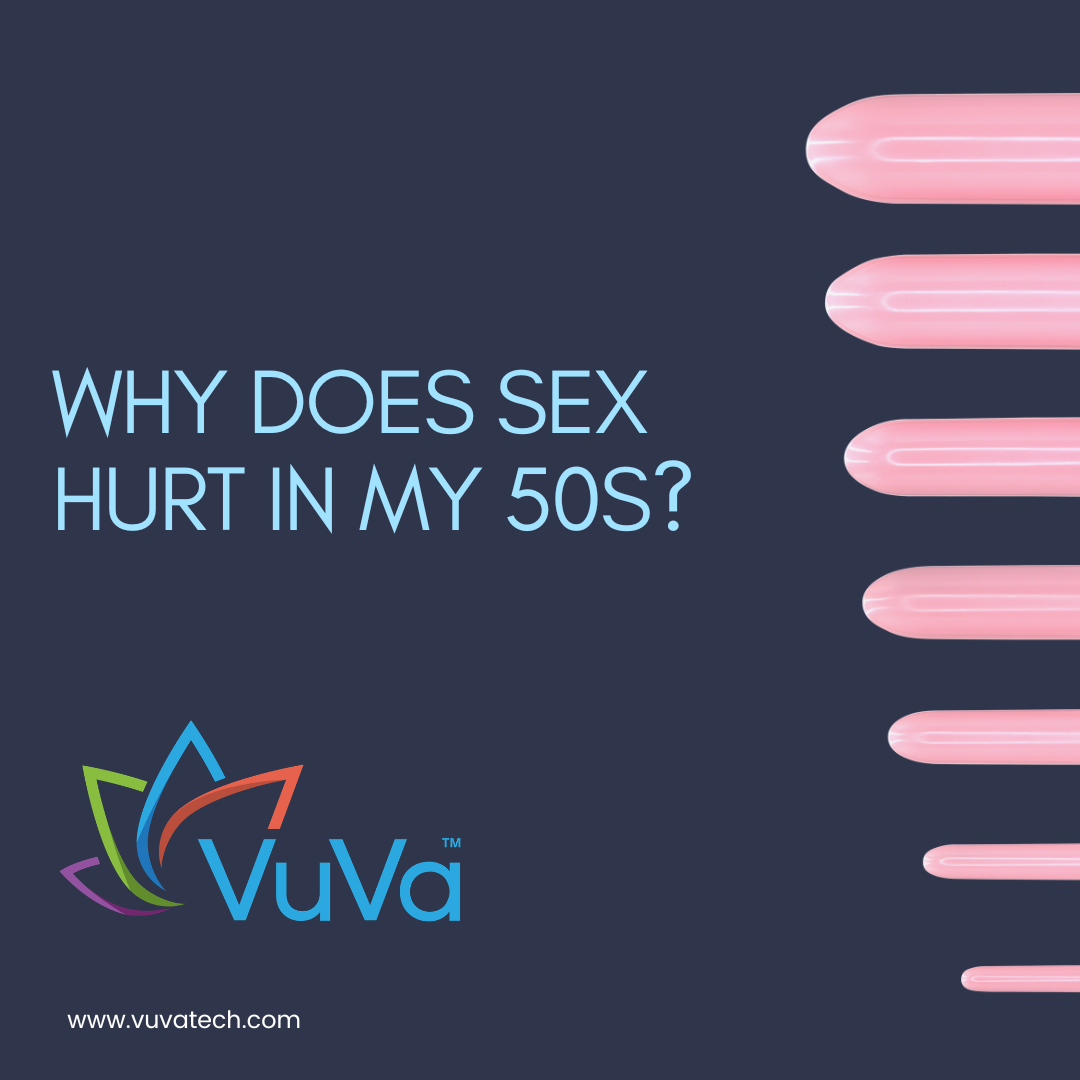
Using a progressive system like VuVa Magnetic Dilators allows you to:
- Slowly and comfortably stretch vaginal tissue
- Increase elasticity over time
- Reduce the sensation of tightness
- Improve comfort with penetration
These dilators work with your body—not against it—by starting small and gradually increasing in size at your own pace.
The addition of magnetic technology may also help support circulation, which is important for tissue health and recovery.
2. Retraining the Pelvic Floor
Dilator use also helps retrain your pelvic floor muscles to relax.
Instead of your body automatically tightening in anticipation of pain, you can:
- Practice relaxing those muscles
- Build confidence in a controlled setting
- Reduce fear around penetration
This is a critical step in breaking the pain cycle.
3. Improving Blood Flow and Comfort
Regular, gentle use of dilators can:
- Increase circulation
- Improve tissue responsiveness
- Help restore natural comfort
Many women find that this alone starts to change how their body feels within a few weeks.
4. Supporting Vaginal Health
Alongside dilator therapy, you can support your body with:
- High-quality lubricants during intimacy
- Vaginal moisturizers for ongoing hydration
- Proper hydration and nutrition
- Talking to a provider about localized estrogen if needed
A combination approach tends to be the most effective.
Can This Actually Be Reversed?
Yes—and this is the part most women are never told.
Your body is incredibly adaptable.
With the right approach, you can:
- Restore elasticity
- Reduce pain
- Retrain muscle response
- Feel comfortable again
Many women begin to notice improvement within 2–4 weeks of consistent effort, although results vary.
What About Libido?
Low libido often goes hand-in-hand with painful sex—but it’s not usually the root problem.
When sex hurts, your brain naturally reduces desire as a form of protection.
Once pain is reduced:
- Confidence increases
- Anxiety decreases
- Desire often begins to return naturally
In many cases, libido isn’t gone—it’s just been suppressed.
What If It’s Been a Long Time?
If you’ve avoided sex for months or even years because of pain, it’s still possible to rebuild comfort.
You are not:
- “Too late”
- “Too far gone”
- Stuck this way permanently
Starting slowly, without pressure, is what matters most.
Why VuVa Dilators Are a Trusted Option
VuVa Dilators have been helping women with insertion, relaxation, and pelvic comfort since 2014.
They are designed specifically for women dealing with:
- Menopause-related pain
- Vaginal tightness
- Pain after long periods without intimacy
- Anxiety around penetration
With a gradual sizing system and a focus on comfort, they allow women to progress at their own pace.
A Realistic Expectation
Every body is different, and results will vary.
However, with consistent use and the right approach, most women experience:
- Less pain
- Improved flexibility
- Increased comfort
- Greater confidence
This is not an overnight fix—but it is a highly effective and empowering solution.
Final Thoughts: You Don’t Have to Accept This
Painful sex in your 50s is common—but that doesn’t mean it’s something you have to live with.
Your body is going through changes, but those changes can be supported, improved, and in many cases, reversed.
With the right tools and understanding, you can:
- Feel comfortable again
- Reconnect with your body
- Enjoy intimacy without fear or pain
And most importantly—you can take back control of your experience.


