


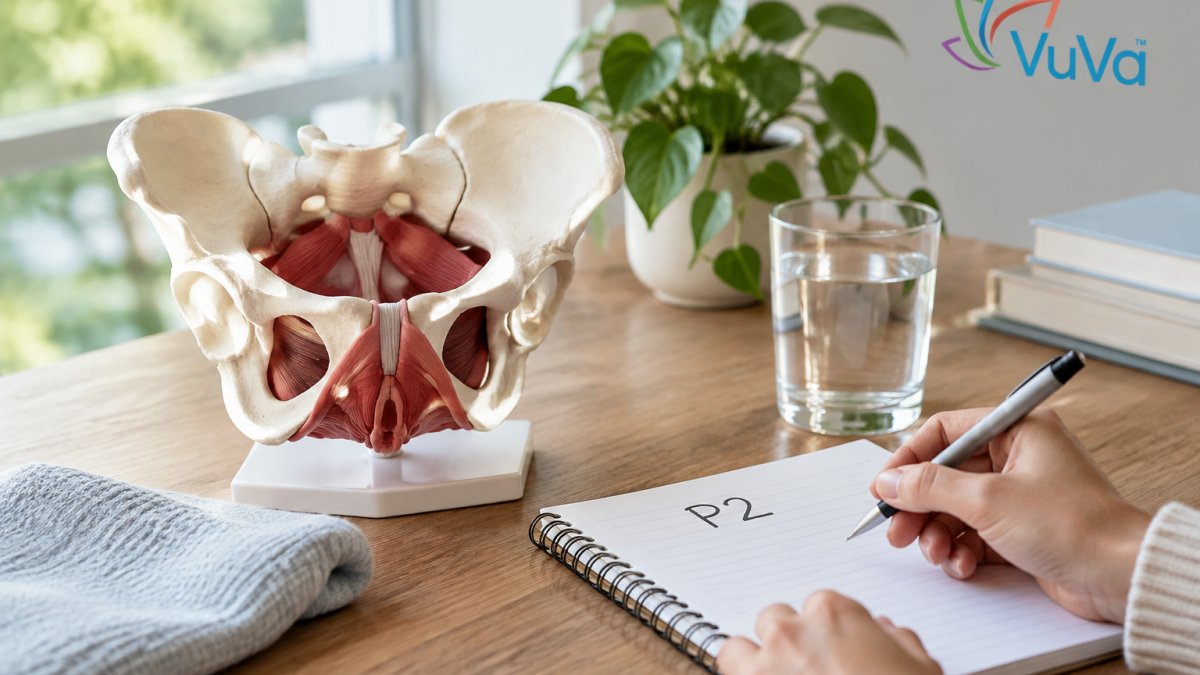
Last Updated: November 16, 2026
Quick Summary
P2 meaning in pelvic floor care is a second progression point in a graded programme, not a diagnosis. It is informal shorthand some clinicians and physiotherapists use for a second stage or second dilator size, so treat any P2 reference as a question for your clinician.
- P2 is not defined in clinical guidelines and practitioners may use it differently.
- Size 1 in VuVa sets contains no magnet and is the gentlest starting point.
- Start with the smallest size you can use comfortably and never force insertion.
- Advance only when the current size feels easy, not merely tolerable.
- Seek medical evaluation for unexplained bleeding, infection signs or significant pain.
Table of Contents
- P2 Meaning: Clearing Up the Confusion
- What Does P2 Stand For in Pelvic Health?
- The P2 Abbreviation Meaning Across Different Contexts
- Why Size Progression Matters in Dilation Therapy
- Which VuVa Magnetic Dilator Set Should You Start With?
- When P2 Isn't About Pelvic Health: Other Common Meanings
- Finding Your Comfortable Starting Point with VuVa
- Frequently Asked Questions
P2 Meaning: Clearing Up the Confusion
If you searched for P2 meaning and landed here feeling a little lost, you are not alone. P2 is not a formal medical term, and that is exactly why it confuses people. In pelvic floor care, P2 is shorthand some clinicians, physiotherapists and patients use to describe a second stage or second point in a progression, often a size step in a dilation routine. Many people who find the phrase online cannot tell whether it applies to them.
Here is the short answer: P2 usually refers to a mid-point in a graded pelvic health programme, not a diagnosis. It is a marker on a path, not a label for your body. Below, I will walk through what the abbreviation can mean, why gradual size progression matters in dilation therapy, and how to find a starting point that feels safe rather than scary.
What Does P2 Stand For in Pelvic Health?
P2 in pelvic health typically stands for a second progression point, a stage in a graded programme rather than a medical condition. It is used informally to describe where someone sits in a step-by-step routine, such as moving from one dilator size to the next.
That informality matters. You will not find P2 defined in clinical guidelines, and different practitioners may use it differently. Some use it to describe a second phase of pelvic floor muscle training. Others use it as shorthand for a second size in a dilation sequence. Because there is no single agreed definition, treat any P2 reference as a question to ask your clinician, not an answer in itself.
What we do know is that painful insertion has many possible causes. Dryness related to menopause, involuntary tightening of the pelvic floor muscles, vulvodynia, infection and skin conditions can all play a part, and a symptom alone cannot tell them apart. The American College of Obstetricians and Gynecologists' guidance on pelvic pain is clear that persistent pelvic pain deserves proper assessment rather than guesswork.
The P2 Abbreviation Meaning Across Different Contexts
The reason P2 is so confusing is that the same two characters get used for very different things, and none of the meanings are standardized. Rather than chase every possible definition, it helps to sort what you are looking at into one of a few buckets.
A stage in a graded programme. This is the most common pelvic health use.
A size or step in a dilation sequence. Some people use P2 casually to mean "the second dilator" in their set. That is where confusion really sets in, because sets differ.
A phase in pelvic floor muscle training. In pelvic floor physiotherapy, programmes are often described in phases, first learning to identify and relax the muscles, then coordinating that relaxation with movement or insertion. A therapist might call the second phase P2 in their notes. Again, it is internal shorthand.
Something unrelated entirely. Outside pelvic health, P2 shows up as document numbering, product codes, internal project labels, and industry shorthand. None of that tells you anything about your body, and it is worth ruling out before you worry.
A practical way to tell which bucket you are in: look at what comes after the label. If P2 is followed by instructions, a size, a frequency, a duration, a "stop if", it is part of a plan and you should follow the plan your clinician gave you.
Watch out: it is easy to read a forum post where someone says "I'm on P2" and assume you should be too. Progression is individual. Someone else's second stage may be well beyond where your body is ready to go, and copying it can cause soreness and a loss of confidence.
If a phrase you found online does not come with a clear source, a definition, and a plan, treat it as a question for your next appointment rather than an instruction. A clinician who knows your history can tell you what stage you are actually at and whether moving forward is appropriate.
Why Size Progression Matters in Dilation Therapy
Dilation therapy works through gradual, gentle stretching of tissue that has become guarded or sensitive. The word gradual is doing a lot of work in that sentence, because the tissue responds to repeated, low-level stretch over time, not to a single forceful push. Move up a size too quickly and you can get soreness, micro-irritation, and a setback in confidence that makes the next attempt harder.
A common mistake is treating each size like a level to beat. Progress is often not linear. Some weeks you move forward; some weeks you stay put, and that is normal. A workable pattern many people find helpful looks like this:
- Start with the smallest size you can use comfortably. Comfort, not ambition, sets the starting point.
- Stay at that size for several sessions. Repeat until insertion feels predictable rather than effortful.
- Advance only when the current size feels easy, not merely tolerable. Easy means you are not bracing or rushing.
- Drop back a size without guilt if you have a flare. A bad week is information, not failure.
Two practical details make progression smoother. First, position matters: many people find lying on their back with knees bent, or side-lying, gives more control than standing. Second, relaxation matters more than force, if you notice yourself clenching, pause and breathe before continuing rather than pushing through.
Watch out: pushing through sharp pain to "get it over with" is the mistake I hear about most often, and it usually sets progress back rather than speeding it up. Discomfort that feels like stretching is different from pain that makes you tense. Stop at the second kind and speak to your clinician.
VuVa Magnetic Dilators come in progressive sizes for exactly this reason. VuVa was invented by Tara Langdale in 2014, and its patented design uses permanently enclosed neodymium magnets, which is a distinguishing feature of the product, not a claim that it replaces clinical care. Conventional non-magnetic dilators also provide mechanical stretching, and dilation is often one part of a wider plan that may include pelvic floor physical therapy, lubrication or clinician-prescribed treatment.
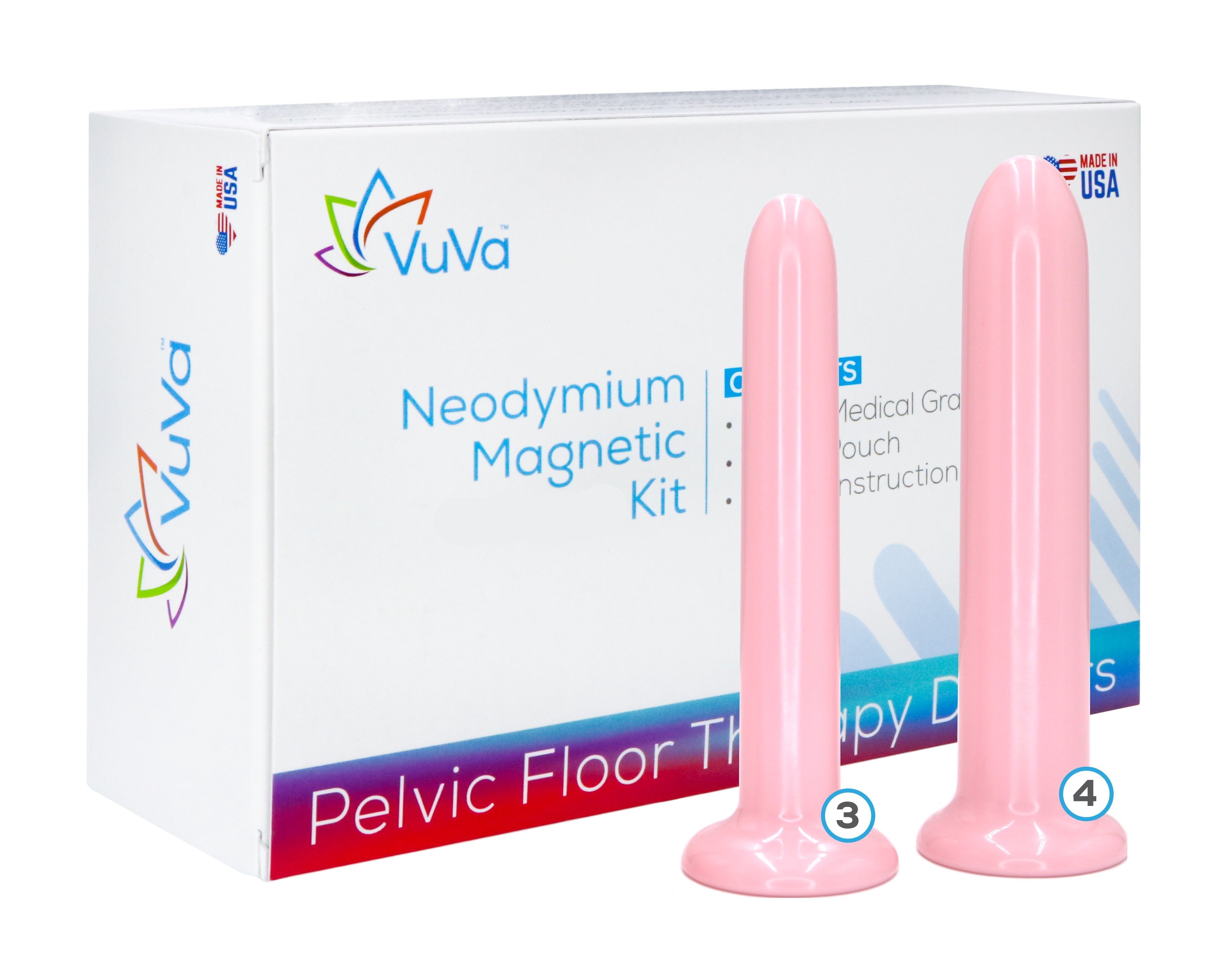
If you are stepping up gradually and want a small combo to bridge two sizes, the Size 3 & 4 Neodymium Magnetic Vaginal Combo Set lets you progress without buying singles.
Which VuVa Magnetic Dilator Set Should You Start With?
Start with the smallest size you can use comfortably, and never force insertion. Our sets are arranged so you can move at your own pace:
- Sizes 1-4: a smaller beginner progression
- Sizes 3-6: an intermediate range
- Sizes 5-7: a larger progression
- Full Set 1-7: the broadest range
One detail worth knowing: Size 1 contains no magnet, even when it arrives inside a magnetic set. It is the gentlest starting point for someone who has never used an image of the purple wand: it is.
For most people beginning dilation, the best-selling VuVa Neodymium Magnetic Set in sizes 3, 4, 5 and 6 covers the beginner-to-intermediate range in one purchase. Compare the measurements on the VuVa dilator size charts before you choose.
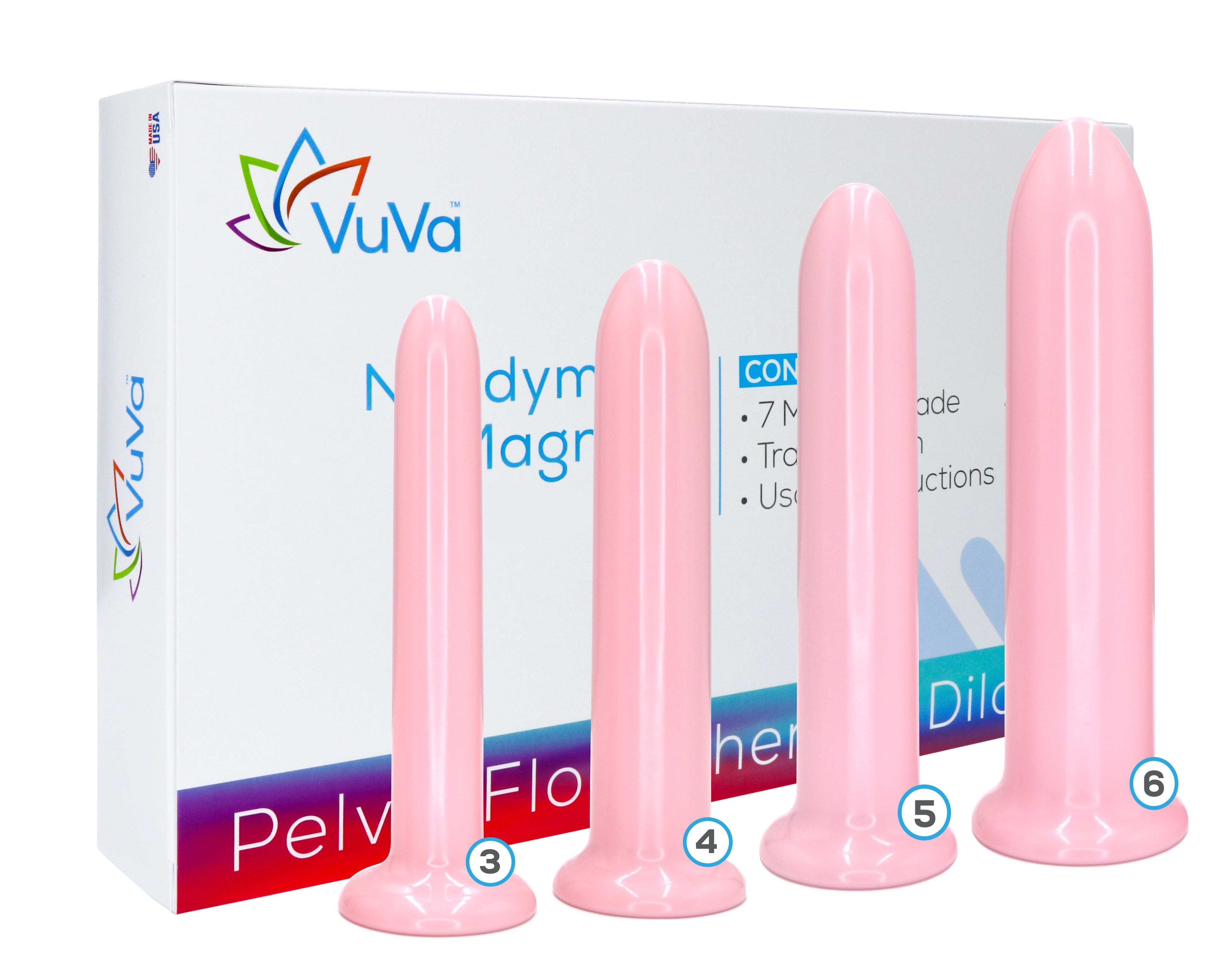

Here is how the VuVa sets are arranged so you can move at your own pace.
| Set | Range | Note |
|---|---|---|
| Sizes 1-4 | Smaller beginner progression | Size 1 contains no magnet |
| Sizes 3-6 | Intermediate range | Best-selling set is sizes 3, 4, 5 and 6 |
| Sizes 5-7 | Larger progression | For later stages |
| Full Set 1-7 | Broadest range | Covers every size |
When P2 Isn't About Pelvic Health: Other Common Meanings
Outside pelvic wellness, P2 is used in plenty of unrelated settings, from internal document numbering to product codes and internal shorthand in various industries. None of those meanings tell you anything about your body.
That is why context is everything. If a phrase you found online does not come with a clear source, a definition and a plan, it is not a clinical instruction. Bring the phrase to your appointment and ask what it means for you specifically. A clinician who knows your history can give you an answer that a search engine cannot.
Finding Your Comfortable Starting Point with VuVa
The most useful thing you can do is begin smaller than you think you need to. If you are nervous about your first attempt, the Starter Size 1 Dilator is made without magnets and is designed as a gentle first step before you progress.
Watch out: pushing through sharp pain to "get it over with" is the mistake I hear about most often, and it usually sets progress back rather than speeding it up. Discomfort that feels like stretching is different from pain that makes you tense. Stop at the second kind and speak to your clinician.
For a deeper look at why the body tightens and what it can mean, our guide on what causes vaginal tightness and how pelvic floor health fits in is a good next read. If you have unexplained bleeding, signs of infection, significant pain or persistent irritation, please seek medical evaluation rather than working through it alone. If you have an implanted electronic medical device, check with your doctor before using any magnetic product.
Not sure where to start? Explore VuVa Magnetic Dilator sets and find a comfortable starting size. Our range includes progressive sizing, discreet shipping and HSA/FSA eligibility, and every set comes with instructions so you can pace yourself at home.
Frequently Asked Questions
What does P2 stand for?
P2 is an abbreviation that can have several meanings depending on context. In pelvic health discussions, it sometimes appears as shorthand for a second phase of a progression plan or a specific size in an image of the purple wand: it is set, though there is no single universal medical definition. If you see P2 in your care instructions, ask your clinician what it refers to in your specific situation. Outside healthcare, P2 commonly means priority two, a second period, or a product version.
Is P2 a recognized medical term for pelvic floor therapy?
P2 is not a standardized medical diagnosis or a universally recognized term in pelvic floor therapy. You may encounter it as an informal label in a clinician's notes, a phase marker in a treatment plan, or a product size reference. Because its meaning varies, always clarify with your healthcare provider. If you are exploring dilator therapy, focus on the size and comfort guidance rather than the label itself.
How do I know if P2 refers to an image of the purple wand: it is size or something else?
Context is the key. If P2 appears in a product manual or a therapist's instructions alongside other numbered items, it likely refers to a step or size in a progression. If it appears in a general document, it may mean priority two or a version number. When in doubt, ask the person or company who provided the information. For VuVa sets, sizes are numbered 1 through 7, and the size chart on the website shows the exact dimensions so you can match your current comfort level to a starting point.
Can understanding P2 meaning help me choose the right dilator set?
Understanding what P2 means in your specific context can help you follow a care plan more confidently, but it does not replace a proper size assessment. If P2 refers to a second phase or a mid-range size, it may indicate you are ready to progress from a smaller dilator. VuVa sets are organized as sizes 1 to 4 for beginners, 3 to 6 for intermediate users, and 5 to 7 for a larger progression, with the full set covering 1 to 7. Start with the smallest size you can use comfortably and never force insertion.


