


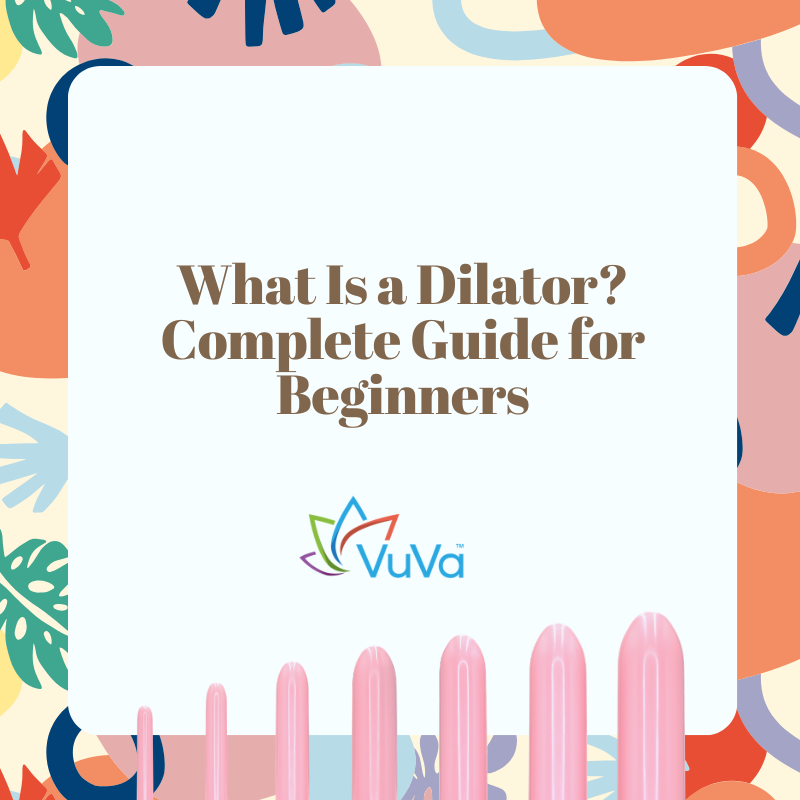
What Is a Vaginal Dilator?
So, a vaginal dilator is basically this smooth device made from stuff like medical silicone, and its main job is to help stretch and get the vaginal muscles and tissues used to things again. I think people use them for stuff like vaginismus, where the muscles just tighten up on their own and make penetration hurt a lot, or even impossible sometimes. It’s not like you can just tell yourself to relax, the body does it automatically, almost like a reflex to protect itself.
Dilators come in sets with different sizes:
Starting really small, maybe like a tampon size
You only go bigger when it feels okay
No rushing that part
Why People Use Dilators
That reminds me of physical therapy after an injury. You wouldn’t jump right back into hard workouts.
Common reasons include:
Vaginal atrophy
Which happens when estrogen drops, like in menopause or after giving birth. The tissues get thinner and drier, less stretchy, and the canal might narrow. Dilators help keep things flexible there and prevent it from getting worse.
Dyspareunia (painful sex)
It creates this loop of pain leading to more tension and more pain. Using dilators breaks that by letting the body get comfortable with insertion without the hurt and retrains the nerves too.
Post surgery or radiation
Scar tissue can build up and narrow everything, called stenosis. Doctors often say to use dilators to stop too much scarring and keep the depth and width normal during healing.
Pelvic floor issues
Where muscles are too tight, causing pain or problems with bathroom stuff. Dilators go with therapy to loosen them, improve how they work together, and ease the constant discomfort.
How Dilators Work
How they work:
Physically, they stretch the tissues gently, build elasticity over time, and stop narrowing
On the nervous system side, if penetration always meant pain before, dilators swap that for neutral feelings and calm the threat response
It’s like desensitization, the area gets less hypersensitive and the body learns it’s safe
Emotionally, since you’re in control, anxiety drops, confidence grows, and it feels good to make progress
Studies say for vaginismus, success is like 80 to 95 percent if you stick with it in therapy, that seems pretty high.
Do Dilators Hurt?
They shouldn’t hurt if done right.
You might feel:
A stretch
Fullness
Maybe awkward at first
But this is not okay:
Sharp pain
Burning
Pain that keeps increasing
If that happens:
Stop
Use more lube
Go smaller
How to Use a Vaginal Dilator
Preparation
Lots of water or silicone based lubricant
Private spot
Relax with breathing or music
Position
Lie back
Knees bent
Pillows help
Breathing
Breathe deep into the belly
In through nose
Out slow
Relax the pelvis
Insertion and Use
Insert slow, towards the tailbone
Don’t force
Hold for 5 to 15 minutes
Keep breathing
Maybe gentle squeezes and releases
After
Remove easy
Wash with soap and water
Dry it
Progression
Move to bigger only when comfortable
3 to 5 times a week
Consistency over speed
Choosing the Right Dilator
Choosing one:
Smooth surface
Tapered tip
Gradual size progression
Cost:
60 to 150 bucks for a good set
Worth it long term
Emotional Side of Using Dilators
Emotionally, it can stir things up:
Anxiety starting out
Frustration when progress is slow
Maybe sadness about body changes
But over time:
Confidence builds
Relief comes
Small steps matter
It’s not always straightforward. Progress jumps around and that’s fine.
Common Myths
They’re just sex toys
No, medical tools for therapy
They stretch you out forever
The vagina bounces back, it’s elastic, just restoring normal
Only for older women
All ages, even teens
It’s all mental
Muscles react involuntarily
When to Seek Help
If:
The smallest doesn’t go after tries
No change in weeks
Pain stays
Then see a professional:
Gyno
Maybe sex therapist for the emotional side
FAQs
What exactly is a vaginal dilator?
A vaginal dilator is a smooth, cylindrical medical device used to gently stretch and retrain vaginal muscles and tissues.
Do vaginal dilators really work?
Yes. Research shows 80–95% success rates for conditions like vaginismus when used consistently.
How often should I use a dilator?
Typically 3–5 times per week for 10–15 minutes per session.
How long does it take to see results?
Many people notice improvement within 4–8 weeks, though timelines vary.
Do I need a prescription?
No. Dilators are available over the counter, though medical guidance is helpful.
Will using dilators affect intimacy?
No. They help restore comfort and confidence—they don’t negatively affect sensitivity or function.
Can dilators help with painful gynecological exams?
Yes. They can make exams like Pap smears more comfortable by relaxing muscles and improving flexibility.
Do I need to use them forever?
Not usually. Many people stop after reaching their goals, though occasional use may help maintain results.
Citations
ter Kuile, M. M., et al. (2009). Therapist-aided exposure for lifelong vaginismus. Journal of Consulting and Clinical Psychology, 77(1), 149–159.
Rosenbaum, T. Y. (2007). Physical therapy treatment of vaginismus. Journal of Sex & Marital Therapy, 33(4), 285–290.
Pacik, P. T. (2014). Understanding and treating vaginismus. International Urogynecology Journal, 25(12), 1613–1620.
Goldstein, I., et al. (2013). Vaginal atrophy overview. Sexual Medicine, 1(2), 44–53.
Reissing, E. D., et al. (2013). Pelvic floor therapy for vaginismus. Journal of Sex & Marital Therapy, 39(4), 306–320.
Morris, E. P., et al. (2017). Dilators after pelvic radiotherapy. Supportive Care in Cancer, 25(4), 1139–1146.
Bachmann, G. A., & Komi, J. O. (2010). Treatment of vulvovaginal atrophy. Menopause, 17(3), 480–486.


