


Painful sex during menopause is incredibly common—but that doesn’t make it any less frustrating, confusing, or isolating. Many women feel like their bodies have suddenly changed overnight, leaving them wondering what happened and how to fix it.
The truth is, there are very real physical reasons behind this shift—and more importantly, there are effective, science-backed ways to improve comfort and enjoy intimacy again.
Why Menopause Causes Painful Sex
The main driver of painful sex during menopause is the decline in estrogen.
Estrogen is responsible for keeping vaginal tissue:
- Thick and elastic
- Naturally lubricated
- Healthy and resilient
As estrogen levels drop, the vaginal area undergoes several changes:
- Increased dryness
- Thinner, more fragile tissue
- Reduced elasticity
- Decreased blood flow
This can lead to discomfort, burning, tightness, or pain during penetration.
This condition is often referred to as genitourinary syndrome of menopause (GSM), and it affects a large percentage of women—but it’s still not talked about enough.
The Cycle of Pain and Avoidance
One of the biggest challenges with painful sex is the cycle it creates.
- Sex becomes uncomfortable
- You begin to avoid intimacy
- Vaginal tissue becomes less flexible over time
- Pelvic floor muscles tighten
- Pain increases
This cycle can make it feel like things are getting worse instead of better—but it’s important to know that this pattern can be broken.
Step 1: Address Vaginal Dryness
Dryness is one of the most immediate causes of pain during menopause.
Using a high-quality lubricant during intimacy can significantly reduce friction and discomfort. Vaginal moisturizers can also help maintain hydration on a regular basis, not just during sex.
This is often the first and simplest step—but for many women, it’s not enough on its own.
Step 2: Restore Elasticity and Comfort
As tissue becomes less elastic, penetration can feel tight or even painful. This is where gradual, consistent stretching becomes important.
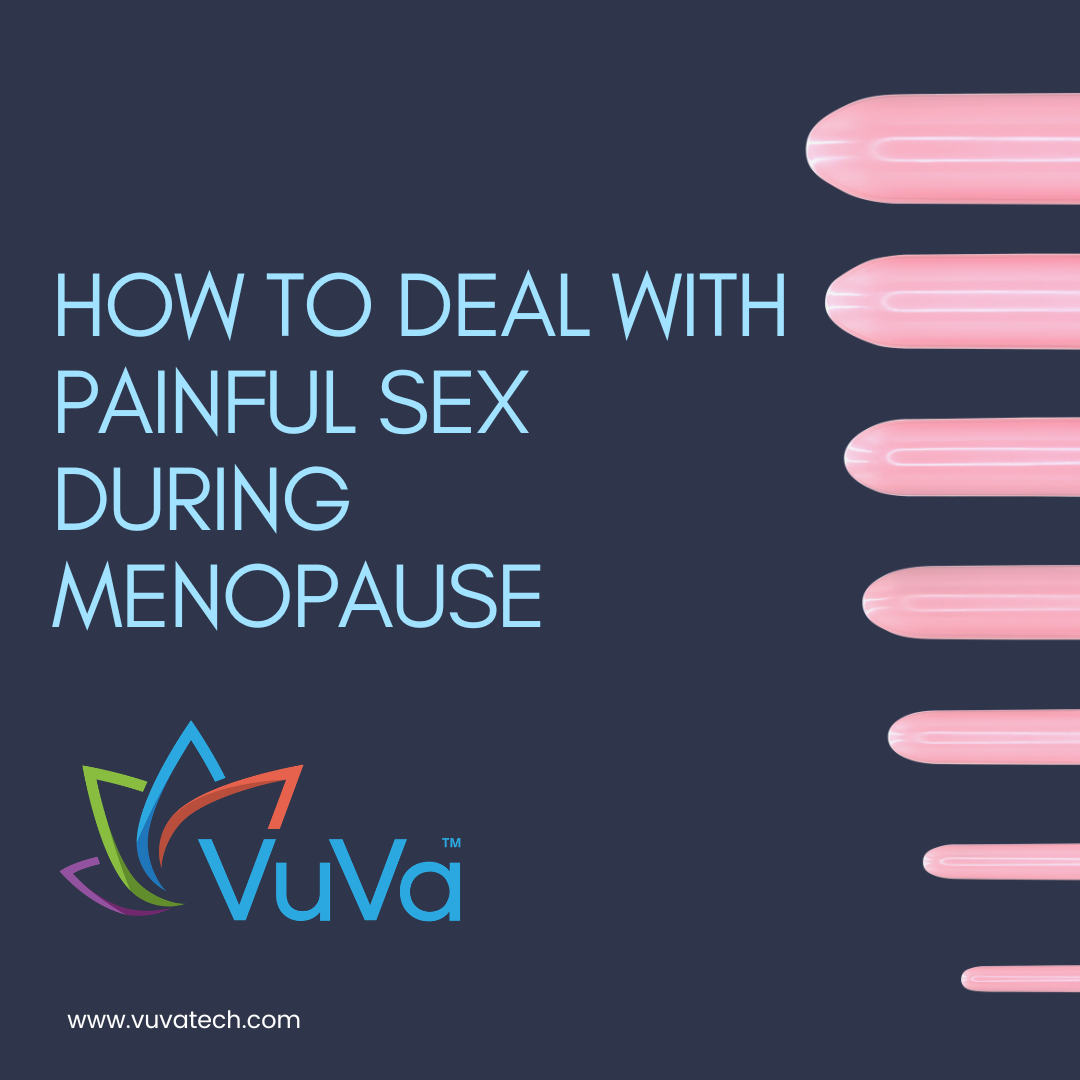
Using a progressive system like VuVa Magnetic Dilators allows you to:
- Gently stretch vaginal tissue over time
- Improve flexibility and comfort
- Reduce the feeling of tightness
- Reintroduce penetration without pain
VuVa dilators are designed to be used at your own pace, starting with a smaller size and gradually working up as your body adapts.
They also incorporate magnetic technology, which may help support circulation and tissue health.
Many women report noticeable improvement within a few weeks of consistent use, although every body is different.
Step 3: Retrain the Pelvic Floor
When sex becomes painful, your pelvic floor muscles may start to tighten automatically as a protective response.
Over time, this tension can make penetration even more difficult.
Dilator therapy helps retrain these muscles by:
- Encouraging relaxation instead of tightening
- Reducing the body’s fear response
- Creating a more positive, controlled experience
This step is essential for breaking the cycle of pain.
Step 4: Improve Blood Flow and Tissue Health
Healthy blood flow is key for maintaining elasticity, lubrication, and sensitivity.
Menopause can reduce circulation to the vaginal area, which contributes to discomfort.
Regular use of dilators, along with overall wellness support, can help:
- Increase circulation
- Improve tissue responsiveness
- Support healing and comfort
Step 5: Consider Hormonal Support (If Needed)
For some women, localized estrogen therapy (such as creams or inserts) can help restore vaginal tissue health.
This is something to discuss with a healthcare provider, especially if symptoms are more severe.
A combined approach—supporting both the physical structure and hormonal environment—often leads to the best results.
Can Painful Sex During Menopause Be Reversed?
Yes. This is one of the most important things to understand.
Your body is capable of change and adaptation at any age.
With consistent effort and the right tools, many women experience:
- Reduced pain
- Improved flexibility
- Increased comfort
- A return to enjoyable intimacy
Results vary, but many women begin noticing changes within 2–4 weeks.
What About Low Libido?
Painful sex and low libido often go hand in hand.
When your body associates intimacy with discomfort, your brain naturally lowers desire as a protective mechanism.
Once pain is reduced:
- Confidence improves
- Anxiety decreases
- Desire often begins to return naturally
In many cases, libido isn’t gone—it’s simply been suppressed.
Why VuVa Dilators Are an Effective Solution
VuVa Dilators have been helping women with insertion, relaxation, and pelvic comfort since 2014.
They are specifically designed for women experiencing:
- Menopause-related pain
- Vaginal tightness
- Pain after periods of avoidance
- Anxiety around penetration
With a gradual sizing system and a focus on comfort, they provide a safe, effective way to rebuild confidence and reduce pain.
A Realistic, Honest Approach
Every woman’s body is different, and results will vary.
However, most women who take a consistent, gentle approach notice:
- Increased comfort
- Less pain
- Improved confidence
- A better overall experience with intimacy
This is not an overnight fix—but it is a path forward that works.
Final Thoughts: You Don’t Have to Live With This
Painful sex during menopause is common—but it is not something you have to accept as your new normal.
With the right approach, you can:
- Restore comfort
- Rebuild confidence
- Reconnect with your body
- Enjoy intimacy again
You deserve to feel good in your body at every stage of life—and there are real solutions to help you get there.


