


The Quick Answer: Will it go away?
-
On its own? Usually not. Because the cause is a hormonal decline (estrogen), the physical changes in the tissue are progressive.
-
With treatment? YES. Most women can significantly reduce or eliminate pain by focusing on tissue elasticity and circulation.
-
The Goal: You must shift from "avoidance" to "rehabilitation" using tools like Magnetic Pelvic Floor Trainers to remind the muscles how to stretch safely.
If you’re experiencing painful sex during menopause, one of the first questions that comes to mind is: Will this ever go away?
The honest answer is—it can, but not usually on its own.
Painful sex during menopause is extremely common, and it’s caused by real physical changes in the body. The good news is that with the right approach, most women can significantly reduce or even eliminate the pain and feel comfortable again.
Why Pain Happens During Menopause
The main reason sex becomes painful during menopause is the drop in estrogen.
Estrogen helps keep vaginal tissue:
- Elastic
- Thick
- Naturally lubricated
As estrogen declines, the body goes through changes like:
- Dryness
- Thinning tissue
- Reduced flexibility
- Increased sensitivity
This can make sex feel tight, uncomfortable, or even painful.
A Message from Tara Langdale-Schmidt, Inventor of VuVa: "The most dangerous myth about menopause is that we should just 'accept' the pain as a part of aging. I created VuVa because I saw so many women giving up on intimacy simply because they didn't have the right tools to maintain their pelvic health. Your body is incredibly resilient—it just needs the right signal to start healing."
Will It Go Away On Its Own?
In most cases, no.
Without intervention, symptoms can actually get worse over time. This is because:
- Vaginal tissue becomes less elastic
- Blood flow decreases
- The body gets used to avoiding penetration
- Pelvic floor muscles can tighten
So while it may seem like something that might “pass,” painful sex during menopause usually needs to be actively addressed.
The Good News: It Can Be Reversed
Even though it doesn’t typically go away on its own, painful sex can improve—and for many women, it improves a lot.
Your body is capable of adapting when you give it the right support.
With the right approach, you can:
- Restore elasticity
- Reduce pain
- Improve comfort
- Feel more confident during intimacy
What Actually Helps?
The most effective approach focuses on restoring the body—not just covering up symptoms.
1. Improve Hydration
Using lubricants and vaginal moisturizers can help reduce dryness and make sex more comfortable in the moment.
But this alone usually doesn’t fix the underlying issue.
2. Restore Elasticity
One of the biggest causes of pain is tightness and loss of flexibility.
This is where vaginal dilators are extremely effective.
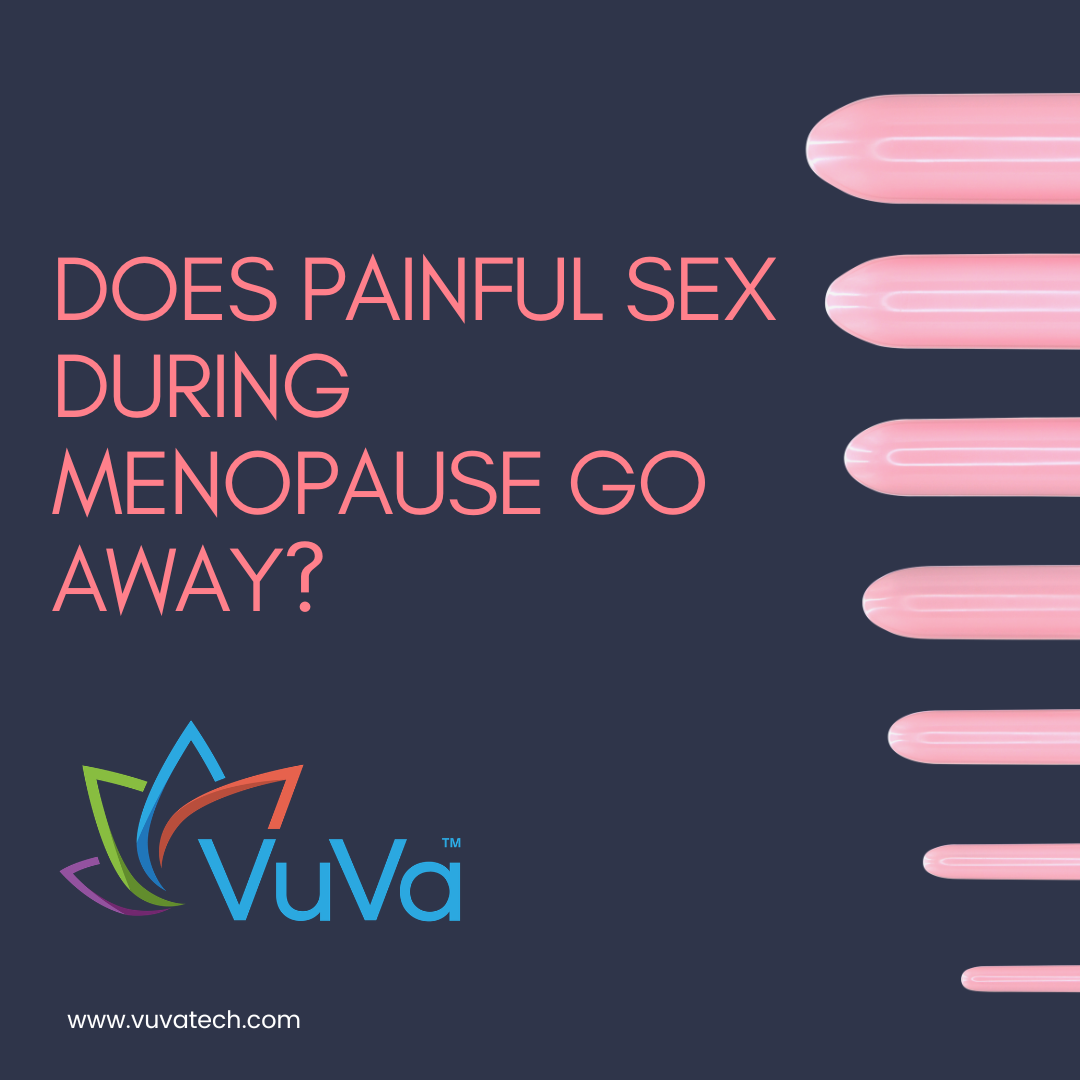
Using a gradual system like VuVa Magnetic Dilators helps:
- Gently stretch vaginal tissue
- Increase flexibility over time
- Reduce the feeling of tightness
- Make penetration more comfortable
Instead of forcing your body, you’re allowing it to adjust gradually.
3. Retrain the Pelvic Floor
If your body has started to associate sex with pain, your muscles may automatically tighten.
Dilators help:
- Teach your body to relax again
- Reduce that automatic tension response
- Build confidence in your body
4. Be Consistent
This isn’t about doing something once—it’s about small, consistent progress.
Many women notice improvement within a few weeks, but consistency is what creates lasting results.
What About Libido?
Low libido often comes along with painful sex.
When something hurts, your brain naturally tries to avoid it. That means desire can drop—not because something is wrong with you, but because your body is protecting you.
Once pain improves:
- Confidence increases
- Anxiety decreases
- Desire often starts to come back naturally
Why VuVa Dilators Work So Well & the Science of Magnets
VuVa Dilators are designed to help women gently and safely restore comfort.
They:
- Use a gradual sizing system so you can go at your own pace
- Help improve flexibility and reduce tightness
- Support relaxation of the pelvic floor
- Include magnetic technology to support circulation
They’ve been helping women with insertion and pain since 2014.
Why Neodymium Magnets Matter for Menopause During menopause, blood flow to the pelvic region naturally decreases. Our patented Neodymium Magnetic trainers are specifically designed to support local circulation. By increasing blood flow to the thinning tissues, you aren't just stretching the area—you are supporting the body's natural ability to nourish and regenerate those delicate cells.
A Realistic Expectation
Every body is different, and results will vary.
But most women who take a consistent, gentle approach experience:
- Less pain
- More comfort
- Improved confidence
- A better overall experience with intimacy
Final Thoughts
Painful sex during menopause does not usually go away on its own—but that doesn’t mean you’re stuck with it.
With the right tools and approach, your body can improve.
You can:
- Feel comfortable again
- Stop dreading intimacy
- Reconnect with your body
This is not the end of your sex life—it’s just a phase that needs the right support to move through.
People Also Ask:
1. Is it too late to start using dilators if I’m already post-menopausal? It is never too late. While the tissue may have become thinner or tighter over several years, the pelvic floor muscles are still capable of being retrained. Starting with our smallest size and moving slowly allows the tissue to safely adapt and regain its capacity.
2. Why does the pain get worse if I wait? Without regular stretching or adequate blood flow, the vaginal opening can undergo "atrophy," meaning it becomes narrower and shorter. Additionally, the brain begins to associate any touch with pain, causing the muscles to "guard" or tighten even further. Proactive care stops this cycle.
3. Can I use these if I am already using hormone replacement therapy (HRT)? Absolutely. Many women find that HRT helps with systemic symptoms (like hot flashes), but they still need "local" physical therapy to restore the elasticity of the pelvic muscles. Using magnetic trainers alongside HRT is a common and effective "dual-path" approach.
About the Author: Tara Langdale-Schmidt
Tara Langdale-Schmidt is the founder of VuVa Tech and the inventor of the patented VuVa™ Neodymium Magnetic Pelvic Floor Trainers. Inspired by her own personal journey through chronic pelvic pain and the "wall" feeling of Vaginismus, Tara developed a non-invasive, drug-free solution that has helped over 250,000 women regain their confidence and intimacy since 2014. Her research-backed technology is a trusted staple in pelvic floor physical therapy and medical practices worldwide. Tara is dedicated to breaking the silence around pelvic health and providing women with the tools they need to live pain-free.


